EP 12 John Feldman: Documenting Revolution, Scientific Paradigm Shifts
The real thing that interests me when I started to think about economics, and this is really only through talking to you that I'm, you know, thinking about it in these terms, is the idea of the selfish gene, the idea that organisms are selfish. And that, therefore, because it's a scientific idea, it can justify selfishness.
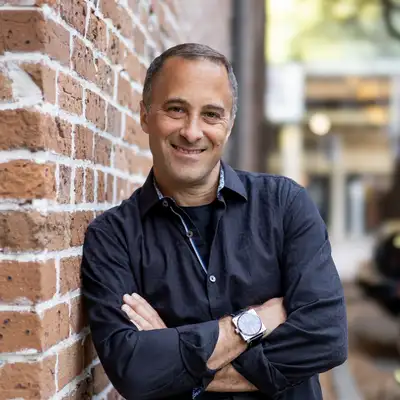
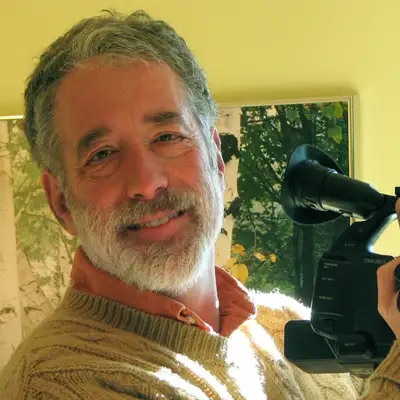
Vinny Tafuro:Hello, and welcome to episode 12 of the design economics podcast, where we explore how design thinking driven by data is revolutionizing economics for the twenty first century. My name is Vinny Tafiro, a futurist, economist, and your host for this episode. My guest today is John Feldman, filmmaker and founder of Hummingbird Films. Over his forty year career, John's documentary work has evolved from defending traditional evolutionary theory to documenting how cooperation and symbiosis rather than competition are the true drivers of evolution and ecological health. Our conversation explores how this intellectual humility contrasts with the scientific overconfidence that plagues economics, and how ecological filmmaking can disrupt orthodoxy.
Vinny Tafuro:Before we begin, if you find value in these conversations, please consider supporting the Design Economics podcast through our Patreon. Your support helps us continue to bring these important discussions to a wider audience. Please visit patreon.com/evolveeconomics, or visit our episode show notes at designeconomics.io to learn more about our range of membership tiers. And with that, I hope you enjoy this conversation with John Feldman.
John Feldman:Well, it's great. It's great to be here. It's great to be here. We could also talk about paradigm change in documentary films. There have been some, but not too significant.
Vinny Tafuro:Not too It's it's been quite quite an experience. I took a a film a documentary film class in college and really got to learn a little bit like cinema verte. Like, the different stages of it over the the decades and century now, and it's it's quite fascinating. So I'm looking forward to this conversation. And so I'd like to start by having you introduce yourself and maybe give me a little bit about give us a little bit about your forty year journey as a filmmaker and naturalist, and kind of overview of kind of the the two recent films that I know I watched, the symbiotic earth and regenerating life.
John Feldman:So, yeah, so I started making films, you know, as a as a young man. I was I was 13, and I wasn't really interested in filmmaking. In fact, I hadn't seen that many films, which was interesting, but I was interested in nature. I was always out in the woods photographing nature and watching nature and and so forth. So I made my first film in six in super eight, and it was an it was an actually a documentary about a a camp, a summer camp that I had been to, and it was a it's a nature summer camp.
John Feldman:It was in West Virginia. It was it was it's interesting when I look back on that film because it's very similar in an eerie sort of way to to what I'm doing now. I studied biology, but somewhere along the line in college, I decided that I didn't really wanna be a biologist, and I wanted to be either a filmmaker or a a photographer. And as things go, I I, you know, became a filmmaker. I made some films in college, and then I was able to get a job right out of college writing film scripts for industry and mostly for science industry and science education, which was quite which was quite wonderful.
John Feldman:And these were not television films or anything of a high stature. They were really training films for people who would be working at various industrial plants, and trying to teach basic chemistry and so forth and so on. I went to graduate school at Temple University, and it was there that I really learned 16 millimeter filmmaking, had wonderful colleagues. And then I I kind of I I I got out of the the documentary field, I began making fiction films. And I spent much of my kind of mid career doing feature doc feature films, fiction.
John Feldman:I was on kind of the Hollywood track and which was nothing to do with nature, although I tried to get birds in sometimes. It was a it was it's frustrating because it's all about raising money and getting stars in your pictures and so forth. But one of my films won an award at the, at a film festival in Ecuador. And I went down to Ecuador, met some people there, and following that, they invited me to make a film with a group of students on the World Evolution Summit. That was in 2005.
John Feldman:And at this summit, I met Lynne Margolis. And Lynne Margolis was an amazing person. We we can talk about her a little bit. Out of that, I made a film called 10 questions everybody should ask about evolution, which basically gave the standard story about evolution, although I did have a lot about how cooperation plays in evolution. I still hadn't quite figured it out yet.
John Feldman:And when that film was finished, Lynn called me up at one point, and we talked about it, and then she sent me an email in which she really chastised me for not telling the whole story. And in symbiotic earth, I relate this experience as the inception of the film. She basically said that this film would be regarded as neo American capitalistic part of the neo American capitalistic zeitgeist. And she challenged me to make a new film and make a film that was totally about evolution and about the real story of evolution, as she called it. And so I started to work with her on this film, and, she gave me a list of the people I should talk to.
John Feldman:She didn't wanna be in the film, but she gave me a list of the people I should talk to, papers I should read, and so forth. And I began down that journey. She opened up her archives to me. She she had a colleague, Jim McAllister, and I was able to to go into her archives. And then soon thereafter, very soon thereafter, died suddenly of a stroke.
John Feldman:So this was a big blow for me, and I really didn't know what I was going to do. But at a at a memorial, symposium that, was held in her honor, I realized that, well, I have a great opportunity here. I can make the same film that she wanted me to make, but I can also make it about her life. And so that became the beginning of, Symbiotic Earth, and I traveled all around and interviewed her colleagues, amazing people, most of whom are in the film, and I really learned a lot about evolution and about Lynn and about science, how science works and how science doesn't work. And that was Symbiotic Earth.
John Feldman:And then basically, one of the takeaways, if you will, of symbiotic Earth is the Gaia theory, which Jim developed with with I'm sorry, which Lynn developed with Jim Lovelock. And the Gaia theory, it basically says that the earth is a self regulating system, and regulate and life on earth regulates its own temperature. And this idea intrigued me a lot, and I had already been thinking about a film on climate change. And so I asked myself the question, well, how does life regulate the climate? How does life regulate the temperature?
John Feldman:And this set me off to make regenerating life. And through that, I talk about how life regulates the climate, what we humans have done to mess this up, and what we can do to put it all back together again. And those are really my two films that are part of a trilogy. I'm working on the third part of the trilogy now, which is called the Gaia perspective, which basically asks the question, you know, how can we, as a as a civilization, move forward and live in harmony with each other and with the natural world? And that's that's where I am now.
Vinny Tafuro:Gotcha. I I that that story about the two of you meeting and having and her and her critique of the first film of Margiela it's Margielis. Right? Margielis. Margielis.
John Feldman:Oh, it's you
Vinny Tafuro:know, it's more like my own names. People make it harder than it actually is. So Lynn Margulis, in that that fact that you were able to have a intellectual humility and go, oh, I I hadn't had the same perspective and now I can look at it through a different lens and now not only do that, but then tell that story. Kind of is is really a good segue into our first tenant and this idea of acknowledging change. In economics, there's sort of a hubris of pretending that it is a physical science or like chemistry or physics, which actually those change even more frequently than economics seems to be willing to.
Vinny Tafuro:And so kinda wanna talk a little bit about what was that journey in understanding, like what was learned in in regenerating life for instance, in in the difference between reducing c o two compared to what we actually need to do to to improve the planet's ability to regulate temperature.
John Feldman:So just to backtrack a little bit, that in fact what you were describing is kind of the narrative style which I developed in symbiotic earth. Took me a while to develop that voice in symbiotic earth, but once I figured it out, I I used it again in regenerating life. And that's the idea that I go through this process of learning all this stuff, interviewing these people, and I do a lot of background, I do a lot of reading, And but when I interview these people, I really learn things, and I really have these, oh my god, you know, moments that you don't often get from reading a book. And so I just I decided that I you know, I tell my story by following this path of learning, and I do it in the past tense. So I can say to somebody, you know, when I met Walter Yeni, I was so amazed about this, that, and the other.
John Feldman:So people are following my discoveries, which is quite you know, and and and I think it's a nice way to teach because, first of all, it's true that I was ignorant and really had these breakthrough moments. And secondly, it makes people follow along with me because for the most part, they also are learning these things along the way.
Vinny Tafuro:That that makes you know, I really enjoy that process. I know, I think it lends itself to the viewer having a buy in. You know, I did feel while I was watching that I was learning at the same time you were, in the way that you built that. So I think I think that's just a wonderful well, it's a wonderful format and way to tell that story. I just wanna recognize that.
John Feldman:Yeah. Thanks. One of the main things I learned from Lynn, and it's I start off with a quote from her about that, is that there are dogmas that come out of science, and yet dogma is certainly not a part of science. Any science will tell scientist will tell you that, you know, that's a belief system. Dogmas are belief systems, and science is not supposed to be a belief system.
John Feldman:And Lynn felt that we had to really examine these dogmas and examine where we got our information. And her method was always to go back to the beginning. Go back to the begin you know, we think of science as the scientists do their work and do their work. And if so so if you're a scientist, you build from here, and knowledge builds up from here, builds up from here. And what she said is, no.
John Feldman:You've gotta take all this down, keep going down, keep going down until you get to a level in which you really feel you know, and then start over again. And this is exactly what's happened in the climate change conversation. Due to ways and that I talk about in the film, the climate change conversation has been stuck in a dogma, what I like to call a a misdiagnosis, And that is this idea that the entire warming of our planet is caused by excess carbon emissions in the atmosphere, and that these carbon emissions have increased the size and potency of the greenhouse effect, and that has led to the overheating of our planet. And pretty much immediately when I started to look into this, it became clear that this was just a a part of the story, and some would say a very small part of the story. And so that was my process of going back and learning, you know, how does the climate how does the Earth regulate its own climate?
John Feldman:To, you know, to cut briefly to the chase, it turns out that the climate of our planet is governed by the flow of water through living systems, similar to the way we, in our own bodies, govern our temperatures. But water flows through everything, as we all know, you just have to think about it, and water has the amazing ability to take heat away from the earth due to the fact that it goes through these phase changes. It goes from ice to liquid to water, and each time it does that, it requires energy. What did I say? Is it ice to liquid to I'm sorry.
John Feldman:Not water. Ice to liquid to Vapor. To vapor. And so vapor holds energy that was required to take the water to vapor and takes that energy upwards. And then when it gets to the clouds, it releases the energy and condenses as water in a cloud.
John Feldman:So it's an amazing process, there are people who are working with this idea and other ideas. And of course, when you talk about water, have to talk about all the vegetation, the soil, the wetlands, and so forth. So this dogma is very hard to break because it's considered truth, by a lot of people, most people. And even though very few scientists and if you read the original papers, there's really no statement of this particular idea. In fact, there's a lot of apparent evidence for this dogma, which is just wrong.
John Feldman:Yeah. And, we could talk about some examples of that, but, you know, probably
Vinny Tafuro:It's a convenient way to to oh, it's this and this only, but everything else all all the the detail gets left out. Well and it you know, it's a silver bullet idea.
John Feldman:Yeah. And it'd be wonderful if if all of a sudden, you know, the whole problem was simplified down to a, you know, one particular situation. And but what's involved is systems thinking. And you have to take a systemic approach to understand anything about nature, and the reductionistic approach to nature is what we mostly, do. You know, we dissect a leaf, we understand photosynthesis, we can see the chloroplasts, we can get further and further into the leaf, but we have to take a much broader systems view to really understand how that leaf, through transpiration, is directly involved with creating, if you will, its own rain, which is an amazing thought.
John Feldman:One of the most amazing things that I thought of was that that, you know, when we were growing up, we used to make fun of people who would say they could bring the rain. Right? Mhmm. But trees, you know, bring the rain. Trees bring their own rain because they take up the water.
John Feldman:They transpire it into the atmosphere. That forms clouds, and then the rain comes down. Course, Of that that that rain might be somewhere else, but then somebody else's rain comes on you. That's true. Yeah.
Vinny Tafuro:Well, and that that's that circulation. It's interesting when, you know, when you talked about, you know, the absolute the necessity of water to circulate through systems, both our own human, you know, animal systems as well as plant systems. But we've used the same thing in our mechanical and digital systems, you know, when it looks at, you know, cooling of server centers and nuclear power plants. Sure. Oh, so I think this comprehending this idea of water as this integral part of the system, I think, interesting addition to the framing of it to to make sure that people understand that.
John Feldman:But, you know, getting back to the idea of dogma, these things are complicated, you know, economics or biology or whatever you wanna call it, and people do like to understand, and it is helpful to have shortcuts. When we when we take shortcuts or when we have metaphors, metaphors are basically a type of shortcut in a way, they can be very dangerous. And I I bring this up a lot in Symbiotic Earth. We talk about metaphors, And in particular, there were two metaphors in evolution that, I may be getting ahead of myself, but
Vinny Tafuro:that's alright. There were two That's that's good. Because I've got something I I think I know where you're going with this.
John Feldman:Okay. So there were two metaphors in in in evolution, popular metaphors. One is called survival of the fittest, and the other is a selfish gene. Yes. And both of these I grew up with, and they make sense.
John Feldman:And they're easy to communicate, but they really have nothing to do with biology. They have to do perhaps with with society, politics, and our own selfish natures, and there's certainly
Vinny Tafuro:That's that's actually because you are leaning into the next segment, but I wanna pause there because, you know, in economics, we have these metaphors that we are driven by, you know, self interest and greed. And it kinda comes from that. Well, nature is driven by that. So obviously, we're from nature, although we forget that all the time. And so therefore, we must be like nature.
Vinny Tafuro:But when you realize this, self interest in in humanity is always framed by your circle of empathy. If you are self interested in just yourself, you're a sociopath. Like, it's diagnosable. If you're most people are interested self interested in their immediate family, their community, their church, their neighborhood. Some are self interested in their city, their state, their nation, and some of us have become self interested in the earth.
Vinny Tafuro:And so I I find, you know, that was one of those metaphors that is evolving, but economics is still, oh, we're self interested. The other is this idea of economic man. We decided to use this kind of homo economicus framework, which which is like homo sapiens. We'll just use Latin and call it homo economicus. It becomes real.
Vinny Tafuro:But it has become real. And this idea that every actor in a economy is acting in rational self interest all the time, and we've realized now that this is completely false. We can be manipulated by algorithms. We can be manipulated by headlines, by dogma of other, sources, and so all of these metaphors are completely wrong. And so what I'm interested in, this is where you're going next with is, how are these dogmas in evolution shifting?
Vinny Tafuro:Because hope my hope and my hope of, you know, having you on this conversation is how do we get those to happen in economics too. So I'd like you to continue on on that selfish gene and that part of it, but I wanted to link it to where we are in economics.
John Feldman:I hope to think that the the dogma or the let's drop the word dogma. The understanding of evolution is shifting, and I see it more and more. You know, Lynn Margolis didn't like to say it's all about cooperation, not competition. She she didn't like to use those words, and she didn't get into the political aspects of things because she was really into studying her bacteria. But she would, you know and she would correct you if you said that, and she would say, no.
John Feldman:It's collaboration, not cooperation. You could get into a whole discussion about that. But I I have seen that there is a shift. There's a lot more papers now about symbiosis. And, you know, her breakthrough was the promoting the theory, which is called endosymbiosis, her symbiogenic theory, it's called, which is that the if you think of a cell and inside the cell are little organelles, And two of the most important organelles, other than the nucleus, are the chloroplast and the mitochondria.
John Feldman:And both of those were at one time preexisting organisms, preexisting bacteria. And so the chloroplasts merged with another cell, and that cell didn't eat it or digest it, but they became symbiotic partners. And the same with the mitochondria. She tried to prove, although she never quite got there, that that was also the case of the nucleus, that the nucleus was an endosymbiont. And that idea, which was later proved through genetic examination of the mitochondria, that's huge.
John Feldman:And she found other ways in which actual organisms work with one another in symbiosis, and some of those have become quite popular as as examples. Lichens are one of them and, mycorrhizae, which are symbiosis between plants and fungi, which exist across the spectrum, they are like this web that connects the plants to the soil. And they also connect plants to plants, and so people study how the plants communicate with one another through this mycorrhizal network. So that's very interesting, but getting again a little bit off subject. The real thing that interests me when I started to think about economics, and this is really only through talking to you that I'm, you know, thinking about it in these terms, is the idea of the selfish gene, the idea that organisms are selfish.
John Feldman:Yeah. And that, therefore, because it's a scientific idea, it can justify selfishness. Yep. And, you know, that's such a shame in a way. But then you're framing it as self interest in terms of families and communities and institutions and everything, you know, that's also very, very interesting because those are also examples of cooperation.
John Feldman:Yes. Right? If if it so I I might have a self interest in my group or my family. It's the easiest in my family and wanting to preserve my family and everything. Yeah.
John Feldman:But that's because we work together. We cooperate with one another always.
Vinny Tafuro:Yeah. Well, and that was know, it it I I started rethinking that early in my journey, like, fifteen years ago, like, in exploring, you know, as I was learning about economics, not through a a degree in academic program, but through my own exploration is how I really went is the famed economist Milton Friedman. There was a episode, I think Donahue or something. It was a TV interview at some point in the seventies or eighties. It was on but it was on YouTube, and I watched it.
Vinny Tafuro:And he talked about how, you know, do you not think the Soviets are greedy? And do you not think this person's greedy? And he he quote he said, do you not think that mother Teresa is greedy? And I was like, herself and I was like, that's where it clicked for me. I'm like, yeah.
Vinny Tafuro:But with a certain level of empathy for a certain size population. And anyways, the first time that I realized, like, I really wish that Friedman had understood this idea of empathy a little bit better, but we didn't we didn't science didn't find the mirror neurons until the late eighties. And I think even our you know, the founder of economics, Adam Smith, his first book was not the wealth of nations. It was the theory of moral sentiments. And in that book, he identifies what he calls at the time sympathy.
Vinny Tafuro:That when you see somebody else in pain, you will recognize that pain. And so he used the word sympathy was the only word he had two hundred and fifty years ago. And it's only in the last few decades that we've identified that as empathy, and now identified that humans aren't the only ones that have it. It's quite fascinating when you look at that conversation about the selfish gene and the selfish person, and how how we need to evolve past that.
John Feldman:Right. And one more thing there, this idea another idea that came out of science that somehow we have this this DNA, and our this DNA controls who we are and what we do. You know? It's like, well, it's in my DNA. You know?
John Feldman:And that idea has also been, you know, recently pretty much debunked in that the that the DNA is simply a database for the creation of proteins. Yeah. And it's, you know, again, very complicated, and we can't and now scientists talk about epigenetics, which is all of the chemistry, if you will, that is outside the genes, of which there's a lot, the rest of us, you know, in a way. I wonder what if we should call the empathetic gene.
Vinny Tafuro:I'd love that.
John Feldman:That would that would be an interesting We
Vinny Tafuro:are an empathetic species in, you know, when it really comes down to it. I think I I would like to bring this, I think, to a little bit in the creativity side in in linking this to economic systems and also what's going on in industry at this point. And I know in regenerating regenerating life that you talk to a lot of farmers about land restoration. So maybe you can go into a little bit of detail about how that collaboration amongst farmers is influencing systems there.
John Feldman:Well, I think we should go one step backwards and or maybe backwards, maybe forwards. And that is the some time. We're not going know, farmers are the farmers I interviewed would say that they are collaborating with the land, and they are collaborating with nature. I mean, after all, nature has the seeds, nature makes the plants, nature makes the sugars, and so forth. And they consider themselves to be collaborating with that process and not to be fighting nature all the time.
John Feldman:The industrial model, in which we're trying to control nature and control the insects and add nutrients if we think it's needed instead of adding plants that will add the nutrients to the soil. You know, that's the counter model. That's that's working, I would say, against nature. When you collaborate with with nature, then this you know, you get the sum of the parts is greater. And and the farmers that I interviewed, I interviewed a handful, and the common theme was really learning this and learning really about the soil.
John Feldman:And it all comes down to the soil. And the soil we now know is full of microorganisms, and it's kind of the base of an incredible cycling process where everything cycles through the soil, and all of these farmers rely on on poop to animal poop to to make the compost and to fertilize the soil. And, of course, when you study biology, you know that it's, of course, the poop that circulates the minerals back to the plants and so forth and so on. So working again with nature in a in a collaborative way, one farmer, I think it's in the film, he basically talks about all he does is take care of the soil. If you take care of the soil, everything else will follow.
John Feldman:Yeah. And, of course, that's true in a way. You know, when I spoke to the farmers, we didn't we weren't always talking about climate change. We were talking about how we can create healthy food Yeah. And and how we are causing problems by putting pesticides and so forth and and chemicals into the soil and creating unhealthy food.
Vinny Tafuro:Along with monoculture and and the site.
John Feldman:Monocultures and cover crops. Cover crops, you know, cover crops, which are crops that you don't necessarily eat, but which you plant on the field to cover the land. Often, they're legumes, which add nitrogen to the soil. Cover crops have been around for a long time. But when industrial agriculture came along, it it didn't seem necessary because they could supply all the the nutrients they wanted through chemicals.
John Feldman:And, you know, also the the the big important point about climate change again is that bare land is what increases the greenhouse effect. It's the heat. Yeah. It's the sun heating bare land that causes the greenhouse effect. So, yeah, I'm not sure I answered your question, but that's what I learned from farmers.
Vinny Tafuro:That was and we we we wanna step backwards to why they're why the farmers are collaborating with the land, but also a little bit of how are farmers collaborating with each other. Because that that land part was important because it is, you know, industrial agriculture just looks at land as a blank canvas. We're going to put the nutrients and the plants in it, genetically engineer them to work together, and we don't need soil.
John Feldman:Whereas So
Vinny Tafuro:the You laid the groundwork for that, but how are the farmers really, collaborating in new ways?
John Feldman:I I think that they're they're collaborating by sharing best practices, really. They're collaborating by schools Yeah. Workshops. There's a regenerative agriculture school in California where that I visited. So I guess through teaching, I think sharing the best practice because regenerative agriculture gets a lot of pushback from other farmers who are on the commodity system, which is a whole system which allows them to supply commodities, and they have insurance from the government.
John Feldman:And it's a complicated system, but they don't seem to benefit as much as the corporations who are who they are supplying the commodities to. No. Absolutely not. And so, and yet they're trapped in a sense Yeah. Because of the economics of it.
Vinny Tafuro:Yeah. Well, I'm hopeful. This is, you know, on the on the farmers collaborate and on this fact that they are sharing information that, you know, as that industrial system breaks down, which I believe we are in kind of the beginning parts of that, that there will be a way for lands to be reclaimed, for lack of a better word, by this more regenerative, farming technique, to rebuild those lands, in a new and better way.
John Feldman:Well and I think that, of course, the public plays a huge role in that because the, typical food, the industrial food, is often way cheaper than the organic food, as you know, if you know, when you go shopping. And that's because, by and large, the industrial food is subsidized. Yeah. And farmers are working together through farmers markets a lot, and there are now organizations that supply, you know, organic mulch to farms, and there's sharing in that in those ways. But, you know, I often say, you know, the simplest thing you can do to combat climate change is go out and have yourself an organic meal from freshly grown food or from growing food yourself.
John Feldman:Yeah. You know, that used to be a big thing in The United States. I mean, I'm sure you know the statistics that, you know, before World War one, you know, we were largely a farming country. Right? And and now they say there's less than 1% of the people are farmers.
Vinny Tafuro:Yeah. I remember growing up, my family had a farm, you know, small we were on Long Island in New York, so it wasn't wasn't big. But farming was a big part of life, for my grandparents and, my my father's generation. So I understand that, which actually I think as we get to that, because we're we're getting into I think that idea of how do we spread these these ideas. And maybe you could give a little bit to start with because I do think, you know, the things we're doing with the institute here is we've got this podcast.
Vinny Tafuro:We are developing other forms of of putting information out there. We'd look at doing like a documentary series, doing education and explainer videos. So maybe as a filmmaker, you can give a little bit of a background of how film has influenced not only your films and influencing paradigm change, but a little bit more maybe on for those that don't know about the film industry and and how the documentary industry has changed and evolved might be a good place to go with this because I really think in the visual age, like, these the storytelling that filmmakers do is important.
John Feldman:When I when I started EVO, the evolution film, which is an educational film distributed by the National Science Teachers Association, I had this mission, which people never really, you know, got, that I wanted to reinvigorate educational films. And at least when I was in school, and that would be in the sixties and seventies, educational films, we hated them. The teacher would show us this film and they were awful. And we all thought they were awful, and they probably were, although not as bad as we thought, I'm sure. And yet I have always been compelled to to to be a kind of a teacher.
John Feldman:And yet that is that's somewhat frowned upon in the documentary field to be anything didactic or or educational per se. Right? I mean and yet, in fact, educational films are segregated from documentary films, and a lot of places where you go to apply to get documentary funding say no educational films. So you tell them it's not educational. You know?
John Feldman:It's interesting, and I and I do think that a lot of people turn to documentaries to learn things. And so the question is how do we share these ideas with people and share an understanding through film? Yeah. And, you know, to tell you the truth, I don't know. I mean, I I I keep trying to do it, and my films are are seen and greatly appreciated.
John Feldman:But it's a difficult learning medium because it goes by quickly. My films are considered dense. Yeah. And you really have to pay attention. People always, you know, wanna go back and look at them again, which, of course, is great.
John Feldman:I have written a a book that accompanies the film, a study guide. The main thing is to to my main objective is to is to give people these these kind of gee whiz moments Yes. And to kind of set these set these things up. And you don't know how people are gonna respond to a film when people are gonna have that gee whiz moment because people respond to different things in different ways. Yeah.
John Feldman:And I've also found that, you know, I can say something in the beginning of a film, like water is the dominant greenhouse gas. Doesn't mean anything. Then people say, you know, later in the film, all of a sudden, realized what you had been talking about in the beginning. So and it Connects. You can't everybody is different in that regard, and you can't predict how it's gonna happen.
John Feldman:But you can you can kinda try to set it up in such a way, and have a punch line or or have a, you know, a line where you you hope that that's the moment they get it. They have it.
Vinny Tafuro:Yes. I mean, learning design for it.
John Feldman:Yeah. You try to design for it. Exactly. Learning is is complicated. And, you know, we all know that you learn something when you go to school, but it's not always what they were teaching you.
John Feldman:And teaching and learning can somehow have this separation. But but all in all, I I think now you know, people now care a lot about these scientific subjects. They care a lot about the economy, and they don't really understand it as as as well as
Vinny Tafuro:No.
John Feldman:We'd hope we as well as we'd hope our educational system had provided for them. And so sometimes the purpose of a film is just to open their eyes to things that they haven't thought about in a long time. Yeah. And in particular with with climate change is to open their eyes to the fact that, well, maybe there is something that we're not hearing from the mainstream narrative. Yeah.
John Feldman:And and, you know, in evolution, you know, no one really cares so much about the theory of evolution, but they do what what they do really care about the idea that, you know, oh my god. You're saying that it's not really about competition. It's about collaboration. And when they get that, it can change everything. It you know, because that that is you know, that one point is is the big point that, you know, came out of the Cartesian split separating us from nature Yeah.
John Feldman:Also came out this idea of survival of the fittest, which, you know, feels like a good metaphor, but it's always misinterpreted.
Vinny Tafuro:Yeah. It's always oversimplified, and and I think that realization alone just really changes. I mean, I look at the economic idea of of rational self interest and this idea that as it has been like like, we're just learning all these new ways of describing the human experience. And I think our our engagement with nature at the same time as well. So I'm I'm hopeful that, you know, while, you know it's interesting because I I recently I, you know, came across some news that, you know, like Netflix is now writing scripts in a way that they understand that people are on their phones scrolling while they're watching quote unquote something on TV.
Vinny Tafuro:So the dialogues are becoming overly descriptive of what's going on on screen because they know you're not watching the screen. And I just find I I get it, but I also like, how do we start slowing down? And how do we take the time to really take in film to take it? And I'm hopeful now as I look at more and more people giving themselves disconnect time. Personally, I I host an occasional dinner with friends, and I'll have six to a dozen friends over, make dinner or or or potluck it or something, and and then sit and watch a documentary together.
Vinny Tafuro:We'll pause and talk about it throughout it, and and amazingly, nobody's really on their phone during that one. You know, they they because now we're together, and it's like there's kind of this peer pressure of like, well, I don't wanna be the one on the phone while we're watching the film. So I'm hopeful that there's some shifts now, and and I would love to see films becoming a bigger part of that.
John Feldman:Well, that's that's a very good point. And when we distributed regenerating life, we decided that, you know, this the best way for films like this to be seen is actually in a room with other people. And we we focus the beginning of our distribution plans on that, on community screenings. And talking about the evolution of film, you know, the idea that right now, you know, so many people have gorgeous screens in their homes where I can go in and play a film, it's it's huge to a filmmaker. You know, I I used to have to carry around a 16 millimeter projector, put it up in a room, put up a screen, and the machine is in the background going, you know?
John Feldman:And now they all have these beautiful screens. Yeah. And getting people together and and and not just because a comedy is better when other people are laughing, but that afterwards, you can talk about it. And people have different reactions, and the discussions that have happened after screenings of my films are very just very interesting because, you know, people are smart, and they and they, you know, they catch on, they miss something, and someone else fills them in, and they understand the common problems, and they can talk about it. So I'd like to see more of that.
John Feldman:But I just wanna bounce back and tell one funny thing. So I worked in I worked in London for a while making films, and I made a film in the very early days of of channel four television. And I had a great producer, woman Stacy, but she would tell me, John, you have to to remember that this is a daytime show, and people are always doing something else. They might be ironing. They might be cooking.
John Feldman:They might be sanding a piece of lumber. So you have to think of it as illustrated radio. And that's very similar to what you're saying that Netflix is trying to trying to figure out because the idea that, you know, people always used to have and probably still do, the television on. It was just on, and they're doing the laundry or whatever. You know?
Vinny Tafuro:So maybe this isn't as new as we think it is. Well What is? We're it's far I think it's far worse, but I think it's it's interesting to hear that perspective of it, though, because, we kinda tend to forget that.
John Feldman:Well and, also, it goes against the grain of filmmaking. You're supposed to be telling things visually. Yeah. And, you know, because it is the visual moments and the music that really can bring a person to an emotional understanding of something. And, you know, sometimes I think that having an emotional understanding of something, like an emotional understanding of the carbon cycle, as bizarre as that sounds, right, is is probably very valuable to understanding how life works.
Vinny Tafuro:Yeah. Well, I think we're we're emotional beings.
John Feldman:Right.
Vinny Tafuro:You know, that's that that that's that instant tie back to, you know, this idea of homoeconomicus and making every decision rationally, yet ignoring the fact that, you know, that model, that character was created at a time where women didn't have the same rights, so you had a stay at home spouse who was under this nuclear family idea. It just left out so many parts of what humanity is, and I think that we're emotionally driven empathetic beings. Period. Full stop. Like that's, you know.
Vinny Tafuro:So I don't know if you can or cannot. Can you talk a little bit about your the next film that's coming this because you said it is a trilogy, I don't know if there's if you're able to add a little bit of that.
John Feldman:So the next film is called the Gaia perspective, changing our world views with Fritzschev Coppra and his mentors. And in many ways, it's gonna be similar to the Margolis film. I mean, that it's a series of essays, and it has a a central character, which is Fritzschev Kopra. And, you know, I can't talk too much about it because I haven't made it, and it's still in my head. And every day I wake up with new ideas, so it goes out of my head, comes into my head.
John Feldman:But I I will say that I become very interest you know, I always return to this Cartesian split, and the previous two films were about the the split that was set up, between man or humans and and nature. And this divide and Yeah. Man's was thought to be necessary to dominate nature, to control nature, to use nature for our purposes, and so forth. And this split also split science from spirituality
Vinny Tafuro:Yes.
John Feldman:And science from religion, and in a bizarre kind of way, science from empathy. When I was in school, if you said something like, that tree wants to turn its leaves into the sun. Oh, no. You can't say that. How could a tree want?
John Feldman:You know? That's Yes. And, you know, that idea. And Fritjof Kopra was one of the people who began to try to look at that division and to start to say, well, you know, if we're going to we we have to start talking about spirituality. We have to start talking about things like intuition and so forth even as scientists.
John Feldman:And if if you think of systems thinking, and now it's pretty well established that all of life and all human society as well is one big network. Right? All these interconnections. And so I asked a couple people this same question, which is, okay. Yes.
John Feldman:Let's say you, you know, you start to think of it as this incredible network, and this is connected to that, and this is connected to that, and this is connected to that, and so forth. Isn't that just a great big complex piece of mechanism? Aren't you just creating this complex mechanistic web? And so, you know, what's different? And the answer was always the same.
John Feldman:You have to include spirituality. You you you you know, and you have to include that. And so in the new film, I'm looking at that, and I'm also looking at how this Cartesian split split us from ourselves, split us from our souls, spirits, you know, whatever you wanna call
Vinny Tafuro:it. Yeah.
John Feldman:But there is this this split, and I think that it's it's interesting to explore. And I and I've talked to several people who are well into exploring it, and I'm not quite sure where I'm gonna take it. But and and this is the area where it's really you know what? I I wouldn't have so much fun making these things if I didn't really go into areas which, you know, I never even would have thought to go into before. New ideas, really big ideas, and then try to find somebody who's been dealing with this all their life.
Vinny Tafuro:This one, you will be learning a lot of new things on this one.
John Feldman:Yeah. Oh, yeah. Oh, yeah. Well, I'm reading the books now, and there's, you know, there's it's it's great stuff out there. There's no dearth of of wonderful people talking about this stuff.
John Feldman:So No. You know?
Vinny Tafuro:Well, it's a fascinating subject. I I am looking forward to seeing what comes of it. It actually last year, I had the futurist and economist, Rianne Eisler was on the program.
John Feldman:Love yeah.
Vinny Tafuro:And, we talked about her nurturing human nurturing her nurturing our humanity book. And, I first came across her a few years ago in her partnership dominant systems thing. So I guess when you when you said that, was like, oh, this is Well, and she's one of the people who
John Feldman:really turned me on at a certain point to some of these ideas or her you know? I don't I don't think I've read her in about ten years, but but The Chalice and
Vinny Tafuro:the Blade was the that was the early one that I read about it. I mean, it's
John Feldman:it's still,
Vinny Tafuro:I think, her foundational piece.
John Feldman:And so the question is, you know, how do these ideas really get out there? And, you know, what is a paradigm shift? You know, I used to like to think that a paradigm shift would kind of happen. And or another thing I've realized in making this film is that I used to kinda think that it was about problem solving, that the climate change was about problem solving. We had to solve these problems.
John Feldman:And now I realize, well, no. That's not the way to look at it. You have to look at it as curing or or or nurturing the earth or allowing the or he allowing the earth to heal itself. And if you say that, you know, we're healing the soil, all of a sudden, you realize it's a living thing and blah blah blah. So, yeah, these ideas are out there, and and there's so much.
John Feldman:And I think that, you know, getting back to the earlier question, you know, all all we can do is is, in my case, is try to understand things, try to pass that understanding and excitement about things on through the films that I make, and hope that people get it and can therefore and then can pass it on to somebody else.
Vinny Tafuro:Yeah. Well, I John, I think this has been a wonderful conversation. Like, how will, how can people find you and connect with you?
John Feldman:Right. So your
Vinny Tafuro:preferred ways of
John Feldman:sohummingbirdfilms.com. Okay. Uh-huh. Is that the show notes? Hummingbirdfilms.com.
John Feldman:And the films are all listed there. My email is there. I even think my phone number is there. And the films are available on Amazon. Symbiotic Earth and Regenerating Life are on Amazon.
John Feldman:They're also available through Bullfrog Films for educational purposes and for well, they have Vimeo also. You can watch it on Vimeo. And Regenerating Life is now for free on Tubi. Oh, excellent. So you can watch it for free.
John Feldman:You have to listen to the ads. Of course. And you can tell me all about those. So yeah. And, you know, I'm always open to talking to people.
Vinny Tafuro:John, it's been a wonderful discussion. I appreciate you taking the time to speak with me and be on the podcast. And my best of luck.
John Feldman:Thank you very much for your interest.
Vinny Tafuro:We hope you enjoyed this episode of the design economics podcast. If you value these conversations, please consider supporting us through our Patreon at patreon.com/evolveeconomics. Your support helps us continue bringing these important discussions to a wider audience. Don't forget to subscribe to the Design Economics podcast on your favorite platform. The Design Economics podcast is produced by the Institute for Economic Evolution, a five zero one c three charitable organization whose vision is economic systems that cultivate rather than restrict our human potential.
Vinny Tafuro:And I'm your host, Vinny Tafuro. Thank you for listening.
Creators and Guests