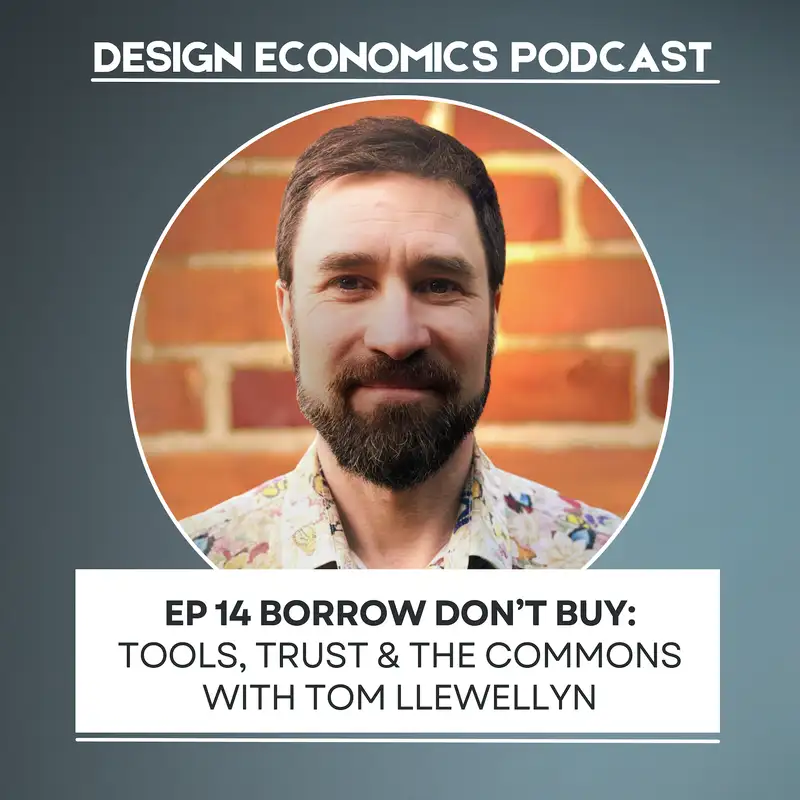
Tom Llewellyn: Borrow Don't Buy; Tools, Trust & The Commons
One of the things that I love about libraries of things is that there's they provide multiple services or they kind of hit on a number of things at the same time. And one of them is sustainability. Right? So there was research that was done years ago that found that the average electric power drill gets used for only fifteen minutes in its entire life cycle.
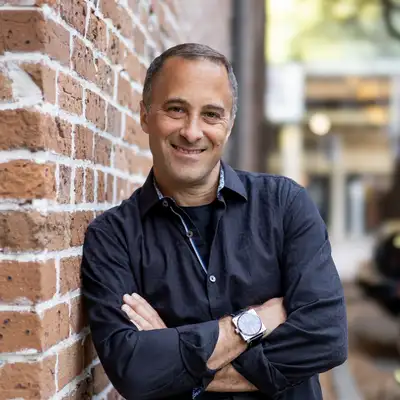
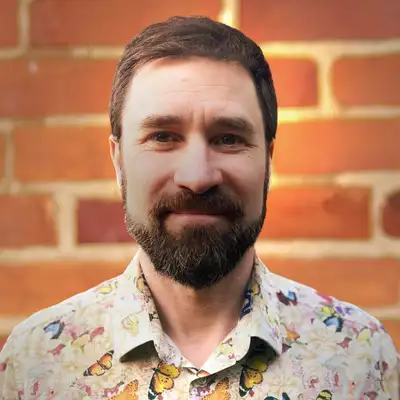
Vinny Tafuro:Hello, and welcome to episode 14 of the design economics podcast, where we explore how design thinking driven by data is revolutionizing economics for the twenty first century. My name is Vinita Furrow, a futurist, economist, and your host for this episode. My guest today is Tom Llewellyn, executive director of Shareable, a nonprofit news and action hub that over sixteen years has documented and helped build people powered alternatives to the extractive economy. Tom is the Executive Producer of the award winning documentary series, The Response, co editor of Sharing Cities, and the leading voice in the global movement to make sharing the foundation of how communities organize, resource, and sustain themselves. Our conversation explores what a genuine sharing economy looks like, one rooted in tool libraries, mutual aid networks, and cooperative infrastructure that has been quietly working for decades.
Vinny Tafuro:Before we begin, if you find value in these conversations, please consider supporting the Design Economics podcast through our Patreon at patreon.com/evolveeconomics. And with that, I hope you enjoy this conversation with Tom Luella.
Tom Llewellyn:Yeah. So thanks. I'm grateful to be on the podcast with you.
Vinny Tafuro:Excellent. A little bit about the podcast for those tuning in for the first time is the design economics podcast is put out by the Institute of Economic Evolution. We look at design thinking and how that relates to expanding economics beyond the neoliberal or GDP driven frameworks that we currently are under. I learned about Tom and Shareable through a colleague and friend and and other favorite podcast team human with Douglas Rushkoff who I've been listening to for quite a long time. And glad to have Tom here today.
Vinny Tafuro:And maybe you could talk a little bit about your background. You've been doing this and a variety of things for quite some time.
Tom Llewellyn:Yeah. I mean, I was fortunate to be born and raised in a small what I refer to as a semi autonomous unintentional community in the woods in Northern California, where we were, it was an unincorporated part of the county and, but we were brought together by a common sense of place. And in that community, there's about two twenty five people. We have a series of water co ops that people are members of, go back to early 1900s. This is like pre hippie time.
Tom Llewellyn:As a community, we'd pave the roads ourselves. We got our own community governance system, for a while we're even running a goat co op. That's a whole another story for another time. And so I, for a very young age, I was fortunate to see what it was like to maintain community infrastructure, to be doing commoning in practice. And one of the stories I like to tell is when I was a 10 year old, I used to save my funky shoes every year because I knew that paving day was coming up.
Tom Llewellyn:And I was out there as a 10 year old with an asphalt rake, like raking that asphalt and paving that road. And it wasn't forced labor. I enjoyed it. It was great. Like being part of this collaborative barn raising project, but then, you know, we hung out on the road, right?
Tom Llewellyn:Like we stargaze and sat in the middle of the road. We rode our bikes on the road. We rode our go karts on the road. It was part of our living experience, you know, of the place that we were from. And so, you know, since that point in time, I've a lot of my work has been focused on, well, how do we translate those experiences on, like, the micro, like community level into cities and broader communities?
Tom Llewellyn:How do we provide opportunities for people to come together and comment and engage around a shared sense of place? And so that work has been a through line through my kind of experience and most recently now with Shareable for the last over twelve years.
Vinny Tafuro:Gotcha, that's an interesting story. I look at my family. I grew up on Long Island and you know it was suburban New York, but my mother's side of the family had some Amish in it. And so I learned at a young age about the barn raisings and different things in Lancaster and that thing. And so it's interesting how we did these things.
Vinny Tafuro:So many things that that were normal you know a hundred years ago or even less in some cases have been lost to time. So it's nice to hear that story of this autonomous kind of area. I wanted to be a construction worker. I wanted to run a backhoe. So it's like I would love to have paved my own road at the time.
Vinny Tafuro:I guess kind of fast forward then, what is Shareable and kind of how did you get involved with that organization?
Tom Llewellyn:Yes, so as you mentioned, Shareable has been around for sixteen years. We were most, we kind of came to be the mouthpiece for this growing sharing movement. And initially when SHAREF was being developed, the initial concept was, we need to start a sharing movement. And as that work to create the organization was happening, they realized that there's actually all these amazing projects happening everywhere in the world. There's no movement that needs to be started.
Tom Llewellyn:The movement's already here. It's just not being talked about enough. And so that was what Shareable's role was for the first decade or more of its time. And we've published about 4,005 stories about the ways that people are sharing resources around the world over 300 how to guides, several books and publications. And along the way, we've had a couple of key milestones that have led us to where we are now.
Tom Llewellyn:And one of them was looking at, as kind of sharing platforms were taking off your Ubers, your Airbnb, but also so many amazing kind of community sharing projects, food sharing, what have you. There was this need to relook at our cities and Shareable in 2010 hosted the first kind of sharing economy conference. I think it was 2011, but early on in its history, looking at the city as a platform for sharing. And what if we look at our existing kind of infrastructure as these platforms for sharing, how do we provide opportunities for residents to be more engaged within their communities? And so that was that first big conference.
Tom Llewellyn:From there, the city of Seoul got excited about what was happening and San Francisco had this first kind of sharing economy working group. They picked it up and ran with it and decided they were going to become a sharing city. For a long time, they were the beacon on the hill. They were the biggest sharing city that other cities were kind of modeling off of. They took a first, they started with more of like, hey, we want seed all these startups.
Tom Llewellyn:And then after a couple of years realizing, you know what, really it's about the commons, it's about the community. We wanna figure out how are we bringing people together. And the mayor at the time we were working with there ended up winning the Gothenburg Sustainability Development Award for that sharing cities work. At one point in time, was over 110 major cities around the world that had municipally sharing cities program. And so we've worked on that for a long time, released a book, Sharing Cities Activating the Urban Commons, which folks can still get for free on our website.
Tom Llewellyn:That's a mix of model city policies and also kind of both community and entrepreneurial kind of ground up projects to kind of meet the core city needs around food and waste and housing and technology and 11 of these kind of core city sectors. And so that was a really big piece of our development kind of looking at, okay, how do we start to scale, look at the development of these sharing cities and thinking more about, like, well, maybe the ideal sharing city doesn't exist, but all the, as we were doing our research, we were kind of seeing all the building blocks that we need to build a truly sharing city exists. Like the components are out there, they're just distributed. Some people are doing it here, some people are doing it there. And what would it look like to bring that all together?
Tom Llewellyn:And so that was a big part of our work for a while. And then we also saw the need to really support the development of kind of community sharing, like physical infrastructure. We got really excited by this project in The UK that was running for a while called Everyone Every Day. And they were created basically an urban village in Barking and Dingham in these two districts in London, where they had community living rooms set up. Had I think four or five of them where they were open to the public, anybody could come in, have a cup of tea and talk about the things they wanted to do in their community.
Tom Llewellyn:And they would find direct support to make that happen. So
Vinny Tafuro:So when you spoke it's spaces.
Tom Llewellyn:It was exactly a third space, but with support, right? So someone's like, very high immigrant community in those places and people have their traditional cuisines. And we're like, I'd love to share this cuisine with other people. Well, they set up a commercial kitchen, they had workshops, they hosted it and they said, okay, well let's work with you to do this. And someone else wanted to host a knitting circle and somebody else wanted to do clothes mending and somebody else wanted to teach juggling and pretty soon they had this amazing calendar of events where they'd actually, they worked with a local newspaper and they would print out quarterly a whole newspaper with literally events happening every single day across it.
Tom Llewellyn:There was always a way for people to engage. I think at their peak, had about a 26 staff members. Like it took a lot of work to be able to maintain something like that. And we started thinking about like, well, what would be a model of that, that wouldn't require so much new infrastructure, that wouldn't require so much both physical and capital. I had been part of a team that started a tool library in Asheville, North Carolina.
Tom Llewellyn:And so we started thinking about, what is the role of libraries? How do we create kind of physical sharing hubs that people can come to and share resources and they can both be physical infrastructure and have a layer of social infrastructure on top. And that's kind of the direction we're going in. And now libraries of things and sharing hubs is probably the the key focus of our work at Shareable.
Vinny Tafuro:Yeah. I love I love this idea and to be able to do it because I know when you know, the the sharing apps and everything came out, they're really not sharing. They're they're they're a for profit and they're they're a paid service. I hosted CouchSurfer. I I had a really great apartment set up for probably about six years and hosted dozens of couch surfers from probably 25 different countries over a different period of time, and then I've used it to travel as well.
Vinny Tafuro:And I think that's the most realistic sharing platform that I've seen used and used myself on a regular basis. So to see that expand to other things, I guess a little my a question I have on this is what is the structure of this infrastructure, like whether it's Asheville or in The UK? Are they municipalities? Because I've seen tool I you know, we've got a library north of us that that has a tool workshop, but also so is it nonprofit? Is it municipal?
Vinny Tafuro:Is it some sort of hybrid blend or or is it just depend on the location? What's what's that kind vibe?
Tom Llewellyn:Yeah. All the above. I mean, think that was one of the things when we started doing that sharing cities work, were like, okay, can we be prescriptive? And the more we tried to put things into a box, the clearer it became that this work can't be put into a box. And so, I mean, did say it.
Tom Llewellyn:So, you know, the Asheville Tool Library is an example, that's a nonprofit. And it's a nonprofit, but with paid staff. And they have sit there, paid, you know, living wage certified, and they've got over 1,500 members, 2,500 tools at this point in time. Right?
Vinny Tafuro:Oh
Tom Llewellyn:wow. And they have all kinds of workshops and classes and trainings and stuff built on top of it. They're training people how to use tools. They're doing mending workshops and all sorts of things. And we're a key organization in the response to hurricane Helene when it came through Western North Carolina last year, which we've done, we've got a session on that, you can find it shareable.
Tom Llewellyn:But that's the one model, right? But even still, when we went to start the Asheville Tool Library, I was keen on having to be part of the public library. City of Berkeley has had a tool library since 1979, I think it's the longest running one in the country. Was one in Cleveland, Ohio that started in '78. And in early nineteen ninety one, somewhere around there, the independent Berkeley Tool Library was brought into under the umbrella of the public library.
Tom Llewellyn:And now it's just part of the public library system. Anybody who lives in Berkeley can have access to tools without paying any money at all with their library card. Same Same thing for the city of Oakland. Right? And and I'm from Northern California and I thought, okay.
Tom Llewellyn:So we're starting this one in Asheville. I'll go talk to the public library. They'll be excited about this. And they the time they told me, run it for five years. It's great they're they're running it over there in California, but run it here for five years and then come and talk to me.
Tom Llewellyn:And the group now that's the I'm not involved with running the tool library in Nashville anymore, but that group is really happy with it being independent. And there's so many things that they were able to do during that response to Hurricane Helene that they could not have done if they were part of the public library system. Right? So we need an all of the above. We need to have government infrastructure on the municipal level, and then we also need to have independent infrastructure like the Asphalt Tool Library so we can have dynamic responses to the needs within our communities.
Vinny Tafuro:Yeah. Now that makes a lot of sense because I mean, Berkeley and Oakland are are kind of unique Bay Area cities. You know, we're here in here in the Tampa Bay region. We've got Saint Pete, which leans little bit more liberal might do something like that. Whereas Tampa, you know, their live our the library system here, they did try something but it's not very expansive in what they can do.
Vinny Tafuro:And when you're racking off those numbers for the for the Asheville two library, I really think of, okay. That's like a good sized chamber of commerce. You pay mem you know, you could be set up as a five zero one c six or whatever that is a membership organization, but easily with 1,500 members, you could have a staff of two, three, whatever you need and have that. And I'm sure, you know, you can even do sliding scale grant type things for for low income members, etcetera. So I really like that idea.
Vinny Tafuro:I think that that, you know and then, hey, if it takes off, you know, maybe maybe they merge with the government. But I think too, you know, we got hit by Helene as well. I had no idea it was going up to you guys. But, know, having that kind of access because how many people went out and bought a chainsaw the next day and didn't know how to use it? So
Tom Llewellyn:Well, that's what they found actually is that a bunch of people did order chainsaws on Amazon and they were injuring themselves or the chain was getting dull and they didn't know how to re sharpen it, or there was a problem with the carburetor or what have you. And so the Asheville Tool Library partnered with the Western North Carolina Repair Cafe and hosted a series of workshops and trained people how to use their items and supported with maintenance. And so they were maintaining and training people to use items that weren't even part of the Asheville Tool Library, but were adding, bringing their knowledge from having run the tool library to the community. So like the tool library, they kind of start with in Asheville, and this is many, we're just using Asheville right now because I've been involved with it, but there's over 2,000 libraries of things at this point in time operating around the world. Like you were saying public libraries have gotten really behind this as well.
Tom Llewellyn:Some with smaller collections, but some with huge collections as well. But for the Asphalt Tool Library, like they have a couple of tiers of discounted membership, zero, no money at all to 25 and then 25 to $50 And then depending on your income, they have a suggestion for what a regular membership would be in the 50 to $250 a year basically to be a member, but then you have access to 3,700 tools. And if you go to a store to go buy one, you're spending that monthly, that annual membership fee for a single tool. It's a real no And one of the things that I love about libraries of things is that there's, they provide multiple services or they kind of hit on a number of things at the same time. And one of them is sustainability.
Tom Llewellyn:So there was research that was done years ago that found that the average electric power drill gets used for only fifteen minutes in its entire life cycle. So that's like, that's finger on trigger for fifteen minutes. But you think about all the minerals that were mined, the oil that was pumped, the plastic that was made, all the shipping of the materials back and forth, all the industrial waste that we never even see, the packaging that gets thrown away, like right right as soon as you buy it and open the box and then to be used and then typically not disposed of properly. Most people just throw them in the landfill. And those batteries are leaching and not being taken care of, and you're losing all those resources.
Tom Llewellyn:It's just got so much embedded energy and waste in that product. And so why not have it be shared something that, you don't need a drill, you need a hole in the wall. So here's the mode for making sure people get that hole in the wall. So that's the one thing that's kind of a really easy sell. The other thing is the, I talked about the sliding scale from zero cost to whatever people can afford for memberships.
Tom Llewellyn:It provides kind of an equitable access to materials that people need. And then the other one is that there's a lot of people that are getting into the trades. You talked about wanting to do construction work, right? And be able to use a bulldozer or what have you, right? Well, it's the same thing.
Tom Llewellyn:Like there's so many people that are trying to get into the trades that don't have the startup capital, right? So, and oftentimes don't have access to affordable credit either. So you get these payday loans, these advanced high interest things. And when we were starting the Asheville, when I did a bunch of interviews with existing libraries of things and talked to the city of Oakland and they had, at this time, this is over a decade ago now, they had 25 hedge trimmers or 25 weed whackers rather, like 15 hedge trimmers and like all these different things. And they were all rented out, all checked out.
Tom Llewellyn:And they told me that they had a lot of people in the city of Oakland that were doing trades that were getting in the business basically that were using those tools to do their work until they could build up a clientele, get enough capital, then they could invest in getting the tools for themselves. So it's an economic development tool. There's a number of tool libraries that have had kind of trades programs built into them to do that kind of training work. And then the other thing is like from a city's perspective, the great example of this is in Minneapolis where when they were starting the tool library there fifteen years ago, or maybe I guess it was a decade, it was 2015. They got a community development block grant.
Tom Llewellyn:And one of the stipulations on that was that they gave free to to low cost memberships to everybody in the neighborhood and they specifically went to an were put into a neighborhood that was experiencing a lot of blight. People were having a hard time maintaining their properties and they said, hey, let's give this this tool to the community to be able to take care of their own property and it's it's been a super, super success there as well. So, it's a benefit of the city, it's benefits the individuals, benefit to the environment. And then there's also the social component. Last year, I think there was over 105 volunteers at the Asheville Tool Library.
Vinny Tafuro:Oh wow.
Tom Llewellyn:105 volunteers each doing an average of about forty hours of volunteer work over the course of the year. And because of that tight knit group, those were the folks that showed up first to support that response when Hurricane Helene came. Those are the people that had a larger support network. So we think about these benefits of these third spaces, it's not just, here, I'm gonna check out this tool. It's transactional, it's relational.
Tom Llewellyn:And so that's one of the things that we're seeing is really important for building these third spaces, building these resource hubs, that it's not just the physical infrastructure, it's also the social infrastructure.
Vinny Tafuro:Yeah. I think also that the the accessibility of it, you know, I didn't think, you know, from a almost like a business incubator option because it's one of those things like, do I have to rent it for just Saturday? Do I you know, can I, are there are there programs for the startup entrepreneur that wants to start a business? Especially an unlicensed trade like like landscaping or something. You know, plumbing, electricity, that's different kind of things.
Vinny Tafuro:You you've got a startup cost for going to school for that. But To to it would be quite expensive to start up a lawn maintenance company or something like that or whatnot. But in reality, with this option, it could be something very affordable to get yourself into.
Tom Llewellyn:Well, even if there's a number of tool libraries that have like a professional tier. So they specifically are catering contractors or carpenters and saying, Hey, if you're using this stuff for your business, great support, hey kick in a little bit more, you're going to be putting more wear and tear on these items and encourage that too. So it doesn't necessarily have to be just for a startup because like you're saying, oftentimes maybe you need a specific tool for that weekend's project, but you don't need it for all of the work that you're doing. And again, for the cost of going to a rental shop, you can have an entire year's access
Vinny Tafuro:to I the did irrigation, commercial irrigation for my family's landscape company in high school over the summers.
Tom Llewellyn:Okay.
Vinny Tafuro:And, you know, there were the limited projects where you needed an auger to go under a driveway. You don't have to buy that all the time. You know, like that's something even I think back then, we would rent it from a from a professional rental place. But like I said, which which I guess brings me to this idea, you know, we're in this paradigm shift where where the old system's kinda collapsing in so many different directions. And this is where, you know, our thing with the institute is bringing design thinking and economics and using data from different places.
Vinny Tafuro:So right now, traditional economics regardless of liberal or social, where where it is on that spectrum, doesn't have a way of counting this. I mean, technically, you asked an economist what's going on with these tool libraries, like, it's leisure time that's uncounted in the economy. Are you seeing anything in the in in in your spheres of where this is being addressed to how economics can do better at counting this and realize, hey, this is a change that we need to recognize. Is that happening anywhere?
Tom Llewellyn:Yeah, mean I think you know I was talking about the number of volunteers at the Asheville Tool Library and they tracked all those hours and then they looked at what, because they're a living wage certified business for their paid employees, they looked at, they then are accounting basically for all those volunteer hours, how much that labor is worth. Over a $100,000 in volunteer labor, that they're able to track report for grant applications when they're doing funding or getting loans, whatever there is. So there's some like tracking within the organizations to look at that. And then the main way that we are able to account for that kind of people working on their own projects, like doing their own work is really in resale value and or higher property taxes when it comes to people maintaining and building their own properties. I think that's probably the only real mechanism for looking at the accounting that.
Tom Llewellyn:Save for I mean, one of the things that I one of the other products that I really love is a is a time bank. And I don't if you're familiar with time banking or not. You've talked about that before on the show.
Vinny Tafuro:We haven't had an episode on it. I and I'm it is interesting. It's interesting to me because I'm not not sure how it works out. Yeah, those that
Tom Llewellyn:are not familiar with it, time banking is kind of like a, it's a skills bank essentially. Where people will sign up for it and they're all over the country and internationally, people will sign up to a platform and they'll say, Hey, I'm willing to share my skills with others in my community. And they'll say, I can do some basic plumbing, I've got some irrigation experience. I don't know if I'm gonna physically do the labor for you, but I can advise on your irrigation project. Or maybe it's a massage therapist or a carpenter, or it's somebody saying, Hey, I've got a car and I'm willing to help drive somebody to a medical appointment or get groceries if they need it.
Tom Llewellyn:Or someone saying, Hey, I've got a physical disability that makes it so I'm not able to do very many work things, but I'm available for phone calls, for conversations, for whatever. People can put in all these different skills or things, offerings that they're willing to give their community. And then and then when you need to get something, you can look in the skill bank, in the time bank, and see like, hey, is anybody offering this thing that I need? And then the way that it works is actually one hour is everybody's hour is valued the same. So whether someone's a doctor or they're doing landscaping work or anything in between or outside of that, one hour is one hour and what you're exchanging is time.
Tom Llewellyn:And so it's not actually a bartering system and you're not necessarily doing a direct exchange with somebody. It's as you show up for an hour for somebody, you get an hour in your bank and that person that has had you come to their home or help you out in some way, they're paying an hour into the bank. And sometime banks start with everyone at zero, right? And then you have people go into negative balances and people have a hard time with that. So others will start, everyone just gets ten hours to start.
Tom Llewellyn:So you're more likely spend that time, right?
Vinny Tafuro:Yeah. And
Tom Llewellyn:they work, they can work really well. The biggest one that I know of in history was running in Istanbul and they grew all the way up to 40,000 members before they were shut down by the Turkish government. Because it was eating away from the predominant economic system that they had, right? So many others are a couple 100 people, you can start them without a huge number of people. And then it typically requires the person or or ideally the team of people that are managing the time bank to help do some of that matchmaking sometimes, even though the platforms are set up to be to do digital matchmaking.
Tom Llewellyn:Yeah. But sometimes you can kind of help facilitate those offers and needs getting met. So they've been around for a long time. They really came into prominence in the nineties. There's been informal versions that have existed for probably millennia, But we've got a number of different platforms and people can look up Time Republic or Time Banks USA are the great places to go and find links to where there's existing Time Banks and also the software to start your own.
Vinny Tafuro:Yeah. Gotcha. I I and like I said, it's it's a topic I wanna dive into deeper on another episode because it is something that, you know, equivalency of like, how many how many dental hygienist cleanings if it's hour to hour do I need to do if I wanna have my lawn maintenance done which takes two hours? You know? So it's an interesting it's an interesting thing.
Vinny Tafuro:I guess on the we've been using the word infrastructure a decent amount. And I think that that I wanna move into this kind of creativity of what's going on right now. And whether it's tool libraries or or shared libraries of any kind, mutual aid, you know, I look at, you know, in our area here, there's the historic district of Zibor City. And, you know, a hundred years ago, it was divided by ethnic group. But if you were Italian, Cuban, African American, German, you could join a mutual aid society.
Vinny Tafuro:And with that membership fee, you would get nonprofit health insurance. You would get pooled resources and things like this. You got a venue to have a wedding in. You had a cantina to play dominoes in. So I I'm familiar with the nonprofit model and I'm curious what you see going on in the mutual aid arena that's kind of bringing this back because I think that's something you seem to touch on in looking at your work.
Tom Llewellyn:Yeah. I mean, you were referring to like those mutual aid social clubs, right? That had resources built in and there's all, I'd say where I've seen the most movement on trying to regenerate the social club space internationally is actually in The UK. There's a lot of great work happening there. There's an organization called STIRR to Action, which is doing work throughout the country right now, doing both research and also hosting events and working on kind of bringing back these third spaces, these social clubs.
Tom Llewellyn:We have this kind of existential social isolation crisis that we're facing right now, just in The United States, but globally. And as people are people are having relationships with their AI chat bots and spending more and more time online and less and less time in real life in person.
Vinny Tafuro:We've
Tom Llewellyn:seen like there's a lot of negative health consequences from that, especially like rise in anxiety. But then the other thing that's not talked about as much is the societal impacts on that. That we have this through the social isolation and loneliness, we also have this civic disconnection that's happening, Like people are feeling that they're not part of those social clubs like they hadn't before. There was a great book Bowling Alone that came out in documentary on Netflix. I highly recommend people watch called Join or Die, which kind of comes on the back of that same research and building off the work from bowling alone and also looking forward and how do we regenerate these social spaces.
Tom Llewellyn:But then the other thing is that we're facing this rise of authoritarianism internationally. And I think a lot of that comes from othering, right? Like people saying, it's a tribal response, a nationalist response. There was when following Brexit, there was a study that was done and it found that the the primary driver of whether or not someone voted to leave the EU or not, you know, to to support Brexit, The UK moving away or not, was the number of interactions that they had with people of other cultures. And it didn't even have to be like a friend, It was the number of benign interactions.
Tom Llewellyn:So going to a grocery store and having a checker that was of a different culture and just being in space with other people, just being people, it made it harder for people to fall for the demonization and for the othering that was being presented to them because they had a baseline of what other people were like, right? And people that were more isolated that were not having those interactions were more likely to vote to to leave or more likely to support authoritarian transitions away from democracy. And so I'm I'm very concerned about the impact of of social isolation on our kind of society, the future of our society. Just as much as I am concerned about the impact of AI and technology and the climate crisis that we're facing right now, I think that it's gonna that the other thing, kind of the silent killer really is the silence, is the people the lack of people coming together. And so mutual aid is a great way to start bridging that gap.
Tom Llewellyn:We saw this during the early days of the pandemic when all of a sudden people were knocking on their neighbor's doors asking, I'm going to the grocery store, can I get you anything?
Vinny Tafuro:What do you need?
Tom Llewellyn:Oh, there's this grandma over there, what do they need? Like, this whole thing, right? And people started doing this kind of neighborhood community mapping, whether it was formalized or informal, getting to figure out like, okay, well there's this person over here and that person over there. And that can be incredibly powerful. I talked about my, where I'm from and we have, I grew up with having a phone tree whenever there was an emergency, it would be activated, right?
Tom Llewellyn:And on that phone tree, was notes about if there was kids in the home or if there was people with disabilities that needed support, if there was an evacuation, but it was just down on paper. And we started after, in Northern California, we've had a series of really big fires over the last decade. And in 2017, had the Tubbs fire. This is up by Santa Rosa about hour and a half north of San Francisco. At the time it was the largest fire in California history.
Tom Llewellyn:It's been eclipsed since then. So went through rural area, it came into the city and my community having one of the highest fire dangers in all of the San Francisco Bay Area, like we got a lot more activated. We'd always done stuff, but it was like, all right, we need to get really serious. And so one of the things we started doing was hosting these monthly brush clearing days where we'd go to a different area of the community and people from other areas would come and we encouraged everyone to show up to your own day and at least one other to another community. Section And of the we would go and pull all the scotch broom and cut the brush and create and make sure that the emergency exit roads were cleared and all this whole thing.
Tom Llewellyn:There was folks that were kind of gave me crap about like, oh, you guys are doing all that labor and what are you gonna do? You're gonna buy a minute or two. If there's a fire that comes through, it's gonna burn this whole place. And I'd say, yeah, we're gonna buy a minute or two. That could be the difference between life or death of people being able to get out.
Tom Llewellyn:But the other thing that happened is that people are all of a sudden on the road together, sharing stories, sharing connections, pointing out the houses where those kids lived or where that person with disability lived and be like, oh, is down over there. Like George can't walk anymore. Oh, I didn't realize George couldn't walk anymore. Oh yeah, he's in a wheelchair. There's an, he can't drive either.
Tom Llewellyn:So there's an exit. And all of a sudden more people have started to get this kind of collective consciousness, this collective kind of community layer of seeing, oh, all right, if there is an evacuation, I've got to make sure I check on George or I make sure that somebody else has. So I think that's going to be like those kinds of small community mapping that comes with that mutual aid work that comes with finding out what the needs of other people in their communities and realizing that we have needs that are not being met. Mean, when California had those big fires a couple of years later, I don't know if you saw pictures or not, or if listeners saw this, but it looked like it was on Mars in the San Francisco Bay area. We woke up and just so that everything was red, you couldn't see it was like nighttime during the day and all of a sudden we're like on another planet.
Tom Llewellyn:There was high anxiety of everyone from that. The way that I dealt with that is my wife and a few other neighbors, we started making DIY air filters out of box fans and HVAC filters and tape. There's simple plans on how to make those yourself and there can be even more efficient than the like hundreds and hundreds of dollar air filters. And we started making them for ourselves and making them for our neighbors and be like, oh you know there's this older woman down over here, let's make sure she gets one. We were all of a sudden be able to put our anxiety into something productive to support others in our community.
Tom Llewellyn:And that's what I'm seeing a lot of folks who are participating in mutual aid doing right. Like I was bent, it wasn't that I was just doing charity, like I was benefiting incredibly, my mental health was benefiting by having some way to support and interact with others, So it wasn't just Exactly, a fear know, and it was not a power over, it was a power with. And so that's kind of the basis of what mutual aid looks like now. That was during the pandemic, here we are and people are freaked out. There's members of our community that are being extracted in broad daylight in the middle of the night and folks that have been here for years, folks that were going through immigration practices, like the pathway and everyone's kind of like, our communities are kind of getting gutted.
Tom Llewellyn:And so we're also seeing a lot of mutual aid now, not only just in kind of from environmental disasters, which there are a lot or like the pandemic, but these kind of social disasters that are unraveling in our community right now, which also gives me a lot of hope, you know, as we talk about the kind of the rise of authoritarianism. I think there's more people that are that are seeing the need to to push back and push back together because that's where our power is is when we're working as a collective.
Vinny Tafuro:Yeah. I I agree. I I think, you know, the the I I'm familiar with bowling alone, and and it's kind of this journey from, you know, when we had bowling leagues and and and and got involved. And now we've been further and further isolated. Social media does no benefits with with the way the algorithms are being programmed.
Vinny Tafuro:No. No. I am I guess, it has me thinking, and this is this is something I'm I'm curious what your thoughts are. You know, I I've looked at historically, like, you look at the crash of twenty nine was the financial crisis that created GDP. I look at the late sixties when, you know, Bobby Kennedy senior, when he gave his speech on GDP and and Hazel Henderson started kind of this green evolution.
Vinny Tafuro:And, you know, here we are now at maturity, we have carbon credits. You know, we have companies like, you know, Walmart that stayed within the Paris Accord even after Trump pulled out in 2016. And like corporations, you know, I I wrote an article years ago, you know, the market has decided the climate is changing. Reasons, you know, whatever, but they're going that direction. And I'm I'm hopeful, this is where the question is, you know, is COVID and then, you know, subsequently all of the other civil unrest, is this our kind of crucible to go, oh, social capital has now collapsed the way the environment did fifty years ago, the way finance did a hundred years ago?
Vinny Tafuro:That maybe we see a maturing of these these things now.
Tom Llewellyn:I don't know if social capital is collapsed. It's definitely transitioning.
Vinny Tafuro:Or a bit more obvious. I guess
Tom Llewellyn:Yeah. Yeah.
Vinny Tafuro:That that's what it is. Not not so much that it's it's collapsed, but but the the the necessity for Yeah. Counting and cultivating it is more apparent. I guess that that would be a better way to phrase it.
Tom Llewellyn:Yeah. I mean, I think it's especially because how disconnected we are as we were just saying. Right? Like, there's the the need for it is so strong right now. It's it's We need it more than we needed it when we had bowling leagues active.
Tom Llewellyn:And I should say that as an example, bowling leagues are on the rise right now. People are going back to those spaces, right? Because people want, it's fun, it's relatively inexpensive and people wanna have those connections. And I think people are looking for them and we were really encouraged last year, we started a mutual aid 101 program. And we've always done mutual aid 101 work, or mutual aid work in the background, it's been part of the stuff that Cheryl does, but we haven't been super explicit about it.
Tom Llewellyn:And honestly, Trump was taking office, there was a lot of people were trying to figure out like, what are we gonna do? How are we gonna defend those in our communities that may be trans or immigrants or otherwise at risk populations, people with disabilities, what have you. And so we launched our Mutual Aid one hundred one series, it was just like a four week, four session workshop. And we had 3,500 people register for that. And to come for those events, people are sharing resources back and forth, connecting with others that are in their local communities to be able to build these kinds of more mutual aid pods.
Tom Llewellyn:And I think that's like, we need that education at scale. We need to have easily accessible resources and templates and people that are doing the thoughts about security and surveillance and how do we keep to continue to do this work, but also how do we work with each other? How do we not navigate conflict in volunteer spaces? Where it's not like we're in a hierarchy and there's a boss and you have to listen to the boss no matter what, if you want to keep your job, but it's like, no, we all want to show up and work together. And now we've got to figure out how to do that when we have conflicting points of view, we are inevitably are gonna have.
Tom Llewellyn:And so it's the creating those tools and training. And we've got a lot of that on shareable. We've got the mutual aid 101 series. You can go back and watch all the video recordings as a self paced course. We have a very well known mutual aid organizer and author, Dean Spade, recently just wrote a 5,000 word feature on how to navigate conflict within mutual aid spaces that we've just published on Shareable.
Tom Llewellyn:Can check that resource out. So we need that, but then on the ground, it is really like finding the others. It's creating affinity pods, five, ten, 15 people that are coming together and one, like moving projects forward and keeping each other accountable to each other, and to the things that we've committed that we wanna do, seeing them through and having other people to work with. So we're not going at it alone. And then that allows the opportunity to build momentum and to find a sense of purpose whilst doing this work.
Tom Llewellyn:And that's how we kind of maintain things like, I've done a lot of documenting of disasters at Shareable. We've got a project called The Response where we've done about, I think 12 audio documentaries that gone out nationally on national radio. We've made a film about Puerto Rico after Hurricane Maria. And we have an ongoing podcast interview series and the things that we've seen that work best are when there are existing networks of people that have organized around something, anything. So in Puerto Rico, before Hurricane Maria happened, there was all this organizing going against austerity measures specifically at the university level where they're cutting funding to the universities and raising tuition and all this whole stuff.
Tom Llewellyn:So there's a lot of student organizing that happened. Then when Hurricane Maria came, it was those student organizers that started putting together the community kitchens that were organizing community acupuncture circles that were creating these third spaces for people to come and gather and process the trauma collectively. And then also to organize, to make sure they're getting resources, to make sure that not only the people were fed, that people were clothed and housed to put pressure on both the Puerto Rican and the federal government to provide services. And that work was able to happen as quickly as it did after Hurricane Maria, because people had existing relationships having organized around anything. And then they've continued to do work.
Tom Llewellyn:There was a series of these mutual aid centers that came together after Hurricane Maria and those centers are continuing to run many of them and they became hubs of organizing and helped to depose their corrupt governor. And then COVID came and there wasn't testing and vaccines coming to Puerto Rico like they were coming to other places. And those community hubs became organizing spaces where pressure was put to be able to get those resources. So it's continuing to serve value because it was rooted in a physical infrastructure. So whenever possible, most mutual aid work a form of social infrastructure.
Tom Llewellyn:There's not necessarily a specific community hub or community center, but when there can be physical spaces built on there, the work can be a lot more lasting.
Vinny Tafuro:Yeah, No, that makes sense. I think having the space is important to get people face to face. I was curious, there was actually a question I was gonna ask you. It was about the mutual aid 101. You said they're recorded from previous.
Vinny Tafuro:Are they new ones coming up?
Tom Llewellyn:Yeah. So we're gonna continue Yeah. So we we've got our our mutual if you go to mutualaid101.org, it'll it'll just take you right to the Mutual Aid 101 series we've got on Shareable. And on it, we've got our toolkit, which is primarily focused on the first four sections. So there's an intro to mutual aid on kind of building and sustaining mutual aid groups.
Tom Llewellyn:We did a session on legal, financial and security basics for that. We had a lawyer come and do a session. We had folks that the cybersecurity group at UC Berkeley presented. And then we also have another session on mutual aid in action, which looks at many different types of mutual aid projects that you might wanna replicate in your own communities might be needed, might already be happening. So that was those first four sessions that we had like support sessions afterwards, like open office hours and ran an office and needs market, which is kind of like a time bank, but it's more of like a pop up system.
Tom Llewellyn:And then since then we've done a couple more sessions. We did one that was focused on community led disaster relief and tool libraries, which you kind of touched on earlier in the call. And then we did another session that was focused in on this kind of navigating conflict, this 5,000 word piece from Dean Spade came out of. And so we're doing, the plan is basically to continue with quarterly sessions as part of mutual aid one hundred one, if you wanna come and join something fresh. But then as I mentioned, all of those recordings from those previous sessions are available for free at mutualaid101.org.
Vinny Tafuro:Gotcha. Gotcha. I guess and then so the you know, earlier you mentioned the 4,500 stories and how to guides. Now is that what kind of built the library of things toolkit? Because I know there's new so I wanna talk a little bit about the stories and if they're separate or the stories and how that led to the toolkit and what's coming next for that.
Tom Llewellyn:Yeah. I mean, so this archive of 4,500 stories, it really documents the rise and then changes within the sharing economy space. I would say like, if you go back and look at our archive and look at stories from 02/2010, like we were actually really hot on Airbnb. We were like a lot of these big behemoth platforms, they were utopian in their rhetoric and in their design before they accepted a bunch of venture capital funding and started to replicate the same kind of, I would say anti social economic systems that they were supposed to be kind of working against, Right? They
Vinny Tafuro:couple were had obligation of everything that's scaled exponentially.
Tom Llewellyn:Yep. And so if you look at the arc of our stories, we went from being boosters of all of the above to focusing more on like, okay, how are we gonna lift up these things that are actually the real sharing economy and becoming much more critical of these much larger extractive platforms. And that's kind of, and so again, this is over a sixteen year arc. Now we've been telling these stories. So back in 2022, we decided that it was time to start to shift the focus of the organization away from being a publishing group.
Tom Llewellyn:We were seeing what was coming with AI and summaries and independent media being deprioritized by search engines. And at the same time, also were fortunate when we started in 2009, nobody else was really publishing stories about the stuff we were publishing stories about. And fast forward and now the Guardian and Huffington Post and the Atlantic and Yes! Magazine, all these other groups are telling these same stories. And so we saw that as kind of a mission accomplished, right?
Tom Llewellyn:Like we changed a narrative, we seeded a beat that was picked up by other groups that had much larger reaches than us. And we started, we realized we wanted to shift towards supporting communities to replicate things that were already working in their communities. And so we had this archive of three fifty how to guides, maybe a little less at that point. And we said, okay, well, let's look at these. We did a whole evaluation process and shows the first kind of handful of them that we thought, you know what, these projects, there is interest, there's a great opportunity right now to support groups to replicate these.
Tom Llewellyn:So the first one we did was an emergency battery network partnering with the People Powered Solar Cooperative in Oakland, California, where they were facing in Oakland still, but especially when we had those fires so regularly for a little while, our power utility would regularly just shut down the power for an entire district because their lines were so poorly maintained and they've been already found liable for starting multiple of these major fires, including the Tubbs fire, which I talked about earlier. And so instead of, really taking care of their and making it more resilient, they would just shut down the power for people. Well, now you've got a bunch of people that have life saving medical devices, right? You've got people that are on super low income that all of a sudden if they lose all the food in their fridge, like they may not eat for the rest
Vinny Tafuro:of the
Tom Llewellyn:It's a huge hit, right? And so People Powered Solar Cooperative had created these emergency battery networks where it was a series of kind of electric generator, those batteries that were distributed throughout the city of Oakland. And if one of the districts of Oakland would lose power, they could all get efficiently moved to other nodes within the specific district that needed them. And then if it was another district, could get moved around. And so we did a collab for folks across the country that were interested in replicating that system.
Tom Llewellyn:And a bunch of them, I think we had 13 groups replicate that model across the country. There's a video series and how to guide and a toolkit and everything for that on Shareable. And then we've done a few others, but the primary one was around libraries of things realizing that it was just a ripe opportunity. And so that's led to the development of our library of things toolkit, which we took that previous collab and made this kind of 100 page super comprehensive toolkit for everything you need to know at the time that we thought everything you needed to know to start a tool library from A to Z, the backend templates, the membership agreements, the governance documents, information about where to get insurance, all the different, how to maintain tools, how to use the digital platforms, like all everything you need basically to start it in a single toolkit. We've since doubled it.
Tom Llewellyn:And over the last year and a half with more and more resources and on March 19 at the Repair and Share Summit, we're gonna be releasing the second edition of now this 200 page libraries of things toolkit we give away for free, that we have a web version and then also a PDF that people can download. Coming in April, we'll also have a print version that late April, early May that people that if they wanna buy it on demand, they can get the print version of it to be able to help facilitate that process of starting libraries of things. So that's something we're really excited about right now. And then the how to's like in general, not only did we choose a handful of them that we wanted to start with for these collabs, we also looked at them for, what are people gonna be able to do in their own communities? What's relevant for 2025, 2026.
Tom Llewellyn:And we've created a kind of sub list of our top 50 how to guides that we have created a widget now that we are partnering with other websites across the internet to host this widget on their website. And they can automatically embed it's a super simple iframe, you just kind of put it in the And it will populate on a page on their site, all those 50 how to guides. And then whenever we publish a new one, will automatically push across the web out onto those those pages and the organizations that are hosting it don't have to worry about doing any of the updating or anything else like that. We're gonna be able to do that remotely.
Vinny Tafuro:Oh, that's great. That's great. No. That that's great. So so I guess the the library things toolkit right now that that like, is this gonna come out in early March?
Vinny Tafuro:So the one right now is like 68 pages. That's the first edition and so this new edition is gonna be 200 pages?
Tom Llewellyn:Yeah. I mean the current one's about a 100 pages and the new one's gonna be 200 of the library of things toolkit. And then we also, we run a series of collabs. So the next one that we're gonna be running is focused on housing. And we ran a pilot with the Connect Community in Houston, Texas a couple of years ago.
Tom Llewellyn:Last year they were finally able to open a library of things in their Connect High Star housing development. And we are gonna be kind of working to replicate what we've done in Houston across other housing developers around The United States starting in May. And so we're still recruiting folks that are working in housing that wanna participate in this place based library of things collab. And there's information about that at charitable.net. That's where the library of things toolkit is gonna be published as well.
Tom Llewellyn:And then the next one after that, that we're gonna be running is gonna be focused on universities. We also did a pilot at the University of North Florida in partnership with the Center for Biological Diversity, and we're in three dormitories at the University of North Florida in Jacksonville. And we are working to partner with a couple of other organizations to spread that model across other universities around country.
Vinny Tafuro:Excellent, excellent. The what was I looking at here? So the housing collab, is that about helping developers put library of things in their housing developments or is it about affordable housing? Can you talk a little bit more about that?
Tom Llewellyn:Yeah. Yeah. So in We have a lot
Vinny Tafuro:of housing here in Florida. Yeah. Something I wanna
Tom Llewellyn:share personally too. Yeah, definitely. So in Connect Community, they were building this new 70 unit housing development. And in it, they have a micro textile factory built in the Ground Floor internally. And then they have six micro entrepreneurial spaces on street facing.
Tom Llewellyn:And there's a cafe going into one of them. We work with them to build a library of things into one of those micro entrepreneurial spaces. We're talking 300 square feet. So these things can scale, can be small 300 square feet, or they can go up to hundreds, or I would say thousands of square feet. We've worked with much larger sharing hubs, which are including libraries of things.
Tom Llewellyn:So they can scale different sizes. So that's what Connect Community did. We're working with an organization that's called Purpose Built Communities. And they kind of facilitate a network of, I think around 25 similar organizations to Connect Community in Houston that are all doing this kind of community housing development, but also kind of connections between different services. Refer to themselves as community quarterback organizations.
Tom Llewellyn:And so we're going to have a number of those network members are going be participating in this collab coming up starting in May, but then it's also open to non purpose built members. So we're talking to both kind of community organizations and then also housing developers directly. And the idea is, yeah, building them into these spaces. The one in Houston is open to the 70 units, the residents, but also to the entire neighborhood.
Vinny Tafuro:Gotcha. That makes a lot of sense. And I I I would imagine, you know, having lived in an urban apartment myself a while, having a lot of friends that would prefer urban apartments, that urban apartment dwellers buying cheap drills are probably highly responsible for that twenty minute of lifetime usage average. You know? Like, you know, you have a three bedroom house, you're probably gonna use a drill a little bit more often than if you have a one or two bedroom apartment, and you you're using it when you move in to hang frames, and and it's just easy to buy one for cheap instead of borrowing one from downstairs.
Vinny Tafuro:So I I really like that that thread.
Tom Llewellyn:Yep. I was gonna say, anyway, this is this is work we've been doing for quite a while. We I mentioned earlier that we partnered with the city of Seoul, South Korea with their sharing cities work. One of the things that they did is that they ran a pilot across 32 of their apartment buildings. These are huge sky rises.
Tom Llewellyn:We're talking 2,500 residents in a single building. And they put libraries of things in 32 of those buildings, on the Ground Floor and the basement basically. It's all different. I mean, started doing a lot more tools and then realized that people weren't using as much and they pivoted to sporting equipment and all of a sudden they got off a whole lot more use. So like the one in Connect High Star, like they've got tools, but then they also have sporting equipment and they also have kitchen equipment.
Tom Llewellyn:And so it can be a full kind of backpacking and camping stuff. Like, so it can be a full gamut of items. And when we were starting the Asphalt Tool Library, I was really intentional wanting to bring in things that we wouldn't necessarily consider to be tools, like a community set of dishes, right? Sewing machines, tanning supplies, things that are oftentimes like tools are oftentimes gendered, And we think, Oh, like a power tool is a tool, but like, Oh, that's just some kitchenware. And I was like, No, no, we gotta break this down.
Tom Llewellyn:Those are all tools. Like we're gonna break down these gender binaries on items. And so when we work with groups, try to think about outside the box, what is the items that are gonna be the most appropriate for the community you're in? And we were part of that collab that we're gonna be doing with the housing folks is leading community needs assessments and then walking through the various steps over the course of a, you know, six months of training and then six months of direct project support to be able to get them open within a year.
Vinny Tafuro:Yeah. Excellent. And I love ungendering that because if I started if I was to start a tool library, I have power tools for constructing furniture, but I also love to dehydrate fruit. But I don't use the dehydrator but a couple times a year. So I I get it.
Vinny Tafuro:Tom, this has been wonderful. I guess other than shareable..net and kind of these dates coming up, which we'll put in the show notes and and it'll actually be included in our March Design Economics Digest email as well. Mhmm. Is there anything else on how people can reach you or the best way to stay in touch to follow you on anything?
Tom Llewellyn:Yeah. I mean, we're we're at shareable on most social media platforms except for on Instagram. We're we're at shareable underscore gram, so you can follow us there. We put out a monthly newsletter, which is a digest of all the stories we've published and opportunities for joining events. Right now we have a running series that we're doing with Tufts University called Cities at Tufts, which is an open lecture series.
Tom Llewellyn:We do six to seven lectures every semester. We've got five more that are gonna be running in March and through April, all kind of focused on diverse perspectives and urban planning. They're kind of like open public lunch and learns. So come and join us for that. And again, you can find links to each one of those at shareable.net.
Tom Llewellyn:All of the things I've talked about, be it the how to guides, the mutual aid 101, the response, cities at Tufts, libraries of things, the best place to go is to shareable.net and you'll find a portal to everything right there.
Vinny Tafuro:Excellent, Tom. You know, I love as a futurist, you know, one of the things, know, we talk about the future is here. It's just not widely distributed. And I just wanna thank you from my heart for taking all of this great information that most of it is just not new, but it's just not widely known. And I think the work you're doing is amazing for that.
Vinny Tafuro:So thank you.
Tom Llewellyn:Yeah. Thank you. Yeah. And thanks for having me on here and and engaging in this this conversation.
Vinny Tafuro:We hope you enjoyed this episode of the Design Economics podcast. If you value these conversations, please consider supporting us through our Patreon at patreon.com/evolveeconomics. Your support helps us continue bringing these important discussions to a wider audience. Don't forget to subscribe to the design economics podcast on your favorite platform. The design economics podcast is produced by the Institute for Economic Evolution, a five zero one c three charitable organization whose vision is economic systems that cultivate rather than our human potential.
Vinny Tafuro:And I'm your host, Vinny Tufuro. Thank you for listening.
Creators and Guests