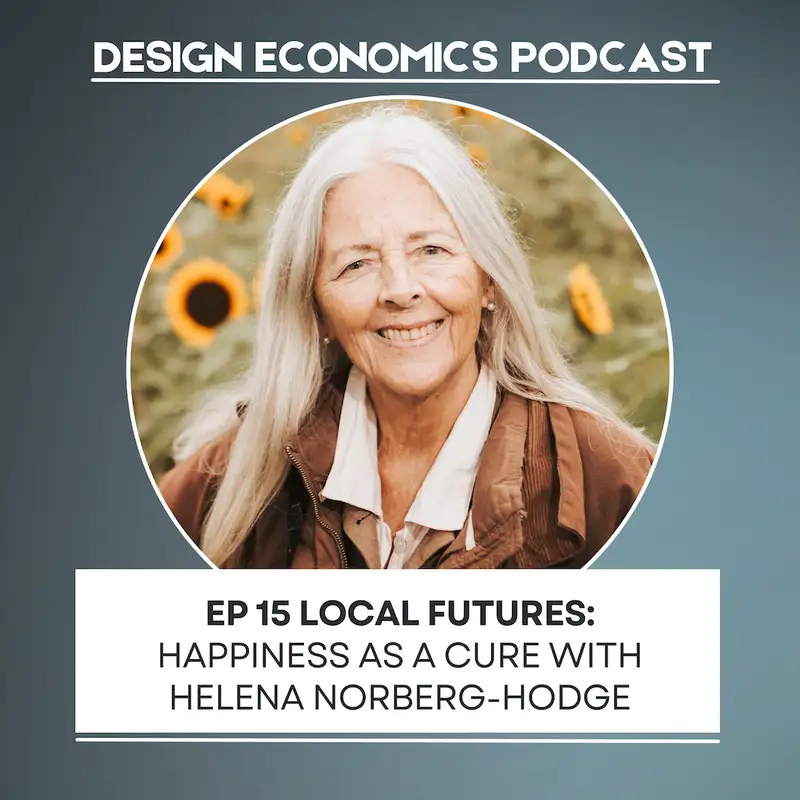
Helena Norberg-Hodge: Local Futures; Happiness as a Cure
I came to have a sort of a a very different perspective on from most westerners because I end up in this other world where peep people are healthier, happier, and more alive than any people I had ever encountered. I'm speaking the language fluently at a point when people are so deeply self respecting that the self is not an issue. You don't need to prove that you're important. You don't need to prove that you're clever. You don't need to be above other people because you're so relaxed about who you are.
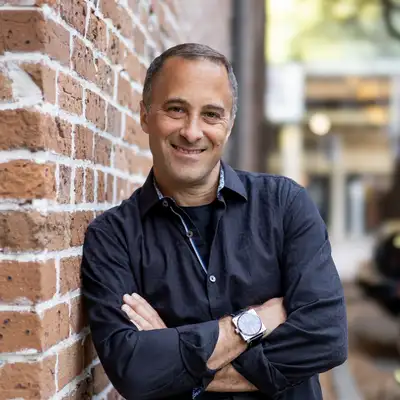
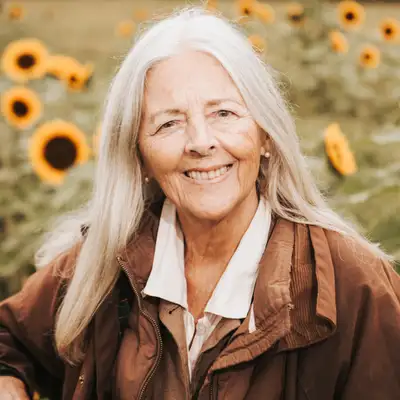
Vinny Tafuro:Hello, and welcome to episode 15 of the Design Economics Podcast, where we explore how design thinking driven by data is revolutionizing economics for the twenty first century. My name is Vinny Tafuro, a futurist, economist, and your host for this episode. My guest today is Helena NorbergHodge, founder of Local Futures and a pioneer of the New Economy Movement. For over fifty years, Helena has worked at the intersection of ecology, culture, economics, beginning with her firsthand experience in Ladakh a Himalayan region sealed from the global economy until the mid 1970s. She is the author of Ancient Futures, the producer of the award winning documentary The Economics of Happiness, and the convener of World Localization Day.
Vinny Tafuro:Our conversation explores what a functioning sustainable economy looks like, how deliberate policy choices dismantle it, and why localization is a structural solution, not a nostalgic one. Before we begin, if you find value in these conversations, please consider supporting the Design Economics Podcast through our Patreon at patreon.com/evolveeconomics. And with that, I hope you enjoy this conversation with Helena NorbergHodge.
Helena Norberg-Hodge:Very happy to be here. Thanks for having me.
Vinny Tafuro:So I want to start a little bit about you've been working in this field for quite some time and want to start with like a little bit of how you got into this work, your experience, especially in Little Tibet in the 70s and kind of give me kind of some background of what your background was, how you got there and kind of the work you've done then.
Helena Norberg-Hodge:My background was I was very globalized from birth, grew up in Sweden, but had family in England and Germany. I ended up very interested in understanding different cultures and learning different languages to do that. So I was interested in psychology and in social change and all that but I wasn't an activist until I was living in Paris working as a linguist and I was asked to go out to this unknown part of the world called Ladakh which is actually Little Tibet. It's a part of Tibet that belongs to India and this part of the world had been sealed off in the whole modern era. So you know the Beatles and the entire consumer culture hadn't arrived but also because they were up at 12,000 feet, sold in for eight months of the year, and it was a dispersed population in a desert, about 100 villages.
Helena Norberg-Hodge:And so they hadn't been interesting to the colonizing British either. So I get to arrive in a culture that was not affected by what is a global economic system that started growing out of Europe and the sort of started already in the fourteen hundreds with traders including Christopher Columbus and so on traveling around the world trying to bring resources to Europe And that system I came to have a sort of a very different perspective on from most westerners because I end up in this other world where people are healthier, happier and more alive than any people I had ever encountered. I'm speaking the language fluently at a point when people are so deeply self respecting that the self is not an issue. You don't need to prove that you're important. You don't need to prove that you're clever.
Helena Norberg-Hodge:You don't need to be above other people because you're so relaxed about who you are. And I see how these deeply self respecting, very contented people become insecure, greedy, even violent as a consequence of the modern global economy coming into their world, destroying the local economy, destroying farmers, which by the way this global system is continuing to do around the world at an increasing rate, pulling people into cities that are completely unsustainable where everybody consumes more resources per capita. So anyway, I got to see the craziness of a global economic system that both destroys the foundations of a healthier ecological economy and that destroys individual self esteem, cultural self respect and basically breaks down the social fabric. So I became a passionate critic of the dominant system and an advocate for what I call localization starting already in the mid seventies.
Vinny Tafuro:So you and I were introduced through Riane Eisler, and it's interesting. I was introduced to her through my Futures Foresight program a few years back. And her childhood, this idea of partnership societies versus dominant societies in kind of preliterate history, whereas what you got the opportunity was to see this in real time just fifty Yeah. Years And I find that fascinating to me. Know from, you know, kind of from a pop culture standpoint, you know, I'm I'm Gen X and there was a movie called The Gods Must Be Crazy.
Helena Norberg-Hodge:Yes. Don't know if you heard it. Saw it.
Vinny Tafuro:And it was this idea that a Coke bottle dropped from from the sky, and it was like it it caused all of this havoc. So it's interesting now to kinda see that we're starting getting examples of that, but you kind of really lived through it before anybody had experienced that. And I think what that really helps with is like our first tenet in design economics is understanding that paradigms change and that they change due to designed systems, whether intentional or unintentional. And so I was wondering if you could maybe get into a little bit of, like, how does hap what is happiness, you know, in the economics of happiness? What does that have to do with designing economies?
Vinny Tafuro:And what did that really what did that experience with the Ladakh help kind of show how that happiness and economics really work together?
Helena Norberg-Hodge:Well, happiness and economics can work together.
Vinny Tafuro:Can.
Helena Norberg-Hodge:But we basically have allowed a system to grow that always from the outset favored global traders. And in the beginning that meant essentially, you know, the slave trade, it meant enclosures, forcing people off the land because the enemy of this global system is more self reliant economies. That's the absolute enemy. And that, you know, those men who started this whole enterprise were very obviously racist, misogynist and anti nature. And what we do need to look at carefully is how science also came in as a way of conquering the world and that the mechanistic foundations of science were questioned by many, many wise scientists, including of course Einstein but also Rachel Carson later on in the 60s saying science is far too reductionist.
Helena Norberg-Hodge:We think we can create you know some poisons for these insects we don't like but actually we're poisoning ourselves. So there was a demand for more holistic science. But so when we look at the foundations of this system it started in a horrific, very exploited, a very destructive way. What we haven't realized is that structurally that domination, that destruction of local economies has continued and that science has been allowed to continue to grow more and more reductionist. What's been funded has been primarily science for profit.
Helena Norberg-Hodge:So we do need to take a big step back, look at the big picture and then realize that an economic system that rips people out of their land based ecologies and their land based economies. And by doing that breaks down more collaborative, truly collaborative relationships. There were also it's also better balance between male and female but also they were intergenerational. In our entire evolution pre the exploitative expansionist civilizations, you know, that could include you know, the Roman empire, it includes Genghis Khan, it includes the Aztec expansionist civilization that expand and conquer other cultures and rob them of their resources. That is something we should all be questioning.
Helena Norberg-Hodge:And the biggest and the worst of all of those was what grew out of the West, but it is no longer a Western enterprise. It's no longer Western white men who are misogynist and racist and anti nature. This system has taken on a life of its own. It's now completely global. It includes men and women of every race, and we need to wake up to the structures that fundamentally cannot support happiness.
Helena Norberg-Hodge:Because we're talking about structures that cannot tolerate diversity, it means they can't tolerate life. It's a frightening, frightening, clear destruction of diversity. That means the extinction of species, extinction of cultures. And very fundamentally, even within Europe, the European Union, which was driven by big business that didn't want some people driving on the left, others on the right. They couldn't tolerate all these different languages and all this small scale.
Helena Norberg-Hodge:They wanted one economic union where they could operate across the board. You know, one currency, none of this So when we step back it becomes very easy to see what is causing most of our crisis today. What is responsible for increased divisiveness, for a very massive increase in depression. And again, I had this bird's eye view of that in Ladakh or Little Tibet where suicide was something that might have happened in a generation, one older person. After this modern economy comes in, pushes people into the city, creates a scarcity of jobs, intense competition and deep self rejection, cultural, racial self rejection.
Helena Norberg-Hodge:Out of that comes in a relatively short period a situation where young people are committing suicide. Now it's more than one a month. And this is from, you know, one in a generation an old person. So it's very black and white when you look at it that way. And I wanna say I can sound very black and white, but I'm proposing a path forward that would be incremental.
Helena Norberg-Hodge:That doesn't mean tearing down every last global bank and corporation. It doesn't mean necessarily tearing down anything. What it means basically in short, quick language, global banks and businesses need to be regulated and they need to pay taxes. Structurally how do we do that? Do we create global government?
Helena Norberg-Hodge:For me an insanity having already seen the problems of the European Union not able to respond to the different languages and the different needs. We do not want to centralize government further. We want to decentralize business which would be so much easier than continuing on a path that literally doesn't tolerate life. And that's extinguishing diversity of every kind while promoting a market multiculturalism, a market now also generated language about everything from indigenous culture, regenerative agriculture. It all sounds good, but we need to look at where the money is, where it's going, and how we can change it.
Helena Norberg-Hodge:So yeah, go ahead. I should let you No,
Vinny Tafuro:that covers a lot of ground. One of the things I wanna pick up on from the beginning of that was this idea of questioning science. And I have a colleague, Douglas Rushkoff.
Helena Norberg-Hodge:Yeah, I
Vinny Tafuro:know him. I'm assuming you're familiar with him. But he's talked very much about, you know, Sir Francis Bacon is held up in history as this like the founder of modern science. But when you look at it, it was very misogynistic. It was nature had to be subdued and controlled and pulled apart.
Vinny Tafuro:And I really think some of the fundamental problems that we have today in science in being able to relate to the world And I just had a conversation, my January guest was John Feldman, the documentarian.
Helena Norberg-Hodge:Oh yeah.
Vinny Tafuro:And we talked about paradigm change in the sciences and how that impacted economics because economics modern economics believe selfishness is okay because science at one point said selfishness was a genetic property. So now all of a sudden capitalism can do whatever it wants because, well, that's what nature does. And I don't think most people do not understand how far back we have to go. It's not US dominionism domination after World War II. It's not the scientific revolution.
Vinny Tafuro:It really is a multi thousand year process when we went from really living in sync to kind of breaking things apart. And so I love that part where you started in this.
Helena Norberg-Hodge:Yeah, but you know, I think it helps us to try to go back thousands of years. I think it does help in terms of my work to value Maria Gimbutas and her, you know, essentially discovery that there were goddess based peaceful cultures in Europe. She was laughed at and now posthumously archeologists have apologized. So to me that builds on what I'm saying but I think we can get so much more clarity if we look at this very clear development from the expansion of the West, you know raping other cultures bringing in resources subjugating them with the help also of Christian missionaries which you know spread the message because they believed it that their god was the only god and so they, you know, that total disrespect for other cultures structurally has changed now dramatically, you know. So the values from the West are now almost a direct opposite of what they were back in the fourteen hundreds.
Helena Norberg-Hodge:But we have to understand that we can get a lot of clarity and a lot of written material to really substantiate this rejection of this Western global system that started from Europe. We can apparently I learned recently that the first book of the printing press was about the need to burn the witches. So this destruction of more feminine earth based leadership which I see as fundamental to the way forward and fundamental to understanding why most indigenous cultures were able to sustain themselves for tens of thousands of years. Yeah, so I would suggest that we go back to to this, Dickensian London and what that meant. And the myth that progress through science and technology kept improving our lives.
Helena Norberg-Hodge:That's because we started with Ducancy in London instead of more relatively peaceful villages before enclosure.
Vinny Tafuro:Going back that far is not necessarily helpful, but it's understanding the context. If you like, the understanding the myths and metaphors of what is informing it, not as far as where the structures were.
Helena Norberg-Hodge:Yeah.
Vinny Tafuro:And it's interesting, I did not know that about the first book off the printing press. Of course, we always A lot of it goes back to Martin Luther and what was caused there by that book publishing. So that's not for this conversation, but I'm going have to pull on that offline somewhere. Guess what maybe to move into from this is what are some of the structural things? So like we talk about, we don't want to tear down every global bank today.
Vinny Tafuro:There's a stepping process and that I think is How this creativity side of do we enable that?
Helena Norberg-Hodge:Well, I started a campaign in Sweden now, which I really hope is gonna take off because my small organization, we've ended up working all over the world and you know with 40 different language groups and so on. But Sweden is my native country and we've got a bit of the ball rolling there. And basically we're wanting to build up a people's movement that demands first of all that governments immediately get out of ISDS and ISDS are clauses in trade treaties. Stand as stands for investor state dispute settlements. And in these clauses, our governments are signing in black and white two global corporations and banks that we will not do anything that threatens our profit.
Helena Norberg-Hodge:And so that means that, like, when Germany decided to phase out nuclear power after Fukushima, a Swedish nuclear power company sues them for billions. Right now, in Australia, as it happens, Australian uranium mining company is suing Greenland for more than their annual GDP because they don't want to do uranium mining anymore. And so these giants are being supported by our governments because our governments believe from day one of the modern economy that production for export is gonna help enrich our economy. Trade, trade, trade, free trade, free trade. And they don't understand that they I know that many of these politicians believe that what they're doing is supporting their national industries.
Helena Norberg-Hodge:So Sweden wants to support Volvo and Saab and therefore they bring in a law that trade treaties have to be negotiated in secrecy. Now most of these trade treaties are negotiated in secrecy anyway. And very often when they're ratified, it will be Christmas Eve at 08:00 or something. Know, So not exactly secret but more or less. And all the time what surrounds them is this aura that of course we've gotta be in favor of free trade of global.
Helena Norberg-Hodge:Essentially the what was brought in as globalization in the late eighties, brought in by big business pushing for more and more rapid deregulation. So what, you know, what that meant is that governments were bending over backwards to facilitate the movement of goods across the world. So they were investing in ever bigger highways, ever straighter for bigger and bigger lorries, bigger ports, bigger airports, essentially laying out a red carpet for McDonald's, for Arthur Daniel Midlands. And the red carpet for banks was that there was gonna be no restriction on currency flows. You can do as you like and more and more that the whole fractional reserve system allow essentially a fraudulent creation of wealth.
Helena Norberg-Hodge:Know, it's and that's what also I'm hoping people will understand is that what we've ended up doing is supporting fewer and fewer players, fewer and fewer giants at the expense even of millionaires. And we can sort of see it. We're seeing the billionaires on the way to becoming trillionaires. We're seeing a world now where even having a million isn't at all what we used to think.
Vinny Tafuro:Not even close.
Helena Norberg-Hodge:So it's now a ridiculous rat race where everybody's running faster and faster. So I just passionately believe that the way forward first of all is education campaigns that force people to step back and look at this. And in Sweden, we're trying to get people to sign on to a petition starting with ISDS to say, we want our government out of this immediately. But as part of that process, they need to understand that it's not just the clauses where governments are signing in black and white that they're willing to be sued if they do anything wrong. But we need to understand that the trade agenda, the support of global traders who don't pay tax and who have no regulations.
Helena Norberg-Hodge:And in the meanwhile, everybody else within the national arena is subject to taxation heavier and heavier and heavier and more clumsy regulations. Many of them brought in with lobbying by big business because they know that that's a way to destroy the smaller players. The smaller players can't afford to build a handicap ramp, you know, to every last shop. They can't afford to put tiles in their ceiling in the name of hygiene. And those kinds of things are brought in.
Helena Norberg-Hodge:Yeah, anyway, so I think it's such a clear thing that we need to do, you know, to look at regulations, what our governments are regulating and what they're deregulating, what they're taxing and how they're spending that money that we should have a voice in. And we need to understand that both left and right have been promoting the same blind support for the global players and they've ended up impoverishing their own countries. They've ended up impoverishing themselves so that corporations are now the boss. Governments are having to go with this plea for PPP, public private partnership. We can't afford anymore to lay out the red carpet for you.
Helena Norberg-Hodge:We can't afford to pay for an even bigger port. You need to help. And now when you want an even bigger, faster superhighway to connect those megalopolis sprawls and those high rise cities where you want everybody concentrated, again you're gonna have to help with some of the money. So starting a path where governments pressured by a relatively small minority but of ecologically and economically literate people who do now understand enough of the basic principles to demand this shift, for governments to implement a shift would be so much easier than continuing the same path because the same path which now means supporting AI to take over the entire economic trajectory to be running the banks, to be running the media, to be running the farming, It's a huge and speedy leap in the same direction that has created multiple crises.
Vinny Tafuro:We're on the hockey stick. We're on that hockey stick of growth where it's like, oh, we have to exponentially grow. You had mentioned the IS It's the ISDS, correct? Yeah. And what's interesting is usually you associate the state with having some immunity in liability for things.
Vinny Tafuro:Whereas here they're writing a blank, they're signing a blank check for the corporations to have immunity. And I remember probably about thirteen years ago was the first time in The US that I think some of the oil companies, they didn't acknowledge that they were at fault for climate change. But in shareholder meetings, they acknowledged that policy change regarding the drilling of oil and the production of fuels might impact their profitability. And it seems like with some of these deals, especially with other countries that are that was US based countries in US markets. Whereas in other markets, seems like this ISDS has allowed them to circumvent that where, Oh, once we've signed a deal with this smaller country that needs quote unquote export money that they sign away this liability that really the state and the people of that country should have.
Helena Norberg-Hodge:Yeah. Well, you know, I think you should have on your podcast someone named Matt Kennard, who was a journalist with the Financial Times I think was given the opportunity to study ISDS around the world, spent two years with an American colleague looking at what this means. And it turns out that it was first brought in by a German thinking that they were gonna keep these unruly third world governments you know, honest and delivering their promises. But then it was swinging back on them. And now there is an attempt in the European Union to modify it a bit.
Helena Norberg-Hodge:But basically what I'm saying when you look at the structures, the fundamental structure is our government is using our taxes to enrich global entities that cannot be ruled unless we now take a step to say every business needs to come back home. So General Motors, are you American or not? Toyota, are you Japanese? Volvo, are you Swedish? And having businesses place based or localized.
Helena Norberg-Hodge:That's what I'm meaning by localization. I'm not talking about a way of life where everybody has to be locked into only living in one place forever and in some small village, you know, fed by local farmers. What I'm talking about is that if we want to have any hope of having any sort of first of all, any kind of democracy where we have a voice over our future and we realize that every price in the marketplace is a political choice today. Today's market is artificially lowering the price of energy and raw materials and increasing the price of labor. Shifting that to support more labor intensive practices which of course the opposite of what AI is gonna do could bring with it huge rewards in farming, in all the things we really need and care about.
Helena Norberg-Hodge:The food, the clothing, the shelter and love and care in the all the health or illness industry whatever you want to call it. Mental health, physical health, real care for our children, education, you know for the elderly. All of these activities that are the most important to all humans. Having more people in the equation would vastly improve the quality. People may not believe that immediately but they really need to think about it.
Helena Norberg-Hodge:They need to think about what it feels like to sit on the phone for an hour desperately trying to talk to a human. And you know whether you're trying to you know buy an airline ticket or talk to some government agency or even a hospital, You can be on the phone for hours praying And to get a human then what you get finally is a robotized human being who cannot respond to your unique situation. Again, it's the complete inability to deal with the diversity which means in everybody's life, you know, situation is unique and different. So what we need is smaller scale, more responsive, more job rich businesses and activities.
Vinny Tafuro:That idea of expanding the amount of people we use because it's so much right now about minimizing people.
Helena Norberg-Hodge:Yes.
Vinny Tafuro:I remember, you know, one of the things that first led me into how does economics need to change was when I was writing my second book on, you know, it was I went to a labor economist and asked him, I was like, what if we expand the definition of labor to include caretaking? And because I didn't know any better at the time, you know, just naive question. And his answer was, that's not my field of study. And that was the first time I really was like, wait, expanding the definition of labor is not your field of study, and you're comfortable telling me that as a PhD educated economist. I was like, wow.
Vinny Tafuro:And like I said, that kind of set me on a journey. So you're part of the local field. We talked about the ISDS. What other kind of systems are out there right now that are being used in different places? Because I think one of the challenges with localization is how do we know the best practices that are happening in other cities, whatever it is.
Vinny Tafuro:How do we do that? What do you see out there that's really a glimmer of good
Helena Norberg-Hodge:Well, first of all, I really want us to start with the basics, you know. So, you know I was saying what most people need and care about so how we rear our food and how we rear our children. These activities were relegated to shadow work, undervalued, undermined and that's a disaster for human beings and for the health of the planet. So the most important area to look at is the interface between this man made system and the natural world. And that, you know, so let's start with farming, but with farming, I really want to include all primary production.
Helena Norberg-Hodge:So forestry, fishery, those activities have been now for generations, they have been pushed to produce in larger and larger scale, bigger and bigger monocultures. Fishery has gone from someone, you know, with a line that would keep a fish that's big enough and allow the small fish to continue to grow. It's translated into trawling nets that can have 17 jumbo jets in one net trawling and essentially taking all of their life out of the seabed. It's a disaster. In farming it's everywhere been encouraging.
Helena Norberg-Hodge:Bigger and bigger monocultures. You get bigger or you get out. And it's involved packages from government to subsidize bigger and bigger machinery seeds that can't regenerate. So, you know, the corporations can sell seeds every year. You know, even ag subsidies that look like they should be beneficial were actually reducing the price of grain and raw material to giant corporations who were then processing and then selling to the general public.
Helena Norberg-Hodge:So keeping the low price of monocultural wheat and corn for these giants actually has worked against us horribly in terms of our health. So we've got a global food economy where governments around subsidizing bigger and bigger monocultures for export. Then they are importing the same product. It couldn't be more insane, more wasteful, and it's so frightening to have this going on and not a peep about it in the dominant climate narrative. Nothing about what industry is up to.
Helena Norberg-Hodge:Instead, the finger is pointed at the average citizen, the average consumer, and they are being told that they're too greedy, they're too selfish, they just want to keep buying more and more stuff and they don't care about the planet. In the meanwhile the truth is that in the middle classes and even higher people are having to run faster and faster and faster just to stay in place. And they even you know they're not staying in place, the middle class is falling down very rapidly throughout the well it's really I was going to say throughout the industrial as well but that includes people who were pulled into Beijing and Mumbai in these newly emerging economies where very quickly the actual life in those cities is so impoverished, so hideous, people want to get out. Which is good news that there is an emerging awareness that they prefer to live closer to the land. They prefer to have a little more time.
Helena Norberg-Hodge:They prefer to have more community. So anyway, we really need to understand the problem before the solution becomes so clear. If subsidies were shifted from today till tomorrow to support production for local needs, meaning you know local, regional, national needs, not for global trade. So if countries were deciding to feed themselves first and then export where they had surplus, we would have a completely different picture. It's really important though that we look at the truth that highly diversified small farms can produce vastly more per unit of land and water than any of these industrial monocultures.
Helena Norberg-Hodge:They've never They actually been more only were efficient because they removed people from the land and pushed them into the city and you know that was marketed as this wonderful progress. And of course it was when if you had been a migrant worker or a slave, of course it was progress to leave that horrible work and go into the city. It certainly looked like it would be progress. But again, we need to contrast the truth which is existing out there. There is a local food movement worldwide which we have helped to start in many countries and particularly with new farmers markets, CSAs and so And it's demonstrating not only that you can produce vastly more food on less land.
Helena Norberg-Hodge:So it's demonstrating that and it's demonstrating that the work becomes quite enjoyable. So enjoyable that many CEOs from Silicon Valley are choosing to go out and farm. When you can
Vinny Tafuro:I was thinking that as you were talking about this, like how many people like that is the epitome when they've reached an exit from a tech company, they buy land and all of a sudden they're organic farmers? Yeah. And I look at the efficiency, the other side of it too, is that efficiency of monoculture also becomes brittle. So there's no resiliency either. And I think that's something that's really missed right now in the equation for many people.
Vinny Tafuro:I don't know if COVID, kind of the breakdown of globalization a little bit that's going on, that people are starting to realize that resiliency is more important than efficiency for efficiency's sake.
Helena Norberg-Hodge:Yeah, but also let's remember how is efficiency being defined? So I want to blast that idea out of the water as well because, you know what if we're saying that it's efficient because as you say it's not just not resilient but it requires chemicals because it's so unnatural. And then with the chemicals and the artificial fertilizers which of course now we're seeing what it means to depend on imports for that. But it's not just the imports. Did you know that there are very clear statistics now that male infertility is increasing dramatically because of chemicals including the pesticide.
Helena Norberg-Hodge:They're now linking Parkinson's which is going up by twenty percent a year in The UK to pesticides. So if we were able to have honest science looking at the cost of this system, we wouldn't hesitate for a minute to change it because it is costing us our health. Now let's add to that, that in the global food industry you have businesses that target your children with highly processed, you know, a toxic sugary food that is now contributing to diabetes, obesity and heart disease. So younger people are now dying earlier than the parent generation. And this is being pushed on people worldwide.
Helena Norberg-Hodge:So it's really criminally horrible. And what I've found is that because everybody is so specialized, come back to that economist who says, well, it's not my domain talking about labor. The specialization, even within particular disciplines is so great that this for me is the main reason why people can have a clear conscience, be quite decent people and still be playing a major role in promoting the system. Don't have to step back and look at the multiple cause. They don't recognize the links between what they're doing and the ill health even of their own children.
Helena Norberg-Hodge:So it's so for me again the cure to all of this is the big picture. So I'm so glad you've got this podcast. I just hope we can get more podcasts like this but also we need to try to get into the mainstream media. And that's what we'll be trying to do in Sweden, you know, working with a famous actor there and also with a with an entrepreneur named Thomas Bjorkman. Have you heard of him?
Vinny Tafuro:I have not.
Helena Norberg-Hodge:He started something called the inner development goals.
Vinny Tafuro:Okay.
Helena Norberg-Hodge:And he's a very thoughtful entrepreneur who was in banking and so on. He's also written a book I recommend called The Myth of the Market. And he
Vinny Tafuro:understands I've seen that book title. I'm not I have not read it, but I'm familiar with the book title.
Helena Norberg-Hodge:Yeah. No. We really we need to try to get these things out, you know, as much as we can. Because really I would argue that no one would stand back and defend a continued globalizing path. But AI which is going to be a huge leap continue is being marketed as something else.
Helena Norberg-Hodge:It's being marketed as a U-turn when it absolutely cannot be. No doubt in a limited way AI could be helpful. It's being helpful for many people right now. But as a tool in this system, that's what we have to understand. That's what we need to prevent.
Helena Norberg-Hodge:It doesn't mean that we have to block, you know, all forms of AI, but we've got to get around our head that we are being ruled by a corporate empire that has no name where, you know, it's truly an invisible hand of the economy running our governments, our laws, our worldview, our science, and that's got to stop. We can't have blind for profit corporations running the world.
Vinny Tafuro:No. It's interesting too, like going back to the ability for any individual to step back and say, well, it's not my fault, is like it's death by a thousand scratches or a thousand cuts. And so no one person had to take ownership. Like I'm type one diabetic, adult onset. I'm not genetically predisposed.
Vinny Tafuro:I don't know how I got it, but there's probably a 100 different variables that contributed it to it. So no one variable is to blame. And I think this leads to a good part to like this 10 to three of how do we raise awareness? How do we bring visibility to people? Because I think so many people, when you talk about economics, they glaze over.
Vinny Tafuro:When you talk about there's so much data coming in, so much information, which in one say, I think there's a bright side. I think social media has done such a terrible job for dividing us, but I also am starting to see signs of, like, education coming through it. You have to be very intentional right now. Yeah. But these systems could be redesigned to help really do that.
Vinny Tafuro:So I guess what are the things you're involved in that that are really like, how do we bring this literacy to the ecology, to economics for people?
Helena Norberg-Hodge:Well, I mean, I think, you know, we're doing we've been doing workshops. I'm gonna do an online course also on this, which will come out soon, a sort of masterclass, not an official one, but on this whole argumentation of why we need to shift from global to local. Local meaning that every business needs to adhere to democratically determined rules. And you see with that trajectory, with business actually having to belong to a place and adhere to rules and pay taxes, again it doesn't mean some kind of prison, it doesn't mean that businesses couldn't collaborate across countries, but there would be the democratic process. Now we also as you know we're all losing faith in the democratic process but we need to remember that the reason we can't have any faith in it is that already literally for generations we haven't had democracy.
Helena Norberg-Hodge:We thought we did. But if we look at the role of these giants, the giant entrepreneurs and the businesses and their role in shaping medicine, in bringing in fossil fuels, in arguing that fossil fuels were gonna create this incredible egalitarian world. All of that was bogus. It helped to enrich. So even countries like Sweden fell for this after the second world war.
Helena Norberg-Hodge:You know, the idea that mass produced furniture was egalitarian. That, you know, farming again, pushing farmers off the land and replacing them with lots of oil and chemicals and machinery that was somehow gonna produce more and spread wealth more. If we look at the truth, the concentration of wealth and the favoring of the global has been going on for a long time. So we haven't had democracy. What we can see is that in the very local that we are helping to create.
Helena Norberg-Hodge:So we're trying to encourage very importantly this discussion of the need for policy change that we're also encouraging communities to come together and people in community to come together to create some of the lifeboats of more localized economy. So particularly say around local food, it's community members that have helped to set up farmers markets, that have helped to create a completely different structure where the consumers and the farmers are linked, the farmers in the supermarket get 10% of what we pay in the farmers market, they get a 100%. Now also when you have more of those markets and you have more opportunity, the price of really healthy local food goes down. So I'm really happy to say that in America, someone named Orin Hesteman who used to be with the Kellogg Foundation, he's helped to bring in a system that is so fabulous where people on food stamps get double the value if they shop at the farmers market instead of the supermarket. So this is a brilliant essentially a policy tool at the local and regional level that has been implemented in a few places.
Helena Norberg-Hodge:We need to bring that up so that it could be across the whole country because we want to support our own farmers and we want them to be able to produce food with fewer chemicals. And we don't want them marketing sugar to our babies, you know, virtually before they, you know, can speak.
Vinny Tafuro:The the sugar part really gets in because I think, you know, at one point, I was in that phase of life where everybody's having children. And, you know, we have this tradition where you've got at one years old, you give the kid a smash cake where they play with it. It's like, as a diabetic and somebody who tries to avoid sugar and also can fall in the pitfalls of getting hooked on it for at times, I'm like, it's like if we put a drug in front of children and here's some cocaine, let me play in it. That's what sugar is. It sets off the same receptors.
Vinny Tafuro:And it just seems so cruel because these decisions to do this are made in boardrooms, in very sterile places with very sterile spreadsheets. And I think one of the things I see lacking so deeply in economics is it doesn't understand the influence of power in the system. It's like we have this idea of economic man and economic man makes all these rash And we're not rational creatures. We're just not. We're very influenced by so many other things.
Helena Norberg-Hodge:Yeah. Although, I mean, I would also argue that in terms of what I'm saying, when you step back and look at this system from that more distant place, of course it can all sound very simplistic what I'm saying. But actually when you do look at that system honestly and from a big picture point of view, it becomes very clear and it's very commonsensical and if you like rational what I'm saying. And that is that anywhere in the world I would go and say we are trying to make films, we're trying to get a message out where we're saying we don't think it's a good idea for governments to be subsidizing these giant corporations who don't pay tax and remove all rules from them. We want to shift that so that they actually support more local smaller businesses.
Helena Norberg-Hodge:We wanna support farmers, your local businesses to also provide more employment and more meaningful work. I think everywhere in the world people would agree with that. It really makes a lot of sense. You know it would what's operating against it is that a lot of people shy away from looking at the big picture. One of those reasons is because they really have been entrained to believe that that is somehow an evolutionary process.
Helena Norberg-Hodge:There's a natural thing that everybody wants to get bigger and bigger. No, it's not natural. No human being wants to grow from six foot to seven foot to eight foot. No tree keeps growing and growing and growing. That is not natural and it's not evolutionary.
Helena Norberg-Hodge:So it's actually because we got off track from evolution. When you step back and look at it, you realize that in our evolution we were in a deep dialogue with the rest of life. This is how racial and cultural differences emerge. And the cultural differences were enormous. We can't even begin to count them because we've lost so many of the languages and so on.
Helena Norberg-Hodge:But the diversity was because we were interacting with life where we lived. We felt deeply embedded, connected to it. And we were. We were dependent on that water, on that tree. We were dependent on those insects and we knew it.
Helena Norberg-Hodge:And so there was a responsibility that came from that. The beautiful thing is that in the newly emerging local movements whether it's in permaculture, in eco villages, in this local food movement, in also in beautiful caring relationships that are emerging when people try consciously to bring older people together with children. One of my favorites, you know recently was to hear that in, I think it was in Amsterdam it's so hard to get a place to live. Young people were being offered a place in an old people's home if they spent a certain amount of time with the old people. And the young people enjoyed it so much they were actually spending more time than they needed.
Helena Norberg-Hodge:Brings tears to my eyes. Just love I those feel so privileged in being part of a movement that is about bringing people together and you know that community work and the work with the land that in two, three, sometimes four years barren land is being turned into a vibrant, productive land and the people who are working on it are loving the work, loving the community. That is so amazing to see that happening in a world where all the pressures from the global economy are pushing us in the opposite direction.
Vinny Tafuro:Yeah, I love that. I've lived this myself in times when I've had challenges with the work that I'm doing. Eight years ago, I spent a good part of the year building furniture on the weekends. And it was such a physical outlet to really balance the struggles of kind of launching, because that was the year we launched the institute. And it doesn't go as quick as you think it's going to go.
Vinny Tafuro:So to be able to take that time and just spend three hours sanding wood was a therapy in and of itself. Then meeting people locally at cafes, coffee shop, Cava bars, etcetera, like it's just, it changes how you engage with your local community.
Helena Norberg-Hodge:Absolutely. And you know, the thing is if we could understand that everybody in this world could have handmade furniture, handmade houses, handmade clothing, pottery, If we would just get out of this prison of this system of mass production using lots of oil and we're not going to be able to create energy to I mean it's mad what they're trying to do. But we've been so brainwashed that people are now told they shouldn't use wood. They should use plastic instead. You know, we're being steered by corporate influences in an eco direction, which is actually very destructive.
Helena Norberg-Hodge:But you know the amount of you know the joy that people can get from doing these handmade things, but you see in the dominant economy it becomes far too expensive for the majority because we have this artificial subsidy for the mass produced. You know, everything that uses more oil and more energy is artificially cheap. So yeah. But it's yeah. I think having lived in a world where I was literally for half the year living in that world where things were handmade, where I was using my body more, I was walking regularly, I wasn't getting into any kind of car or anything.
Helena Norberg-Hodge:And everything in a way was more time consuming. I often give the example of I actually helped to write down the ancient language for the first time was that particular dialect of Tibetan which was quite different hadn't been written down before. And so I was working on a dictionary of Ladakhie or spoken Ladakhie. I was working with this monk who lived I lived on the outskirts of this little town up the hill and he lived on the other side high up in a little monastery. And so we would plan to meet to work on this dictionary.
Helena Norberg-Hodge:And I would sometimes go walking all the way through the town all the way up the mountain to the monastery and he might not be there because we didn't have telephone. Then at one point, a few weeks later, I'm sitting in New York and trying to reach people. I'm trying to get this message out and there's call waiting. So as I'm speaking, the phone goes beep beep beep. So I know there's someone else trying to call me.
Helena Norberg-Hodge:And I just realized afterwards, oh my god. You know, in the name of efficiency, I'm robbed of what I was getting in that other way. As I was walking through that town, I was saying hello to about 10 people. I was walking through fresh clear air. I was using my body.
Helena Norberg-Hodge:It was actually so much better. So much better. But you know, that was in a world where the walking distance, the spoken word, all of it functioned because it was of a scale where everything I needed could be met that way. So it's very hard for people to imagine that, you know, in the modern world. But what we need to use these technologies for now is to get the message out about ultimately being less dependent on them.
Helena Norberg-Hodge:You know? So we should distinguish between using the technologies like the one we're using now to get this message out that we need to come back home to a more place based, nature based, community based way of living.
Vinny Tafuro:So how do we yeah. It's it's how do we use these tools to slow down life and make life more local by learning from people that may be on the other side of the planet.
Helena Norberg-Hodge:Exactly.
Vinny Tafuro:And I want to end and kind of ask a little bit of how people can connect with you. Like I said, I appreciate you so much taking the time to do this. The work you've been doing over decades is just impressive and just such a foundation for the work to come. I share the optimism that we're going to turn and start waking people up here. So how can people engage with your work?
Vinny Tafuro:Any websites or things that they wanna share?
Helena Norberg-Hodge:Yeah, well, please come to our website. It's localfutures.org. And we're a nonprofit and we've been doing this work out of just the passion that I gained from having this unusual experience in Ladakh. So we've been doing this for fifty years and I hope you can be patient with our website because it's got so much stuff on it. It's not elegant and trendy looking but we have a wealth of material from people from every continent.
Helena Norberg-Hodge:We have voices. We organize conferences around the world called Economics of Happiness conferences for several decades. And so you have voices from all around the world and you have a perspective that is fairly rare because of the big picture. And of course because it's big picture there's so many different things there. So you might be more interested you know in setting up a local community initiative or you might be interested in the policy side of things.
Helena Norberg-Hodge:So just look at our website, write to us, join us on World Localization Day because with our partners on every continent, June 21, we celebrate this emerging movement which includes a lot of other movements. From our point of view, the permaculture movement, almost all the really healthy agricultural initiatives are part of this movement. They often don't know that because they don't realize that human scale diversified production is so key that all over the world there are initiatives and on June 21 sometimes people just organize a meal with some friends where they try to cook mainly from local food not being fundamentalist about it but becoming more aware about what's available and so And then they can link up through our website. We usually have a new film or a webinar going on as well that you can sign up to. We have yeah.
Helena Norberg-Hodge:Conference is also coming up but they're you know right now mainly in Brazil, in Nepal, in Vietnam. Yeah and a few we're working with a very wonderful group in at the University of Santa Cruz that's also linking up what are called Right Livelihood Award winners. So I won this. It started in Sweden and it's been called an alternative Nobel Prize I won the Ladakhie group I started in 1986. And so there are really special people from around the world who are connected to that.
Helena Norberg-Hodge:And they're also supporting our campaign in Sweden. So there's so many things that people haven't heard of that are really inspiring, meaningful work. Oh, one other I want to mention is Via Campesina, which is the biggest social movement in the world with about 200,000,000 small farmers. Wow. Listen to them.
Helena Norberg-Hodge:They've been warning about the trade treaties forever. They are lobbying to allow have governments allow them feed themselves and their own country first as a priority. So this what we're talking about goes way beyond left and right. Don't think that any of the current politicians are speaking the right language. None of them.
Helena Norberg-Hodge:Don't think that Trump is a localist. Absolutely the opposite. So, yeah. Hope you'll come to our website. Get our newsletter.
Helena Norberg-Hodge:Sign up to our newsletter. We put out a newsletter every few weeks. I really hope we can collaborate more with you Vinny and yeah.
Vinny Tafuro:I would love to. I'm going to look more into the World Localization Day. Had seen that when I was kind of reviewing, you know, preparing for this. Recently we had an episode with Tom Llewellyn, who's the executive director for Shareable. And we were talking about the importance and resiliency provided by tool libraries and different and libraries of things.
Vinny Tafuro:So this is definitely a conversation that our listeners and our audience will be really, really engaged with. And like I said, we'll we'll be sharing this as well. And I have all the links in the show notes as well.
Helena Norberg-Hodge:Good because I also should mention our films which we provide for free, The Economics of Happiness, Planet Local, Closer to Home and other materials that you can share. We also have a localization action guide which is available also for free on our website. And I do worry sometimes that people undervalue things that are free but on the other hand yeah, we just want to get it out as widely as possible. So I hope
Vinny Tafuro:it's Certainly a balance between Yeah, yeah. Yeah, we'll share those. Well, Helena, thank you so much for being here today. I appreciate this conversation and your time and look forward to collaborating further.
Helena Norberg-Hodge:Yeah, we'd love to. Thanks so much.
Vinny Tafuro:We hope you enjoyed this episode of the Design Economics Podcast. If you value these conversations, please consider supporting us through our Patreon at patreon.com/evolveeconomics. Your support helps us continue bringing these important discussions to a wider audience. Don't forget to subscribe to the Design Economics Podcast on your favorite platform. The Design Economics Podcast is produced by the Institute for Economic Evolution, a five zero one c three charitable organization whose vision is economic systems that cultivate rather than restrict our human potential.
Vinny Tafuro:And I'm your host, Vinny Tafuro. Thank you for listening.
Creators and Guests