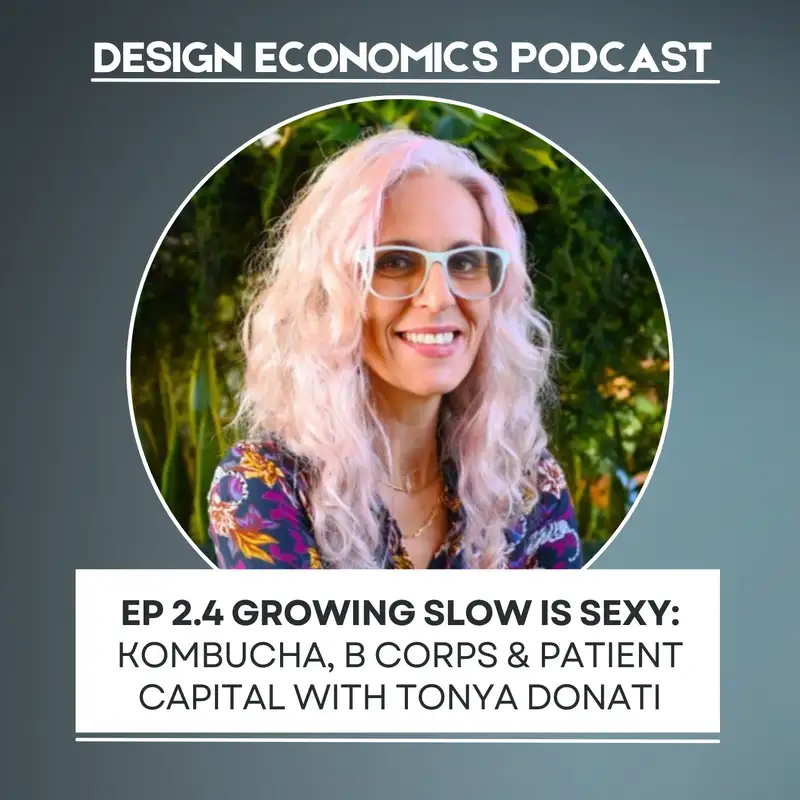
Tonya Donati: Growing Slow is Sexy: Kombucha, B Corps & Patient Capital
But what I will say about the b corp assessment that's great is that for many years before we had a b corp certification, we had that assessment, and we were going through it. It was giving us ideas about, oh, we could do that. Like, I hadn't really thought about paying our employees to do volunteer work. Like, that was a great idea. It just wasn't something that had come to me as like, we can't do a lot of grand things because we're a small business.
Tonya Donati:So, we can't give grand amounts of money and things, you know, we were very involved in the community. I was like, oh, that's a great idea. Idea. A lot of the things that are in the B Corp assessment, if people never actually get B Corp certified, it's a really wonderful tool for building out a better business.
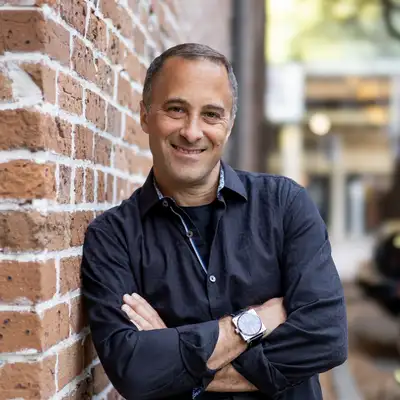
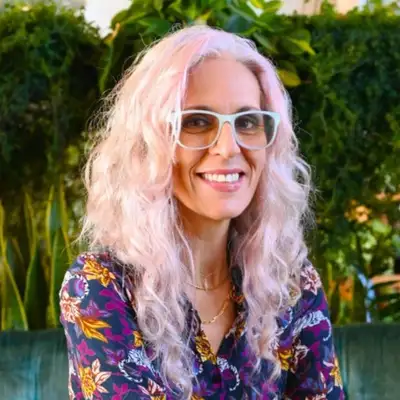
Vinny Tafuro:Hello, and welcome to season two episode four of the design economics podcast, where we explore how data driven system design is revolutionizing economics for the twenty first century. My name is Vinny Tafiro, a futurist, economist, and your host for this episode. My guest today is Tanya Donati, founder and CEO of Mother Kombucha, a certified b corporation based in Saint Petersburg, Florida. Tanya's journey from occupational therapist to beverage entrepreneur reflects a fundamental shift in how businesses can grow, rejecting the venture capital extraction model in favor of regional strength, profitability, and stakeholder capitalism. Our conversation today explores how growing slow through bootstrapped operations and b corp certification is making sound business fundamentals sexy again, and how patient capital and community anchoring create sustainable alternatives to late stage capitalism's hockey stick growth demands.
Vinny Tafuro:So with that, I hope you enjoy this conversation with Tanya Danati.
Tonya Donati:Yeah, thanks for having me. I'm looking forward to it.
Vinny Tafuro:So if you could start a little bit, you're a certified B Corp, a kombucha company. Can you tell us a little bit about how Mother Kombucha came to be and kind of the backstory there for this brand?
Tonya Donati:Yeah, sure. Prior to my founder story, I was an occupational therapist for about seventeen, eighteen years and focusing a lot on kind of integrated wellness and having a lot of clients and patients who were sort of struggling with wellness oftentimes as a result of a combination of the medical model, lifestyle choices, and a variety of things. And I was just trying to meet them where they were and help them find the maximum level of wellness where they were. And so, I was veering off the course of what a typical therapist would do so much to the point where I was like, is this really even the job that I'm supposed to be doing with these? I'm treating a need that I see and that's what I'm trying to do.
Tonya Donati:And so I kind of came to the realization that the medical model was probably not where I belonged and that wanted to find another way to, to help people be healthy and fulfilled and again, meet them where they were in that journey. And so I was home with a newborn and a three year old and decided that I'd start looking for, I was on maternity leave with my second child, decided I'd start looking for another avenue of career pursuits. And so, that's how I ended up in kombucha. I was making it at home because I liked the way that it made me feel, but didn't like the way that it tasted. So, I decided I could probably do it better myself, make it cheaper and better.
Tonya Donati:All the kombucha I was buying was coming from California at that time anyway. And I was like, it's alive. It's coming a really long way to get to me. Maybe I can do this myself. And I just so happened to have a friend who had opened a cold pressed juice bar in town.
Tonya Donati:And she asked me on her opening day if I can make kombucha for her, for her juice bar. And so that was sort of the humble beginnings as I thought I was gonna do it for a friend as a favor. And then through the process of time and research and really looking at the industry, I just became interested. I had never thought of it. Was just making it just like you might because you make your own bread doesn't make you think about where bread comes from and bread factories and things like that.
Tonya Donati:So that conversation that took it from making at home to putting it into a shop, maybe start to think about the kind of the industrialization and commercialization of kombucha and what that looked like. And at that time, there was no kombucha brands in Florida and most other places had them. And so that's sort of how we concept to initiating into a world that I had no experience in. As I mentioned, my background was in healthcare, so I had no experience in CPG. I'm not sure if somebody had said CPG, I would really have probably even known what that meant without somebody explaining it.
Tonya Donati:So, we definitely didn't have a background in beverage manufacturing or anything along those lines. More just an interest in a belief in kombucha being something that really could make you feel better, and I could feel good about making it. And so that's sort of where we got from just like into day one of product from idea to to realization.
Vinny Tafuro:Gotcha. And so CPG though is consumer product goods. Right? Or is it bev CPG? Yep.
Tonya Donati:Yeah. Okay. It's consumer packaged goods, consumer product goods.
Vinny Tafuro:Consumer packaged goods, that's what
Tonya Donati:it was.
Vinny Tafuro:Yeah. I know we have a lot of listeners that kind of across the spectrum. So they may not know what that term is. But yeah, I do remember that you started like local and so I didn't realize it was literally for a friend's business at first. What was the kind of moment from that to like, you're obviously now exploring this to go, okay, I want to start a legitimate business doing this as opposed to, you know, as a hobby or something like that?
Tonya Donati:Yeah. So, you know, as mentioned, I was home and I was really looking for what was that thing that I could sort of throw myself into. And my husband and I had had a boutique dive watch company that we had started. I had owned several of my own therapy practices. So entrepreneurship was definitely kind of my parents both owned their own businesses was kind of in my blood and in my kind of my DNA and how I felt about doing things.
Tonya Donati:And so when I realized Florida didn't have a kombucha brand, I thought, well, maybe this is something we could start doing. And so, the concept started out very small. We started working about a two fifty square foot space of a shared space of a kitchen here in St. Petersburg and selling at local farmer's markets. So, we just viewed it as a big test.
Tonya Donati:Like, can we find out if there is a market in Florida? Because most people at that time, this is '20, early twenty fourteen, Most people that you would run into, unless they were pretty crunchy, did not know what kombucha was, you know? Yeah. And so, you know, I think there was probably one brand at Publix. Now there's, you know, eight or 10.
Tonya Donati:So, you know, it was definitely on the very periphery. So I wasn't really sure if our area was ready for it and if it was something we could make a viable business out of. So we kind of went from homebrewing hobby to concept test lab. And so we spent about a year just as a test lab, and that was working out of a small space. It cost us $400 a month.
Tonya Donati:We've figured out how to get, we were the first kombucha brand in the state to have a license with the Department of Agriculture. So we helped them build out the program that they now use for all the other kombucha brands because they didn't know anything about it either. It's a little its own process and everything has to be figured out and made into a method and a system. So, we went from, you know, making it at home to working with the Department of Agriculture, having to clear the product with the alcohol, tobacco, and firearms because there's a concern about alcohol in kombucha. So, you know, within a month or two of operating, we had the ATF knocking on our brewery door.
Vinny Tafuro:Exciting moment, I'm sure.
Tonya Donati:Yeah. So Test Lab to commercialization started happening real fast when you started thinking about regulations and developing systems. And so that's where we started was to really develop systems. But the standards that we started to put into place really hold true for us still at this point, that we wanted to make something that was cleanly sourced, fairly made ingredients. We wanted something low sugar because the products that were on the market were high in sugar.
Tonya Donati:We wanted something that was less vinegary and made to pair with foods because the other stuff just was a little bit hard to swallow and didn't feel like, it felt very much like a health beverage and not a fermentation thing that you could really just enjoy. Enjoy. And so that's kind of where the product development started. And really that first year and a half was just a, let's see if this product has legs and we can do something with it. At the same time, learning how to run that type of business and develop things on a commercial scale.
Vinny Tafuro:Great. Now in going from that kind of test kit, you're just kind of getting all the pieces together. This is where it goes into where I see or where you guys saw this paradigm change that was happening or that could happen. So there's some things you did that weren't traditional, just getting the business off of the ground as far as regional as opposed to other funding models. How did you explore the maybe expected path to what you actually chose to launch into this brand that started growing?
Tonya Donati:Yeah, I think that our lack of experience ended up to be to some ways to our benefit because we you don't know what you don't know. And so you just go about it the way that you think is the right way. And so, we, like I said, I didn't think about being a When we started, I really wasn't thinking about being a factory, a production facility. I was thinking about being kind of artisan and maybe we were gonna have a tasting room and an on-site brewery and continue to sell to people in our area. And so that was kind of the mindset that we went into it.
Tonya Donati:So again, we weren't thinking about these massive bottling lines. We were making product in kegs. We were selling it to restaurants and bars and coffee shops and yoga studios and things like that. And it was very, very community based. So we were scaling and growing, but really, really in a grassroots way and tied to tied to home.
Tonya Donati:And so our models that we started building were built around that, like, how do we be a profitable business? Like, I never would have known or even believed at that time in our early couple of years that we were supposed to go out and raise $5,000,000 to get to our first million dollars in sales. Those numbers don't make sense to me. Apparently do to a lot of people that got excited about consumer brands being like tech brands and a lot of stuff that happened in the time that ensued from then to now was throwing money at a lot of brands that don't exist anymore. And some of them did fantastic.
Tonya Donati:But just to answer your questions, a lot of it was out of, you know, we weren't ready to find that kind of money and grow. And we also wanted to retain control over our business. And had we gone and raised capital for this massive growth early on, we would have very quickly handed over control to someone else. And that was just not something that any of us were willing to do.
Vinny Tafuro:That makes a lot of sense. Mean, I guess, you know, even as a therapist, you ran your own therapy business as opposed to working for another business. So like there's this, as you were saying, this entrepreneurial kind of thread and I guess coming from a healthcare background as well, there's this kind of, I mean, I've met you personally, I asked you were a caring person, an empathetic person to the community and how then did it go from, okay, we're gonna kind of make these decisions not to grow, be more grassroots. How did you decide that B Corp certification was going to be something? Because I mean, was You were founded in 2011 or?
Tonya Donati:2014.
Vinny Tafuro:'fourteen, because B Corps only really came on the scene a couple years before that, they were still pretty new.
Tonya Donati:Right. And I don't think I found out what a B corp was until so so going back, and I know we've had this conversation before, but and I've talked about it in a lot of the presentations and things that I've done was that we just all collectively had the same ideals of how a business should be run. And it was based on how we'd run previous businesses, the places we'd worked that we thought did it right and didn't, and just how we ran our homes and how we thought you should conduct yourself. And that was really, you know, we just always, from the first batch that we made composted our tea waste. One of our founders had an organic garden.
Tonya Donati:And at that point, he had enough room to compost it in his garden and we recycled everything. And we wanted it to be organic and fair trade because that's the kind of things that we bought and had at home. And so we just took what we knew and then scaled it. When we brought on employees, we wanted to think about like, it's tough, we don't have much money, we're not bringing a lot of revenue. How do we pay them as fairly as we can for the work that they're doing?
Tonya Donati:And if we can't pay them as much as we'd like, what other things can we do? You know, when we first got a yoga studio as a partnership, we traded product and we still to this day, our employees get free, you know, yoga memberships and, as part of their, you know, employment. And so we just started to look at things to build out the culture that we wanted to be a part of that we'd feel good about, and think about investing in our product and our people. And so that was just kind of how we all saw things. And then I was introduced to the concept of B Corp later on down the road.
Tonya Donati:And I believe you were one of the first people that probably brought that to our attention through Elizabeth and through various things going on in the community. Elizabeth and I went to a conscious capitalism event in, Philadelphia 2017, I believe. And that's when it all started to come together really, like, the more I started to look into it, like, how many you always heard about Ben and Jerry's and Patagonia and just knew there's, these companies that are just really the pioneers of talking about doing business the right way. And, you know, we started to piece together the idea of this is just how we do things to as we grow, how do we submit that into the business so that at a, you know, a point in time, if we do sell a large portion of the business or even just even if that doesn't happen, how are we sort of cementing it into the DNA of the business so that it's clear to all the employees that come on on board so that we can, it's kind of just shorthand for communicating with the consumers. People still don't all know what a B Corp is and that tag on our bottle may not mean things to some people.
Tonya Donati:But my hope is that some people see it go, what's this? And they'll learn what a B Corp is. And it'll it'll help introduce the idea to not just to give us some sort of credence and value to our consumers, but the movement becomes more recognized. And then people start to see it on maybe, you know, a brand of clothing that they buy something in a hotel, you know, or they go to look for a, you know, a service provider and find that they're a B Corp. So, that was really, we we connected the dots there.
Tonya Donati:And then there was just a really big span of time, as you know, between B Corp mindedness and, you know, we we operated with B Corp values. But what I will say about the B Corp assessment that's great is that for many years before we had a B Corp certification, we had that assessment and we were going through it. It was giving us ideas about, oh, we could do that. Like, I hadn't really thought about paying our employees to do volunteer work. Yeah.
Tonya Donati:Like, that was a great idea. It just wasn't something that come to me as like, oh, this is another thing. We can't do a lot of grand things because we're a small business. We're, you know, struggling to be profitable a lot of the time. So we can't give grand amounts of money and things, you know, we were very involved in the community.
Tonya Donati:But was like, oh, that's a great idea. A lot of the things that are in the B Corp assessment, if people never actually get B Corp certified, it's a really wonderful tool for building out a better business, you know?
Vinny Tafuro:Yeah, that makes a lot of sense. I know when I was involved with Conscious Capitalism, that was something that us in Florida for good had talked about with companies. Even if you don't go the path of getting certified, going through the assessment gives a company all of these different points from governance to employment to community on how they can improve themselves. Even if you never do the certification, just by measuring it for the first time, we're humans, we like to improve things when we measure them. I like to hear that.
Vinny Tafuro:I guess then kind of looking at in the beverage category maybe, how has the route that you've gone because I'm sure a number of companies could be acquired a lot earlier or sell out, how are you balancing that for yourself? Then also, what are you seeing as Are there any trends that you're seeing in the beverage category? Because there's so many ones that they look original and you realize they're owned by Coke or Pepsi or something like that. You're like, Oh, they were a really original idea at one point. Is there a trend changing there or?
Tonya Donati:I think that it's kind of all over the place. It's wild and it's like, it's really easy once you get super enmeshed in the industry. So you're reading, you know, I'm reading trade magazines and I'm, you know, my LinkedIn network is, you know, probably 80% beverage or food and beverage. You know? So I I feel like I live in kind of a a tunnel of that experience.
Tonya Donati:But, you know, I think that there's a lot of noise out there, you know, and there's a lot of products, especially in beverage. You see it in snacks too. You know, things come up and you can look at it and you can say, is this really something that's gonna be around in five years or ten years that anybody is gonna, you know, is this a novelty with nice packaging? Or is this like a really true product and company? You know, because a company foundation can always change and and morph over time.
Tonya Donati:So I think that what's what's kind of exciting about the change, one of the few good things that's come out of the economic situation over the last, you know, post pandemic era is that businesses prior to this were really in the CPG world kind of told that you have to grow at hockey stick growth and, you know, you need to bring on institutional investors by the time you get to, you know, x point. There's all all these, like, rules that other people have said this is how it is done. I've kind of never been somebody that really like to follow rules very closely. So I just I I I haven't just ignored them because I was like, this doesn't maybe this doesn't apply to us. You know?
Tonya Donati:And now it's sort of come around. There are still people on that path that take in a very large sum of money, grow exponentially, and then have a transaction and, you know, good for them, not always good for their product. But there's a lot of different ways that that transaction can happen. It's not just selling to one of the big cove, you know, handful of, you know, massive brands. But there are like minded companies bringing in other like minded companies and adding them to their portfolios.
Tonya Donati:So, are a lot of there are a lot of different paths. But I will say that as I was kind of meandering to is that the economic downturn and the changes that have happened, recession, every, you know, without nothing political, just the changes that have happened and the interest rates, the various things, a lot of funding left the the space. So a lot of that VC money that was basically a brand that was very small and under proven would bring in money. And then that money source gets to decide your fate, Right? Because basically, they say, you know, they have a plan and they, you know, they're they have a system and it, you know, it works for some and it's basically that this money needs to come in and we need to pay off our investors within this period of time.
Tonya Donati:This money needs to turn around and we need to we need to get in and out in, you know, five years.
Vinny Tafuro:Right?
Tonya Donati:So while their money is in, they are dictating how the company is run to get to that financial goal. And then if they don't, they built an entire system around trying to get to that goal. Hockey stick growth, you know, building out excessive distribution before having velocities where things are not moving. They've just got more doors with no product moving, you know, and it looks great because you can get this top line revenue number growing, growing, growing, but then nothing's actually happening and you're not becoming profitable. And then there's a certain point where they all just say, we're not going to do this anymore.
Tonya Donati:And then the brands just get left. They die. They go bankrupt. They get sold off, whatever it is. And this change where money left the system because there were safer places to put money and they, you know, it's made profitability and sustainable growth like sexy again.
Tonya Donati:So that's know, kind of right? Like, this is not Las Vegas. I can't remember the numbers, but it is really like one in ten or one or 20 of the investments that VC makes actually have returns. And they know that going into it. And they're just knowing that the rest is just kind of the the detrius of the capitalist system, you know, is like, this is just part of it's the churn, whatever.
Tonya Donati:I'm sure there's a bunch of awful terms that I don't know. But, you know, and it's in a I don't blame the people that are doing the investments, the brands that get into it, they made the choice. They signed on for the deal. You know, it's not like they didn't know how, you know, maybe some didn't, but it's pretty obviously, you know, how it works. But I don't know if I answered your question.
Tonya Donati:Yeah. It's a lot of rambling around. But, you know, it's exciting to me to see that this idea of sustainability and profitability, which fits into the B Corp model, because it is capitalism. You know, I know there's some nonprofits, but for the most part, I think most B Corps are businesses for profit. And that's really what the idea is built around is that to do good, you need to make money, you know, and it's just not it's not in an unchecked, unscientious way.
Tonya Donati:Right?
Vinny Tafuro:The idea that sustainable long term profitable business is sexy again is disturbing in itself. Why'd we ever get away from it to this exponential growth thing that kind of has just been this anomaly the last thirty years? I was actually, and I don't know, in the craft beer industry, I attended a virtual summit a number of years, this is probably five years ago now, and a number that shocked me was there's still at that time, was about five years ago, there was still only a fraction of independent brewers in the country compared to prior to prohibition. We think as everybody's like, Oh, there's so many craft breweries, why are there so many? It's like, that's the way brewing started.
Vinny Tafuro:It wasn't until after prohibition that the only ones with the infrastructure to keep it up were the big brewers, so it's like we're still not returning to this, or we are, I think, finally returning to this idea of American and capitalism as this kind of business run by people for people.
Tonya Donati:Yes.
Vinny Tafuro:I think you're a leading edge of that being in the beverage category and in the B Corp category. Shifting a little bit since you are kind of not following the quote unquote rules, and obviously where is creativity coming from within Mother Kombucha as an organization? How do you keep that culture and have that culture help come up with ideas? Because I'm sure it's not one person with all of the ideas all the time.
Tonya Donati:Yeah. So we have a very small team and quite a few of us have been on the team for an extended period of time. And we just you know, we love what we're doing, and we love the product, and it excites us. And so we have running lists of, like, flavors that we'd like to work with and ingredients that we'd like to work with. And, you know, you know, we just we talk about it in a way we just try to be very curious, I guess.
Tonya Donati:Just maintain a level of curiosity and just, we go down, you know, we have meetings and we kind of go down rabbit holes and tangents and just explore thoughts and ideas and watch for trends and say, is that interesting? Is that something that we want to do or new ingredients that become available? So it's just part, it's the fun part of the job, you know, and then we try to get everyone, you know, everyone on the team should be involved in the quality of the product, they should really understand what it tastes like. And then when we make something new, like we test it out at the farmers markets and get it in front of people, we test it in front of our staff, we've got staff from a wide variety of backgrounds and lifestyles, you know, some people on our staff, but everybody does drink kombucha and they they can, you know, even if they don't when they start, we've I think we've maybe had one person who never came around. It's not a requirement, but, you know, it's there and it's available.
Tonya Donati:And, you know, so when we do something new, we put it in front of everybody and we taste it and we talk about it. And it's like, if you can get somebody who only likes one flavor and barely drinks it, and they're like, wow, this is really good, you kind of think like, what do we tap into that might have an appeal to, you know, a wider audience? Because, we're trying to prove that kombucha is not something that tastes bad and that it's actually something you can actually enjoy. And so we're always trying to open, like, widen the net. So it's like, who else can we you know, it's always a challenge, you know, get the UPS guy, get the, you know, the people that come to inspect the fire alarms, you know?
Tonya Donati:And so it's really just about maintaining that level of, like, excitement and curiosity is really the secret for us and then just sharing sharing our findings and stuff. You know?
Vinny Tafuro:Yeah. Now what is mother kombucha's footprint right now as far as reach? Like, where
Tonya Donati:So retail, we are on the, I guess you would call it the Eastern Corridor. So our biggest area is still very much in Florida. Our retail exposure there is the largest, but we do partner with the Fresh Market, which has about 200 stores that go all the way up to Maine and over to Chicago and kind of all, like, scattered throughout the entire Eastern side of the country. But we're still very heavily focused in Florida and the Southeast. And then the exception to that is we work, in food service.
Tonya Donati:We utilize a national distributor that can service the entire country. And so we do have restaurants, corporate campuses, places that would be serviced by, like, your broad line food service distributors that are in different parts of the country that are selling both of our Mother Kombucha and Agua Bucha product lines.
Vinny Tafuro:Are those both of those shipped via keg then as opposed
Tonya Donati:No. To Those are all bottles and Those are bottles and cans.
Vinny Tafuro:Oh, are? Okay. But they're like if they're like a corporate campus Yeah. Cafeteria or food service area that would happen there, but it would be an individual.
Tonya Donati:They call it pantry. You'll be in like a you know, maybe an office building has a couple 1,000 employees. They've got like the little grab and go areas where they can go and buy food or, you know, if it's Google or someplace like that, they get it for free or to, you know, a heavily discounted rate, things like that.
Vinny Tafuro:Going back to the B Corp side and the assessment, you were certified, I think two years ago now or are you?
Tonya Donati:We just completed our first recertification prior to the new standard so we just completed it earlier this year. Okay and so The three three years in.
Vinny Tafuro:Were there improvements? Are there is that is the has the assessment become something that the employees and team at Mother Kombucha kind of go, hey, I'm in this area and I know how I can help us do better or is that kinda
Tonya Donati:know, it's been a little Yeah. Bit of You know, our scores improved. And even though we had some things that went down and some things that went up, we found some systems harder for our small business that we had in place to fully integrate or things that we were moving towards. So there's so many areas that are assessed and so many different ways to look at the business. So we had a member of our team.
Tonya Donati:He's actually an investor who had nonprofit John, you know, had nonprofit experience. And so he's the one who he and I mostly did the vast majority of the work for the first B Corp certification. And so I've he's no longer he's now living his dream out in Washington State. But, you know, I've I've improved we continue to grow and use the systems he put into place. Some things that seemed feasible, maybe, and I can't think of the exact example from the this year's assessment, but some things just seem like a little bit bulky and hard to do, or we weren't able to to, you know, to get to a certain point.
Tonya Donati:And we thought, you know, that's not the best way to address, you know, everybody has to pick their lane in the B Corp certification. You're not gonna get a 100%. You're not gonna do everything, and especially a business our size. But, yeah, like, it's really just building out the culture is an ongoing process, you know, with your teams and having people just, you know, they see by example how things are done. You know, I think people that come into the building who maybe never even, maybe they don't recycle at home or they don't think about those things.
Tonya Donati:They see that we do all that and they're immediately like, oh, that's cool. And then they just do it. It's not like you have to make a big deal out of it. You just have systems that are implemented and, they're like, oh, that's how this works here. And then, you know, it just becomes integrated into they get absorbed into the process and the flow of things.
Tonya Donati:And so but Most people like I think it's really just it makes them proud, you know, to work here.
Vinny Tafuro:That's wonderful. That culture is important and being proud of where you work is important. Extend from that, and this really kind of goes into our third tenet, the kind of literacy about economics and what the institute's trying to do is make economics a accessible field for people and being data driven, what impacts have you seen either in retail, in different conversations within the industry or within service industry about how to how companies can perform better? So even if you're not a b corp, what influence can b corps have on other players within the same industry or within the same region? There's a better way to walk the walk as a business.
Tonya Donati:You know, I think it sets again, like a conversation. It's a point of conversation. So I've had other business owners ask me like, Oh, I saw your post about B Corps. What is that? Tell me about it.
Tonya Donati:And, you know, I think that just talking about it, putting it out there starts to set a standard. And it's a I think it's a it's really is a long as you know, you've been involved in it longer than me, and you've seen the the struggles. And Yeah. It's a long arc. But again, going back to the assessment, oftentimes I'll tell people, I don't know if B Corp is right for your business.
Tonya Donati:You know if it's right for your business, but go do the assessment and think about how you might implement those things into how you run your business. And then that might or might not, you know, inspire you to become a B Corp and or share that information. So to me, it really is like a word. A lot of it is very word-of-mouth and grassroots still. Yeah, it seems like which is cool, you know, and it's like, you know, I love that the build Southeast to be in a room full of other B Corps and people who are just B Corp minded and everybody that was there are interested or students studying it.
Tonya Donati:It's really cool to be in a room full of people who speak the same language.
Vinny Tafuro:Yeah.
Tonya Donati:You know? And so I don't know if that really answers your question, but to me it is. It's a hard path, you know, and it gets hard to swallow for businesses that worry about, is this going to make it harder for me to sell my business? Some people probably think, you know, or can I afford the extra time and effort that goes into this and, you know, maybe I can't change some of my policies to meet these, you know, demands or these expectations, you know? But it's a, you know, it's such a worthwhile conversation and it really does get the, having that certification and having these groups allows the conversation to happen and it builds, starts to build the overall understanding of what businesses can do.
Tonya Donati:Because I think most people do look at the world today and think like, man, we got a lot of problems. Yeah. You know, there's a lot of stuff on every layer that like, what can I do? And at least I know within my business, like at least there's something, you know, that you can feel like, you know, if I'm not making it better, at least I'm not making it worse.
Vinny Tafuro:Absolutely, absolutely and I think that you did answer the question because it is starting a conversation because I know when I was involved with getting B Corp legislation passed in 2014 in Florida, the example is I would talk to business owners here and they're like, that's great for Patagonia and Ben and Jerry's. I'm a local Florida business or I'm a regional, whatever it was, and here we are a decade later and I point to you or eSmart Recycling or Diamond View, I can point to six or a dozen small to mid size Florida or regional businesses around the country now that have become B Corps, and then of course there's still like your bigger brands that have come online too, so it makes it I can connect it now when I'm talking to somebody or any of us are talking to somebody that it may not be for you, but the assessment's gonna ask your business ask you questions about your business that you likely have not asked yourself, and just in answering those just in experiencing those questions, it makes you think a little differently even if you don't go certification. So I do see in the last decade that influence that's gone from the Patagonia, Ben and Jerry's and Cabot Creamery to Mother Kombucha and Big C Design, now it's tangible.
Vinny Tafuro:Now you go, okay, now it's a choice. I really see brands like yourselves and founders like yourselves helping to push that because me as a consultant and entrepreneur, the things that I've done, I don't have the employees and business behind me and I think that's really the strength in B Corps like yours is the fact that you are business peers and so therefore there's I think a power to hold other businesses accountable to go, well, maybe you can look at it.
Tonya Donati:Right. Yeah.
Vinny Tafuro:So I guess what is kind of, there there is a couple things I wanna touch on here that I in in looking preparing for this, and one is, you know, like kind of this community impact, your nonprofit partnerships, is there a system forming for that or is it kind of like you said, like, you're I didn't realize that you're still doing tastings of new flavors at farmer's markets. Like, is there kind of a systematic approach to some of this stuff or is it more gut instinct? How is your outreach in the community kind of evolving?
Tonya Donati:We have essentially have a couple pillars that we work under, you know, and groups that we formed relationships with. We're always open to other conversations, but we formed the partnerships that we currently have and just keep growing those. But, you know, we we kind of we looked at it in the the sort of and a lot of it was, you know, somebody would reach out to us and, you know, hey, we're having a beach cleanup. Can you donate some kombucha? Sure.
Tonya Donati:And then, like, they do it again. And then we like, tell us more about what you're doing. And then, you know, we so we we we do partnerships that evolve around more of the kind of environmental side of things. And we have a handful of partnerships from the edible piece patch that we, you know, do our all of our teas and food waste is composted with. And so we kind of are tight with them, have had our team go and do plantings and get involved with that.
Tonya Donati:And so, kind of try to tie it all together. We have our volunteer hours that we pay our employees. We have the relationships where our involvement is often to be present at fundraisers and galas and whether, you know, in events, giving out product, setting up a, you know, Pride wanted to have a zero proof bar because they started to realize a lot of people in our community have been able to overcome issues with alcohol and drug abuse. So we want people to come and have a great time. We'll have a bar.
Tonya Donati:People are gonna have a fun, but why not have a in a bar that's just as fun and exciting and interesting. So, you know, part of our partnership with pride in the past has been to be at their different fundraiser and gala events and have a really nice and a bar with custom made mocktails and things along those lines. It's really meeting the partners where they are. We've done things with Casa for quite a few years. So really, you know, and it all came from, like, we started working with CASA because we had a couple employees who had been utilized their services and had had domestic violence issues in their life.
Tonya Donati:And so it was it spoke to us from a standpoint of how important it was in our community. And then other times somebody reaches out to us, they tell us about their program. And then we're like, yeah, we want to be involved in that. We want to support you. So I don't know if that answers the question very clearly, but we have some long standing relationships and then, we're always open when somebody approaches us to say, you know, this is what we're doing.
Tonya Donati:We want to hear about it. They're part of our community. If it's something we want to get behind, then, you know, it may we start out probably donating in kind products just for events and things, and then we get more heavily involved, whether it's through volunteer work, through actively participating at events that they're doing and things like that.
Vinny Tafuro:Yeah. No, that absolutely does because everybody becomes an advocate then for the model and the morals and the brand and what you stand for, so I think that that's definitely part of it that's important. I guess a final question on that is this idea that do you see, you know, this is I guess the optimism in me sees the optimism in you and you know, there's a lot of challenges right now in business and with markets, but do you see this as the beginning of a shift? Is that, you know, not gonna say inevitable, but is it to a point where like I guess going back to like what you're saying about venture cap, like all of a sudden, are investors looking for stuff like this now as opposed to looking for the standard model that was used maybe ten years ago when you were starting?
Tonya Donati:Yeah. Capitalism is a good thing. Late stage capitalism is problematic, you know, in my eyes. It's it's out of control. Right?
Vinny Tafuro:Yeah.
Tonya Donati:You know, somewhere along the way, we decided that corporations were people. I don't think that that's been to the benefit of anyone that's an actual person, human person. So, you know, I think things are and I am really like seeing the younger generation and how they see, they look at all of this system that we've built and they're like, this is crazy. This doesn't make a lot of sense, you know? And so I do think that change is happening again, just like with investment.
Tonya Donati:Yeah, sure. It's led by the fact that it's money based, you know, but that's okay. That's a correction within a, you know, a capitalist system. Right? So if they determine that turning it into a Ponzi scheme slash trip to Las Vegas didn't make a lot of sense, then maybe doing it another way is the is the correction.
Tonya Donati:It still doesn't make investment easy for brands who build out their model like ours because I see it's becoming, again, through my my lens of, like, all the people that I'm exposed to through LinkedIn and communities. And, you know, I try now to tell a little bit about our story to other brands that are that are kind of stuck in that saying, you know, I've been doing this for eight months and now I can't find somebody to give me money or, you know, I don't want to give away this much of my business. There's a lot more founders going into it in this particular space that are not trying to do it that way, the old way of getting funding in their first year and doing this. And, you know, the situation of the last few years has made it a necessity that these brands are getting into it. They're like, oh, I need to bootstrap this and oh, I need to have a really good profitable plan.
Tonya Donati:And don't assume that margins are gonna come later. You know, there's certain things that, yeah, when you're making tiny volumes of things, the margins aren't gonna be great. But when you're making, you know, hundreds of thousands and millions of bottles, don't start saying, my 20% margins are all of a sudden become 40% margins once I reach, you know, 100,000,000 in sales. They're not, you know, they're just not, you know. And so unit economics and fundamentals of just sound business seems to be the norm.
Tonya Donati:And I think building those types of things is also leads to the right kind of businesses, you know.
Vinny Tafuro:Great. Well, before we kind of close out, is there anything I should have asked but didn't? We're sharing inspiring B Corps and business chains.
Tonya Donati:Oh, gosh. You know, Vinny, you caught me there. There's nothing I can really think of. I just encourage like anybody that's listening that is has an interest to get involved, you know, and to to look into the, you know, sustainable efforts within the community. I hear Florida for good is coming back online.
Tonya Donati:Me too. Uh-huh. And, you know, just I think the change that's really needed in this crazy world is being more community minded, you know, just getting involved and whatever level that is for each person and comfort level, but just, you know, we've got to stop staring at the digital boxes in front of us and thinking that that's the real world. Yes. And that when you interact with other humans in a real way, that just naturally breeds ideas and compassion and decency, and I think that that's the it's much, much needed at this point.
Vinny Tafuro:Reclaiming the real world from the digital.
Tonya Donati:Yes. Yeah.
Vinny Tafuro:Well, and then how would speaking of the digital world though, how would people connect with you? Obviously, I will share Mother Kombucha on the website in the in the show notes, but anything that you wanna point people to in reaching out to you personally at all.
Tonya Donati:They can always connect to me on LinkedIn or my email is tonya mother kombucha dot com. They can just message me.
Vinny Tafuro:Excellent. Well, I really appreciate you being here. I am very grateful to have gotten to know you and your brand and for the success that you've had. So thank you for being on the show today.
Tonya Donati:Thanks. I really enjoyed it.
Vinny Tafuro:We hope you enjoyed this episode of the design economics podcast. And this one is special. This marks the one year anniversary since our pilot episode launched last December on GivingTuesday. Speaking of which, today is GivingTuesday, and we've launched a Patreon to support the continued and improved production of the show. If you value these conversations about evolving economics, please visit patreon.com/evolveeconomics to become a supporter.
Vinny Tafuro:Don't forget to subscribe to the Design Economics podcast on your favorite platform, and join us in January for episode 12 as we move beyond the season framework into year two. The Design Economics podcast is produced by the Institute for Economic Evolution, a five zero one c three charitable organization whose vision is economic systems that cultivate rather than restrict our human potential. And I'm your host, Vinitifuro. Thank you for listening.
Creators and Guests