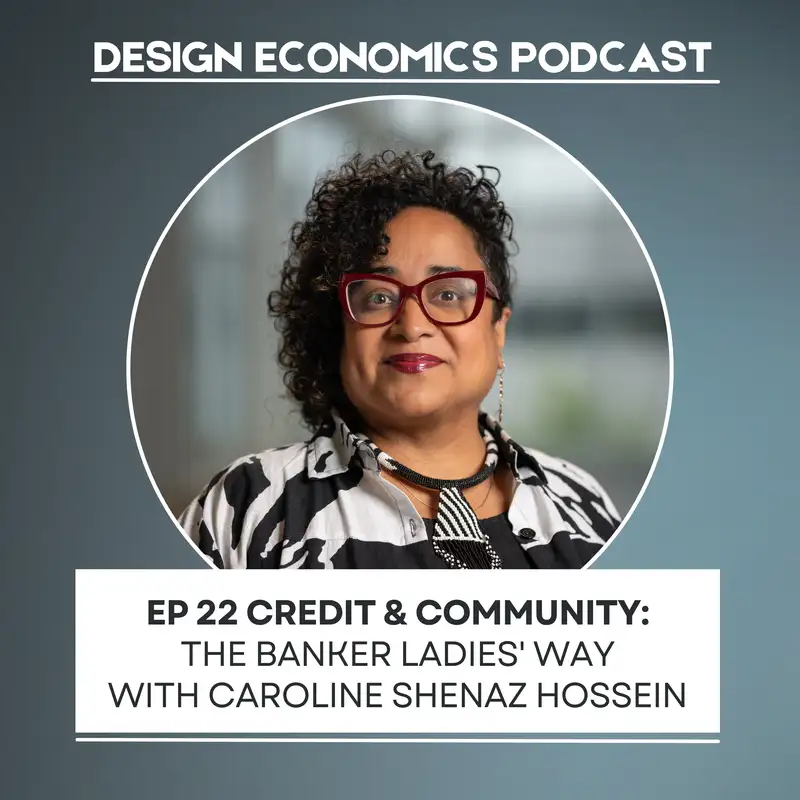
Caroline Shenaz Hossein: Credit & Community; The Banker Ladies' Way
Think of it as a group of friends who come together. So you may have a group of 10 people, and they say we're gonna do a $100 every month. They call it throw a hand into the pot. Everyone will put their hand. It's usually a fixed sum of money to keep the math simple.
Caroline Shenaz Hossein:And so the group, they decide, okay, there's 10 of us. Let's throw a $100 bucks At the end of every month, and we'll meet at so and so's house. So that's, like, a thousand bucks. And then they decide in turn how they get that lump sum.
Caroline Shenaz Hossein:So if it's your turn first, Vinny, you're gonna receive $900. A $100 payments for each of the other nine members plus your own gives you a thousand. You get to do what you like until the following month, where then you contribute a $100 to me and along with the other eight members. So I'll have 900 plus mine is a thousand and so on. And so they probably will structure it on...
Caroline Shenaz Hossein:If there's 10 members on a ten month period. And it's very simplified so that everyone has access and ease of participating.
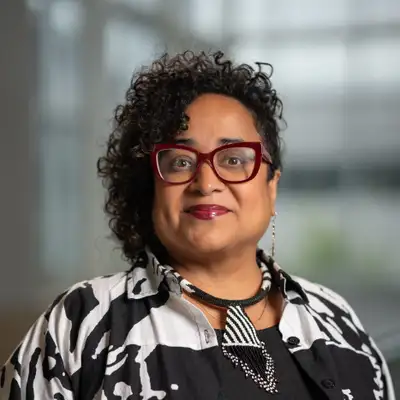
Vinny Tafuro:Hello, and welcome to episode 22 of the Design Economics Podcast, where we explore how design thinking driven by data is revolutionizing economics for the twenty first century. Century. My name is Vinny Tafuro, a futurist, economist, and your host for this episode. My guest today is Caroline Shenaz Hossein, a Canada research chair in Africana development and feminist political economy and full professor of global development and political economy at the University of Toronto. She's also the founder of the Dice Collective and a member of the Royal Society of Canada.
Vinny Tafuro:For over fifteen years, Caroline has researched informal banking systems known as ROSCAs used by over 200 million people globally. In The Caribbean and around the world, this type of mutual aid is celebrated. Yet in North America and Europe, these systems are often criminalized and their operators stigmatized. Our conversation explores what determines who's allowed to organize money, why established financial technologies are often treated as innovations when commercial banks copy them, what citational justice means across sectors, and how making these systems visible transforms who we recognize as economic experts. Before we begin, if you find value in these conversations, please consider supporting the Design Economics Podcast through our Patreon at patreon.com/evolveeconomics.
Vinny Tafuro:And with that, I hope you enjoy this episode with Caroline Shenaz Hossein.
Caroline Shenaz Hossein:Thank you, Vinny, for having me. It's a real pleasure.
Vinny Tafuro:Thanks. It... You know, it's it's... I'm so glad that I was able to connect with you. I originally found the work of Jessica Gordon Nembard through a colleague and friend, Douglas Rushkoff, and her book Courageous Courage, or Collective Courage.
Vinny Tafuro:And it's I've been searching that kind of... Her research in some of her sources, and it was it was in the last year, you know, earlier this year that I found your book, The Banker Ladies. And one of the things that drew me to it so much for reaching out to you for the show was the fact it was the first time I found something on this topic that was in an audiobook format. And being a podcast, one of the best things we can do is put out things there that, hey, listening to the podcast, you're done, you enjoyed it, why don't you go move over to another platform and get the audiobook, and you can at least start to engage with this information. And so your book, The Banker Ladies, kind of, I'd like you to start with a little bit your background and history and how you got to where you are today and the book we're gonna talk about.
Caroline Shenaz Hossein:Okay. Sure. Thanks for having me on your podcast. I mean, it's a real pleasure for me here to be speaking to a completely new audience. So my name is Caroline Hossein.
Caroline Shenaz Hossein:I'm a professor at the University of Toronto out of political science and global development, where I think about the ways in which people access financial goods, how small or micro entrepreneurs are able to navigate the market with very little sums of money. I'm interested in sort of issues around business exclusion, but not necessarily staying there, looking at sort of the options that people have when they're excluded from sort of mainstream options and how they diversify their financial portfolios with others. So that means that I'm thinking about membership institutions, cooperatives, collectives, associations, mutual aid groups, and what have you. But as long as there's this idea of coming together or what we call commoning or mutual aid, I'm really interested in those kinds of institutions, especially if they're operating by choice informally and what's happening there. It's very interesting because a lot of my disciplines, a lot of formal disciplines, tend to ignore the value of informal institutions and tend to homogenize them all as being sort of negative or bad for humanity, and there's a lot of good that comes out of being below the surface, and there are reasons why people choose to operate that way.
Caroline Shenaz Hossein:The reason why I'm interested in that is because I, too, am a child of immigrants. I watch my parents labor a lot and have to rely on things called the social and solidarity economy to make ends meet. I knew that I would wanna do something in business because my father was self... Has been self employed for most of his adult life, and I knew that I was interested in exclusion. So before I became an academic, I actually worked for about sixteen years in global or international development in an area called microfinance for large international NGOs, nongovernmental organizations, and really managing and doing the programming and training to make sure those institutions were, I guess, legit and reaching the people that we had to reach in a positive way.
Caroline Shenaz Hossein:And so I did that a lot of my career for those sixteen years. Actually, I was based quite a bit of time in Philadelphia through an African American led NGO that I really admired a lot, who did this kind of work both in The US, in underserved community urban areas in The US, and then also overseas in Africa. And so I think that eventually, life brought me back home to Toronto after many years of being international both in The US and around the globe, and I decided to focus a lot of what I was doing applied in the academy. So, yeah, I'm back home, and I'm thinking about people of African descent both in Canada but also in the Caribbean region and what women, black women in particular, how they manage money, and how do they do that together when times are tough?
Vinny Tafuro:I appreciate that journey and the practical experience outside of the academy before bringing that into the academy. So I think on on the the topic of the book, and I think this is, you know, our first tenant of of design economics is this idea of paradigm change. And I I know in my own journey when I started learning about economics and what was missing from the dominant paradigm and and, you know, kind of the neoliberal paradigm was, you know, this acknowledgment of paradigm change. And then, you know, as I discovered, you know, there were cooperative systems, it was being presented as something new as opposed to the fact that it had always been there. And maybe you could talk a little bit about how the work you're doing is establishing that, hey, these systems are here and we can learn from them, as opposed to this is not something new that's being invented as a result of quote unquote late stage capitalism.
Vinny Tafuro:These are systems that existed, preexisted this, or even how they came into being.
Caroline Shenaz Hossein:Yeah. So I think for a very long time, people in various spaces, in various disciplines, in various walks of life have been thinking about alternatives to an economic system that has alienated a lot of people and have only served in the interest of a few. Right? So that's like speaking about this really fundamentalist extreme version of capitalism that has really not done its job for most people. The whole myth of that trickle down economics and the capitalism is freedom for all has been really problematic to most people who are laboring in those places.
Caroline Shenaz Hossein:And so there has been a lot of discussion, particularly in feminist economics, for decades that has been counteracting the larger narrative of this, the only one kind of capitalistic capitalistic economic system where you apply a lot of privatized user fees and tariffs on corporation, like through a corporate model. And the idea of the firm has been really rigid in terms of understanding what that looks like. And feminist economics have been able, so many ways, to find the fissures in that mainstream logic and to really show that there is actually possibilities with thinking about how to do business differently and more cooperatively, meaning that there are so many businesses that people are engaged in together, and often they don't have a corporate mandate or model in mind. What they're actually thinking about is how to address social needs first. They are thinking about ideas of mutual aid, and they're thinking about things like reciprocity while trying to attend to their more material needs.
Caroline Shenaz Hossein:And I think that we can learn a lot about the ideas coming out of Marilyn Powers' work, who's written a lot in feminist economics on this idea of social provisioning. There is a great edited collection by Bejeron and Feen, who speak to this idea of liberating economics from a feminist perspective. And so I think that women, who are also straddling this idea of being economists as well, have been thinking for decades about how to make economics more pluralistic, and that's how this idea of cooperation and cooperatives and credit unions and various forms of membership institution come into play as being legitimate economic actors that have a role in our economic environment.
Vinny Tafuro:Yeah. So now, what are these systems actually called? And this is the thing, the Banker Ladies. Can you go into a little description of who are the Banker Ladies, where are the Banker Ladies, and what are they doing as the Banker Ladies?
Caroline Shenaz Hossein:Yeah. So thanks for referring to the book. The book is called The Banker Ladies. These are the women I called the vanguards of the social and solidarity economy.
Vinny Tafuro:It's such a good and accessible title. Really enjoyed just telling people about that I was reading The Banker Ladies, and they're like, what? Like, it's just... It piques curiosity, I think.
Caroline Shenaz Hossein:Oh, interesting.
Vinny Tafuro:So continue on. I'm like, sorry.
Caroline Shenaz Hossein:It can can peak curiosity in a positive way or Yes. In other ways. Right? Yes. But I think that this body of work...
Caroline Shenaz Hossein:First of all, the book is open access, so the hard copy is open access. So that means that people don't have to pay for it if they're willing to read a PDF version of the book. So please do share it with folks. Also, there is a short film called The Banker Ladies that's on Films for Actions. That's open access as well, and what we're trying to do in this work is to really spread knowledge that these women who call themselves the Banker Ladies exist, and they exist beyond the black, and black diaspora, actually.
Caroline Shenaz Hossein:All... Many cultural communities are engaging in these self managed collective money groups. That's basically what they are. They are akin to what we know as, cooperatives or credit unions where members come together, and they first save and share their savings in turn with one another. There is a formal academic term that kind of explains what the colloquial banker ladies are doing, and it's called, ROSCAs, which is short for rotating savings and credit associations.
Caroline Shenaz Hossein:And so we just use those capital letters called ROSCAs to denote these collective money co ops that are informally managed by kin or friends or a group of people who may know each other professionally and choose to come together to save together for a fixed period of time and make those payments on a system that makes sense for that group. So there's a real kind of I mean, they abide by everything that cooperatives do. They have the same kind of set of seven principles that are governed by cooperatives around the world. But often these ROSCA institutions and the women who organize them who call themselves banker ladies, are often excluded even from within those cooperative systems. So as any good feminist political economist will do, is that we will trouble, even in progressive spaces where we're thinking about alternative economies, we are thinking about the erasure of other people who are often not included in those alternative economic spaces, or perhaps the kinds of solidarity economic institutions that they do are too informalized that people are not clear or understanding the goal of those institutions.
Caroline Shenaz Hossein:So it was an opportunity for me over a decade to study women, black women coming from a number of countries. A lot of them, obviously, are from the Caribbean region because I study in five different Caribbean countries, looking at these various systems. I did do a bit of fieldwork that's not included, but it does does lend to the analysis in Ghana and Ethiopia. Mhmm. And I'm often beckoned as sort of these source countries for how these systems operate outside of Africa, and it's been really helpful in trying to tie together the connections of what ROSCAs are to people living, many of them in precarity and many not, but who choose to want to be engaged as a member in a cooperative that they organize.
Caroline Shenaz Hossein:And, yes, there's a money aspect to it. It helps people get on with their livelihoods, but it's also about having conversation. These publics come together, and they discuss issues of the day, whether it's personal or political, And people are coming together, through democratic norms and building up civil society in a really positive way. And that's some... That's the part of the work that was so exciting for me, is the social and the democratic organizing that these women do in spaces that people think they lack social capital.
Vinny Tafuro:Gotcha. So how... So give us a little bit of a description what a... RASKAs are known in different areas and how one or a typical one may function.
Caroline Shenaz Hossein:Yeah. That's a that's a good question. Okay. So ROSCAs are defined as these membership informal collective institutions. They go by usually not the name ROSCAs, that's the real academic term, but it kind of pinpoints where...
Caroline Shenaz Hossein:The validity of these institutions and why they should be studied. But people that you meet may not know them as ROSCAs, but if you call them but in their vernacular, which is something that people use every day, it's almost like a secret code or a community that is below the surface. But once you say these words, people then recognize that you understand what they're doing, and they no longer become hidden. So for example, and this might make sense to viewers who are coming out of The US because there's lots of diaspora from these places like Jamaica. There are...
Caroline Shenaz Hossein:They have these ROSCA systems called Pardna. Indians have Chit or Kuris. Chinese have Hua. Many Arab communities call it Sanduk or Gamea. There are Tandas for Latin Americans.
Caroline Shenaz Hossein:Peruvians call it Junta. Cameroonians have Njangi. Kenyans are calling it Chama. And as you can see, everyone has their own names for these systems. My people hail from Trinidad and they call it Susu.
Caroline Shenaz Hossein:In Ghana, it's the same name. Like in Grenada, where I have some people from, they're calling it Susu. My other part of my family are Guyanese. I think there are lots of Guyanese diaspora in Florida, and they're calling it Boxhand . So people have their own precious name that they refer to these systems as, and it's like a community money club that you know about but others may not know about.
Caroline Shenaz Hossein:Right? Yeah. And that that you're engaging in for self help reasons. Not necessarily looking for a handout from anyone. No.
Caroline Shenaz Hossein:But to collectively organize with people you know and trust. And I think that's a good definition for a ROSCA shorthand is that it's a group of people who know and trust one another with their savings, and that they're willing to do that kind of work for each other.
Vinny Tafuro:What I what I love about that, and before we go into how they actually function on the naming thing, this kind of the idea that we have with design economics is, you you mentioned trickle down, there was this, the mainstream economics right now is this one idea of if capital accumulated to the top, it's gonna work its way down, and it doesn't work. But what we're trying to do is, with Design Economics and with this Podcast and the Institute, there's so many various great ideas working towards a better social organizing of our economic systems, but they lack a name that unites them all. And so that's why we've come up design economics, and if a design economic system meets these three tenants, the same way you're not taking the identity of Sousse or of Pod or any of these things, but you're giving them a category that's above it as opposed to rebranding them or renaming them. And so ROSCA is this way of identifying a system no matter where in the world it operates. And I just I love the way that's come together, at least from what I'm understanding, and how that's a category of operating.
Caroline Shenaz Hossein:Yeah, and it's a part of the solidarity economy, right? When we think about the solidarity economy, I teach this to my students, or the social economy, what it's commonly known as in Canada and The US, there are many types of institutions that make up what the solidarity economy is. Right? We have nonprofits, foundations, cooperatives, credit unions, you know, churches, all these kinds of institutions that add to our legible life. Right?
Caroline Shenaz Hossein:And ROSCAs are a part of that. They are informal institutions for most part. They are beneath the surface. People don't readily see them, so they often get erased from when we are thinking about institutions in the solidarity economy. But what's interesting here is that we assume, we often make this assumption, that institutions in the third sector or the solidarity economy space must interact with private sector, must interact with the state.
Caroline Shenaz Hossein:But what happens when people cannot interact with either for a variety of reasons? The solidarity economy makes room for that, and often those institutions you will find are acting informally, meaning that they're not engaging with formal actors like the government or with big business because it doesn't make sense for them to do that for a number of reasons. And so ROSCAs are detached from that that assumption that all solidarity economies cooperate with formal actors. They're doing something a little different. They are self funded.
Caroline Shenaz Hossein:They are motivated by community interests first and foremost, and they're trying to make things better for a group of people who completely feel ostracized or alienated from mainstream businesses states even, and they're trying to do things differently on their own accord to make life more inclusive.
Vinny Tafuro:So so how then does a ROSCA operate typically, and, like, what would the purpose be for for having having one of these?
Caroline Shenaz Hossein:Yeah. So every ROSCA... And I've been studying these things for a decade plus, and they are different. Every time you meet a group, they are based on the democratic principles by the members who self organize, means that they come together. So just for, I guess, ease sake, they usually have a group, and, you know, these Roscas can live, by the way.
Caroline Shenaz Hossein:They they have a finite period. I mean, all ROSCAs start and end. There's no ROSCA that just keeps going on for the rest of one's life. ROSCAs have a beginning and an end period, and they can range anywhere from, you know, six months to several years. Alright?
Caroline Shenaz Hossein:Memberships can be as small as I've seen them as five or, you know, eight people, and they can be in the hundreds. Some of these Senegalese tontines were literally in the hundreds. Same with Haitians. I mean, they have very big soul systems or tontines that just can go on for years. But generally, just for the readers, just for listeners to understand, these groups, think of it as a group of friends who come together.
Caroline Shenaz Hossein:So you may have a group of 10 people that come together, and they say, we're gonna do a $100 every month, put into a pot, or they call it throw a hand into the pot. Everyone will put their hand. It's usually a fixed sum of money to keep the math simple. And so everyone says, okay, and they agree on this. So it's not like one person is telling everyone.
Caroline Shenaz Hossein:Usually, there is group consensus and understanding why else would people participate in such a thing. They organize their meetings and structure the policies according to the group. Right? And so the group, they decide, okay. There's 10 of us.
Caroline Shenaz Hossein:Let's throw a $100 every... At the end of every month, and we'll meet at so and so's house. So that's like a thousand bucks. Right? 10 people, a thousand dollars.
Caroline Shenaz Hossein:And then they decide in turn how they get that lump sum. So if it's your turn first, Vinny, you're going to receive $900, a $100 payments for each of the other nine members, plus your own gives you a thousand. You get to do what you like until the following month, where then you contribute a $100 to me and along with the other eight members. So I'll have 900 plus mine is a thousand and so on. And so they probably will structure it on, if there's 10 members, on a ten month period.
Caroline Shenaz Hossein:And it's very simplified so that everyone has access and ease of participating. So why would people do this? One, I would have to ordinarily say for ten months to be able to access that thousand dollars if money was on the scarcity side. But if I have something that's going on that I needed for a specific reason, it could be a seasonal, you know, work related reason. It could be something more personal, like a trip that I have to take and I need access to funds.
Caroline Shenaz Hossein:Banks are often not gonna move with that kind of speed, but a group of friends who get my sort of timeline might be able to come help me out. Right? And what we're doing is sharing the risks with each other's savings. So instead of, I can wait, you know, I can wait to be the ninth person to get the payout, You're not getting any more money than you've put in. What you're doing is circulating people's savings so that someone gets access to a lump sum of money without having to go into debt or having to go through the bureaucracy of a regular bank who may or may not give you that $1,000 And so that's really what it's about, is kind of like the discipline of saving with one another.
Caroline Shenaz Hossein:So that's the financial aspect of how these systems operate. Anyone can do it. And I'm actually working on a book, a how to book, with a group of community people because they really... One critique from them is that my books are too academic, and we do do... Or these banker ladies have organized a Roskie network, and from time to time, they've had virtual sessions talking to just ordinary folk.
Caroline Shenaz Hossein:At these sessions that I've come to, the one major feedback has been, can you do a how to book so that some of us who don't know about these systems but who would like to participate in Grow It can do that with some ease and not have to read through a complicated academic book. So we are doing that with visuals and also examples and exercises so that people can feel like, yes, I've read this in a very short space of time, and this is something that I'd like to organize with a group of fellows that I know. And we're actually working on that. It'll be published by Africa World Press, and it's gonna be something that speaks to all communities, all people, to kind of grow this idea of democratic financing. Right?
Caroline Shenaz Hossein:People coming together on their own terms and helping one another out. It's kind of a good cure, not only for money problems, but also for friendship issues. Right? Like, if you're not connecting with people in your locale, you're not gonna be able to do this. But if you wanna do this, one banker lady called Babinty said to people, you have to make sure that you have a group of people that you can work with, And if you don't, that's only...
Caroline Shenaz Hossein:That's gonna be the one problem that... Why you wouldn't be able to be successful at this group is that if you don't have a group of people. And so it makes people kind of to get out of this loneliness and to find folks that they can work with. You know what I mean? Yeah.
Caroline Shenaz Hossein:And so
Vinny Tafuro:what I'm thinking. It's like... I even think... Like, it's it's why we get together in running groups or exercise groups or different... Like, doing things as a group is what makes us human.
Vinny Tafuro:Right, and motivates us, right? Yeah, you know, could save a $100 a month, but I might not, you know, and especially, and you I think one of the examples in the book they used was, somebody needed to make purchases for school supplies, or for school clothes, or something like that. And we're here in August, September, this will come out in The US. Everybody's back to school, but somebody in the group may have a trip that they need to take, or something that's coming up in March, and they're like, hey, I can wait eight months or nine months or seven months so somebody else can have the thousand dollars access So
Caroline Shenaz Hossein:you can see why the democratic positioning of how these groups function will vary. People say, Well, in Jamaica, they should be all the same. Well, no, no. They vary within context, within locales, within really small communities. They will vary because the group dynamic will vary.
Caroline Shenaz Hossein:And so every group is different. Some groups like monthly payments, some like biweekly payments, some want it quarterly with larger lump sums. I mean, all of this depends. You have to have the buy in of the group, and usually these groups are... That's why the idea of calling them informal...
Caroline Shenaz Hossein:Maybe we should call them nonformal, but the idea of calling these institutions informal kind of doesn't do them justice in that they are very structured. People come together, they elect someone who's in charge, a president or a champion or whatever the name's, the Banker Lady, and they give them the authority to kind of collect the funds, but there's also other executives. There might be a treasurer, there is a secretary, There is a membership coordinator for the social get togethers. So there are a number of them who are taking on roles, important roles, that facilitate a positive group formation. And so when you think about all that time and energy and structuring, what is so informal and illicit about the way that these groups are operating?
Caroline Shenaz Hossein:They are operating as good citizens trying to think through business exclusion and loneliness and coming together in a way that is extremely positive. But, unfortunately, depending on the context will depend on sort of the perceptions of how ROSCAs have been treated historically, and that's kind of what the book gets at.
Vinny Tafuro:Now... So on that, because I think, you know, in... This is basically an oral agreement. I'm sure somebody's taking notes. But what what provisions...
Vinny Tafuro:How how... Is there compensation for anybody? I mean, that's a question somebody's gonna ask because, like, oh Yeah. Yeah. How how does this get handled?
Vinny Tafuro:Where's the interest? Where's the fees? Yeah, yeah. So how does that get handled?
Caroline Shenaz Hossein:Yeah, sure. And those are good questions to ask, and there are risks. I'm not gonna say, like every institution, there are a set of risks. With ROSCAs, there are risks, and maybe to some there might be more than others. But there seems to be, the research shows that there's been a high degree of compliance more to these kinds of systems because they're in your own backyard.
Caroline Shenaz Hossein:These institutions are usually organized by the people themselves. They are not reporting to an outside person who doesn't really understand the group dynamic. I mean, over the years, I've heard people tell me that they would, if they had to make a payment, they'd rather make the payment to this ROSCA, the Susu Group, than a formal bank, And the reason being is that they didn't wanna let down their mates, right, like their friends. The risk... Letting down a banker in a tie who they don't know is not so traumatic for them, but letting down
Vinny Tafuro:They're a number. I'm a number. We're all a number to the bank in many cases.
Caroline Shenaz Hossein:That's exactly it. So there are risks. I mean, there can be risks in terms of people being delayed or not making payments to the group. For sure, groups decide on those kinds of sanctions that will happen, and I have fun stories to tell you about the various ways in which people think through creative solutions. Right?
Caroline Shenaz Hossein:But there also might be some more compassion, where maybe someone is dealing with a death, and so they can't make a payment or a meeting. Groups will also rally together to support that person and cover their payments so that that member doesn't lose out on getting their full share. Okay, so there are ways that there's a kind of sympathy and compassion that exists in these kind of humanizing banking systems that make them so endearing. But let's talk about the risks. There are risks.
Caroline Shenaz Hossein:People can abscond with funds and leave these people with no recourse because they, particularly in the West, are not understood or known, people have very little recourse unless that ROSCA group had some sort of paperwork done, meaning that people were more formalized in the ways that they structured their ROSCAs. And that's what I mean. The spectrum on how ROSCAs operate can be very informal to accounting, where people witness what has been going on, to very, formalized ways of banking through, you know, written statements and paperwork, okay, and bookkeeping. But so there is this kind of spectrum, or I call it a continuum in terms of how ROSC are organized to safeguard against risk. But many of the ROSCAs I met are somewhere in the medium.
Caroline Shenaz Hossein:Right? Some might have some paperwork, some bookkeeping, but a lot of it is largely paperless because one of the issues that people have, particularly if they're newcomers or English isn't their first language or they've had a negative experience in a commercial bank, is that they like the cultural familiarity and friendship or personal touch that it takes to cooperating with a group of people you know and trust. So a lot of the work in these ROSCAs are done upfront to mitigate risk, meaning that you can't just join a group by saying you wanna join the group. You get vetted. It's a group of people who have known and worked together for a long time.
Caroline Shenaz Hossein:For example, I met a group of orderlies in Montreal. Orderlies are people who are often at the lower level of the hospital doing all the cleanup and what have you. A group of them came together and they had regular, a kind of a sousou system where they would pool funds together. And these people came from diverse cultural backgrounds. But the thing that they had in common was the job affinity.
Caroline Shenaz Hossein:They all worked at the same location, and there was a degree of respect for one another and an understanding that, you know, sometimes monies are short. They could also meet and vent about doctors and nurses who treated them terribly. And it was like a coping mechanism, right? Like for some sort of camaraderie in a workplace that was common to this ROSCA group, for example. So people will come together on affinity.
Caroline Shenaz Hossein:They'll come based on neighborhood location. Churches and mosques, people will come together in a group, like a group of church ladies that was common after church would pool some monies together and have a rosca group, and they would have fun discussing how they plan on using their lump sum of savings when it was their turn. And so people are doing a lot of the risk mitigation early on in the process based on how the membership group is formed to begin with. But, you know, there are leaks. Sometimes people will invite a friend to join that the rest of the group does not know.
Caroline Shenaz Hossein:And often that that's kind of the weak aspect of the group dynamic because you're being vouched for by one member. And so in case of default or a problem with that member, the person on the hook is the one who vouched for that person.
Vinny Tafuro:That often happens in LGBTQ and queer spaces. You know, when bringing new people in, there's somebody that vouched for somebody, and so you kinda take responsibility for the person you've brought along into different spaces. I kinda understand that.
Caroline Shenaz Hossein:So that's kind of a way to mitigate the risks so that not all members become vulnerable. Right? And so that's why I say a lot of the hard work gets done in the beginning, but there surely are risks as groups get much bigger and become more impersonalized so that there, like I said, there was a spectrum of ROSCAs. The very small, close knit ROSCAs can be managed with those kinds of systems. You know, twenty, thirty people, it's manageable.
Caroline Shenaz Hossein:When you get into more like hundreds of members or fifty, sixty members, it can get away from you. And that vouching system has been reliable. It has been useful, but there are risks. There are people who are taking on much more formalized aspects to mitigate those kinds of risks, and it might mean that they professionalize and have more paperwork. It may mean when they have that many more members that they decide as a group whether additional fees will be charged.
Caroline Shenaz Hossein:Yeah? And so I can't say that some ROSCOs have no fees. I mean, there have been Jamaican partners that I have been to that have been, you know, pretty hefty size, like fifty, sixty people, and the key banker ladies were like, it's a lot on my cell phone bill, and it's a lot with my transport to go and pick up payments. So the members decide what that fixed service fee will be, and they all contribute to it. But it's a risk that they're...
Caroline Shenaz Hossein:Or a payment that they're okay doing. So it's not like someone is requiring you to do it. Other groups still do it voluntarily. Mean, Somalis have very big groups, but they're very opposed. It's considered haram to charge an interest fee.
Caroline Shenaz Hossein:But people may cover... They rotate with food, I guess, parties or tea parties, they call it, and so people would rotate hosting that over So
Vinny Tafuro:you can rotate on the responsibility of cost to cover the actions that are happening. That makes a lot of sense.
Caroline Shenaz Hossein:People are thinking through other ways to share risks and costs. Right? And I think there's a medley of ways that people can do that, but it's interesting to see how people will decide what makes sense for their group dynamic. Yeah? Yeah.
Caroline Shenaz Hossein:That's great. Mhmm. Mhmm.
Vinny Tafuro:Well, think one... So one of the things in that, I think, too, is is I I remember reading, like, newer members of the Roscoe will be... They'll get their payout later.
Caroline Shenaz Hossein:Yeah. Because And you
Vinny Tafuro:can understand their... What's that?
Caroline Shenaz Hossein:You can understand why.
Vinny Tafuro:Exactly. And I would imagine, like, so if you've got a ROSCA of twenty twenty people, and I'm gonna bring somebody new in, that person, depending on who else may know them, maybe they're gonna be the fifteenth to twentieth payout. They're not gonna be the first or third just to kinda see
Caroline Shenaz Hossein:how long way of managing risk. Right? Like Yeah. Watch how disciplined they are with attending meetings and making the payment in a timely way. That's the other thing, right?
Caroline Shenaz Hossein:That's a risk too, people who are not timely with making their contribution. I've been in Rosskins like that, where people have been delayed, and usually with good reason, but it can be risky for people who are doing something seasonal and actually needs that lump sum of money to get on with their work responsibly.
Vinny Tafuro:Yeah. That if it's gonna be short on their week Yeah. That's painful.
Caroline Shenaz Hossein:That can be a problem, and they have to wait a few days or something. But in any event, so you can see how even those built in kind of like where you're positioned in the queue is a way to manage risk. Yeah. Mhmm.
Vinny Tafuro:So I wanna move on to kind of this creativeness to it, because I think something that you mentioned earlier when we were talking about giving the name Raska to these programs, to these collaborative workings, is similar to me, or the conversation that we had last episode was about the social sector. And my guest Jody, the thing was we name the sector the nonprofit sector because we're naming it after what we are identified as legally, as opposed to what we are, which is the social sector. So I wanna get into a little bit of the... How this is coming together in academia, but also how it's it's getting out into the mainstream. And like you said, your book and this request for how to novel, how how do we...
Vinny Tafuro:As a social sector, a business sector, and this kind of informal sector, Or what... Like, how do we start bringing this together to make sure that everybody's talking and citing the right sources?
Caroline Shenaz Hossein:Yeah. That's a good question. And I think we have a lot of homework to do, to be fair, Vinny, is that
Vinny Tafuro:I do not disagree.
Caroline Shenaz Hossein:That we kind of have these silos. Right? Even in the... I mean, the overall arching umbrella of what we do that is not corporate or business or not government is called historically the third sector. That's the old sort of European British term, the third sector, meaning anything that's not the state or anything that's not private sector.
Caroline Shenaz Hossein:Yep. And largely, there has been this kind of three parts to what is the economy. But it is with... The trouble becomes within that third sector of who has the right to be there. And to some extent, that's why people like you mentioned, Collective Courage's author Jessica Gordon Nimhard, has written extensively on African American cooperatives because they were unseen for such a long time as being part of people's economic system because generally in The US, cooperatives or credit unions are kind of marginal in...
Caroline Shenaz Hossein:Or viewed as marginal in the economic system despite the fact that there are some really important cooperative institutions like Sunkist, for example. Right? And a lot of agric or farming cooperatives play a pretty important role when it comes to business. So the third sector, or we can refer to it as the social and solidarity economy, how... Is that overarching umbrella to kind of group this myriad of actors that are part of something that's not state or, private sector.
Caroline Shenaz Hossein:And so, unfortunately, the third sector institutions are kind of defined in the negative, if you know what I mean. They're not government. They're not private sector. So then they're all thrown into this thing called the third sector or the social economy. And in the social economy sphere or that sector, nonprofits tend to be the most visibleized.
Caroline Shenaz Hossein:Right? The most seen as the most credible. Like, formal philanthropy is how we do things because we are able to cooperate with the state, and we are able to cooperate with private sector, meaning commercial businesses. Right? There is this assumption that nonprofits, philanthropy foundations are kind of the leaders in the third sector space.
Caroline Shenaz Hossein:That's where that becomes problematic in that, well, there are lots of other kinds of social economy institutions like cooperatives and credit unions, mutual aid associations, collectives, informal ROSCA type groups that are also a part of the third sector ecosystem but are not considered, I guess, worthy enough or, trustful enough to be counted as something that should be public facing. And that's where... And also, in some ways, they're competing with more formal nonprofit philanthropy type of institutions who often have links to private sector and the state, and many are doing good works, but they often have to fit with certain deliverables that are within the confines of either donors or proposals, right, in ways that more radical alternative parts of the solidarity economy who are detached from state and private sector do not. So cooperatives and credit unions and these ROSCAs or mutual aid groups, women's groups, whatever queer LGBTI type of community focused groups may be able to tap into more kinds of thinking and platforms that don't ordinarily have to fit with formal institutions, and it may be in their interest not to. And so that's where you have this kind of...
Caroline Shenaz Hossein:That's why the solidarity economy and figuring out what term, what literatures do we read have complicated things. I mean, there's this whole space for community economies that is really important. Eleanor Ostrom, who won a Nobel Prize, who said there's a logic to collectivity, wrote about the commons around the world. I think she was working out of Indiana with a political theory workshop and has done... Her work has done a tremendous amount of good for acknowledging more informal, collaborative forms of of third sector institutions that are helping to make our economy and lives better.
Caroline Shenaz Hossein:But how do we configure that when there is formal philanthropy and nonprofits or NGOs really dominating that space. And so that's why I keep saying to people, think outside the box. Look for more cooperative or membership institutions that are pushing philanthropy to also counter what neoliberal types of institutions are doing. Okay? And there are often those institutions that won't be funded by corporate funds or even government funds.
Vinny Tafuro:It's almost going to have to come from philanthropic and social sector sources, which makes me wonder. I... It's so... I guess, how do we work towards bringing together some of the larger nonprofits, you know, foundations to get them to see this work as important, maybe to fund it? Like, is that a path forward?
Vinny Tafuro:Is it, like, working with community foundations at a local level, working with... I don't know if... I'll name off the big ones, the Hewlett Foundation or the... You know, Hewlett Foundation actually comes to mind right now because they had put out a kind of a treatise a few years ago about a new economy and new common language for the economy, and I think, well, wouldn't this be a perfect fit? Where is the academy on kind of dealing with...
Vinny Tafuro:Interacting with foundations at that scale, or even at the local scale in a community like Toronto?
Caroline Shenaz Hossein:Yeah. So I think that... I mean, it's a medley, and it's mixed, and it's all over the place. Like, I think a lot of the academy is still focused on large, formal, nonprofits, NGOs, foundations, whether they're family or corporate, to figure out the inroads in which they think about things like new economies as Hewlett is doing. I mean, I think that there are a number of family type foundations that are thinking about sort of alternatives and doing things a bit differently.
Caroline Shenaz Hossein:So there are those spaces, right? But they're still kind of cooperating in a certain paradigm that's still focused on a certain kind of market corporate economy. Yeah? And that we kind of have to work with what we have. They're not thinking about how do we transform that economy or giving space to more pluralized forms of businesses that are different from a commercial model.
Caroline Shenaz Hossein:And that's getting back to my earlier idea of what is the firm has been very narrowly defined as corporate. Yeah? As with shareholders and what have you. When you start diverting from that to a more cooperative or credit union structure where people are the members, that's when where you're thinking about fundamental transformation on the ways in which we organize our economic systems. And that often means that we're not going to traditional colonizing philanthropy type of institutions because they just don't get the assignment, which is to try to change our corporate economy and not to cooperate and work within it.
Caroline Shenaz Hossein:And so Yes. That's why you have the standoff between more radical forms of organizing within the solidarity economy that are are completely at odds with traditional nonprofit, NGO, philanthropy, family corporate foundations because they're still toeing the line and policing the kinds of economies and to the extent in which they will be critical. So there's a safe, critical aspect of where they will espouse, but they will tread the line and they're still working and upholding the same corporate fundamentalist capitalist system. And so there will be people within the solidarity economy who are not okay who are not okay with abiding or toeing that line in exchange for money.
Vinny Tafuro:Yeah. So how do we move then, like, in looking at, you know... Or, like, bringing literacy and and bringing this to
Caroline Shenaz Hossein:a wider just wanna say that. So when you said about the academy
Vinny Tafuro:Yeah.
Caroline Shenaz Hossein:They're indicted in part of this. Right? So you have a lot of those that study who are universities for sure operate like a business, and they have been completely corporatized in the ways in which they operate. And so their allegiance to more colonizing corporate types of nonprofits work for their best interests. So you can see the array of research that will continue to solidify and build up a corporate structure that continues to alienate people who don't fit or behave to a certain model.
Caroline Shenaz Hossein:Yeah.
Vinny Tafuro:And so that see that. No, I appreciate that. Thank you. Because, you know, and that's something we ran up against. You know, I had reached out to the Hewlett Foundation a few years ago, and, you know, they had just named Harvard, Stanford, and, you know, like three major institutions with three major grants, and I was like, Is there any open call for grant requests?
Vinny Tafuro:And the answer was With the desire potentially to look into that, I'm not sure where there are with that now, but I definitely have not seen a call for open inquiries for grant money to look at new economic thinking.
Caroline Shenaz Hossein:So very elitist, even though trying to assist and bring new economies to our world.
Vinny Tafuro:Yeah, and it really my first time coming up against, oh, okay, I see how that's working within the foundation realm, which I guess is a good way to segue into this kind of third tenet of literacy, and what people can do on the ground. You know, I think one of the things that comes up is these entities are treated as illegal in some places, so I'd love for you to touch on that briefly, and then go into... We can talk a little bit more. I've got a couple other questions on how to access this.
Caroline Shenaz Hossein:Okay. So depending on the context in which one is located, informal membership institutions like the Roscos or the SUSU or the CHIT funds that we've been talking about will be policed. They'll be surveilled because they're largely misunderstood. Part of it has to do with language. I believe as a scholar who've been publishing in this area is to really reframe the discourse around ROSCAs to one that people understand, And so that's why a lot of my work you'll see is anchored in the social solidarity economy, recognizing that ROSCAs have a role inside of the social and solidarity economy, and that they are relatives of the cooperative system.
Caroline Shenaz Hossein:Yeah. That they belong as part of cooperative credit union institutions because they're based on membership, right? And so once you start identifying where ROSCAs play a role, people then start to understand it. And people started understanding this during the pandemic, actually. It made my research a lot easier because in the academy, there are people who question the kind of work that I'm doing in advancing the role of informal institutions, particularly membership institutions, and its ability to do good in our world.
Caroline Shenaz Hossein:Because there has been so much understanding of informal institutions in the negative, that they must be mafia, that they must be corrupt, that they are criminal, all these kind of things. So a very dark understanding. And when someone then, particularly feminists, who are thinking about economics in the plural, start raising questions that informal institutions, collective particularly, have a role in our providing social provisioning, support to underclass and excluded people, then we start to have a quarrel in the academy about what kind of institutions, in what role informal institutions or what value informal institutions should play in our world. And I think that these informal institutions that we're talking about are very much important to what we are trying to do when we think about new economies. How can we do new economies under a very elite structure?
Caroline Shenaz Hossein:Right? You have to go to those groups that have been pioneering this for decades, and they're all around us. It's just making room to start to see that these institutions exist.
Vinny Tafuro:Yeah. It's counting it as it exists already, and economics hasn't counted it so far. I mean, I think So
Caroline Shenaz Hossein:how we make that space? Right? That's part of shedding light where things already exist. I mean, that's all I'm doing is actually just speaking to people who do this day in and day out, and will continue to do them below the surface. And so why people are doing it below the surface is because they're being surveilled, and that's particularly because of the context in which they live in.
Caroline Shenaz Hossein:So if I go to Ethiopia and Ghana and India and I try to ask the same questions about surveillance or policing or criminality of these institutions, it makes no sense in those contexts because people understand the validity of informal cooperative institutions that I sound ridiculous asking these questions. Right? Because people validate them. You know, Ghana has both informal and formal susu systems. In India, Chit banks have been existing before colonization was there.
Caroline Shenaz Hossein:So people are just like, what are you talking about? Ethiopians are like, we are the creator of Ekub, Idir, and Winfel, and they have a lot of other names for these institutions and various formal, informal cooperatives. So it doesn't even make sense in other global locales, the question. So the problem is really in the West, and that's why my book, it's a comparative study between two of Canada's major cities, Toronto and Montreal, which could be like a New York and Miami where lots of, you know, immigrants and people from different places congregate and move to, to that of five countries in The Caribbean, just to look at context in The Americas and how people are using and adjusting and what is the perception of these institutions. And what we find is that the policing and criminalization of people who use this self help group are misunderstood largely.
Caroline Shenaz Hossein:And the pandemic, as I was saying, helped us in some ways because when people were suffering alone, it was mutual aid and informal institutions that were rescuing and helping people who were isolated to access food and go places. Right? Because formal structures just
Vinny Tafuro:They weren't gonna work for that.
Caroline Shenaz Hossein:Real. Yeah. And so people were coming together through community organizing informally together, mutually, to make things work. And so trust, reciprocity, became important in how we do things through the social sector. And I think in some ways, the pandemic helped us recognize that these systems are not criminal, are not illegal, are not bad for society, and that we need more of them.
Vinny Tafuro:They're actually they're actually critical. Right.
Caroline Shenaz Hossein:Because they challenge the status quo, and they're actually reaching people who need them by people who understand what it means to be in that lived experience. Yeah? And so I think that we've kind of come full circle. In some ways, we have an understanding. The gatekeeping of who gets to be the social worker or the social sector queen is now being questioned.
Caroline Shenaz Hossein:And I think ROSCAs, people who do ROSCAs are now coming out of hiding because what they see is that they are cooperatives, they're engaged, they are mutual aid institutions, and there is nothing illegal about the work that they're doing.
Vinny Tafuro:Yeah. So to that point then of of, like, what has evolved? Is either... You know, is Toronto or Montreal an example of how things are changing? You're also...
Vinny Tafuro:What what can be done at a local level or regional level, either with the social sector to find people that are operating to to highlight this, to bring it to light? I don't know if that's maybe the work you're doing with the Dice Collective, if that's the time maybe we talk about that a little bit. Because I think, so how what's do changing, and if it's not, how do we make a change in more places than just Toronto, if that's the example?
Caroline Shenaz Hossein:Yeah, I'm glad you asked that. So when you read the book, you'll see that I started it over ten years ago, and so, of course, there was a bulk of it that was under crisis, like major surveillance criminality happening to Canadians engaging in these kinds of solidarity economy institutions. But over time, what I have witnessed, and that's what the end of the book is really showing you, is how engaged citizenship has really taken the stage. So what I'm witnessing in places like Toronto and other major cities, actually, is that people now have the language to help others understand the work that they're doing. Yeah?
Caroline Shenaz Hossein:And what's also happening is that it's not culturally exclusive anymore to one certain group, these groups. For example, Jamaican partners don't necessarily only operate with Jamaican people. You will find other kinds of Canadians participating in a Jamaican partner. Because people live side by side or have various affinities to one another beyond their cultural identity, could be their neighborhood, it could be their work, I don't know, it could be they socialize or their hobby, They start to connect with one another. And you can have Filipino, you can have Italians, you can have, I don't know, French people all coming together in a Jamaican partner.
Caroline Shenaz Hossein:And so that is really heartwarming to see those changes evolving. But what we need to do is advocacy. That's helpful. Is that when students, filmmakers, artists are now speaking, and they are speaking about Roskiss in a more cultural artistic way, it starts to seep into the human psyche. Right?
Vinny Tafuro:Mhmm.
Caroline Shenaz Hossein:When you go to a museum like the Bank of England had one speaking about the Windrush generation and the Jamaican partner in The UK context, thousands of people visited that museum to learn about this, you know, kind of informal money system that immigrants used in the nineteen forties and fifties and why it's still going on and so beneficial to people. And I thought, when we start to think about going beyond the academy to kind of rescue and understand and ROSCAs, that's how we all win and change our economic system. So really, my interest with the Dice Collective, we had a symposium very recently in Toronto that was very global in its orientation, and it was looking at political art. It was looking at the lawyers who worked in the social sector, and it was bringing out community activists and students and other scholars together in a forum to really speak out loud with artists, filmmakers, visual artists, writers, what have you, coming together and really thinking through how do we curate a new kind of economic system that that is focused on membership or that is about membership institutions both in the formal and the informal.
Caroline Shenaz Hossein:And I think part of the homework for everyone listening is really to spread the news about diverse economic systems that exist and not to rush to regulate them and to understand why they choose informality and economic cooperation. And how do we help to amplify those institutions, looking for some kind of value that they may have, then indict them as being corrupt or illegal without any proof of that. Yeah? And I think that that's kind of the work that we do, but I don't think the academy is gonna be able to do that. Right?
Caroline Shenaz Hossein:That work means... The academy is kind of meaning about conforming to the status quo and elite politics. Whereas Yeah. I think what we need to do is take the research, make it more applied, get other people, particularly those in the creative space, to work with them to really amplify the kinds of new economies we are actually thinking about. Right?
Caroline Shenaz Hossein:So when we hear about these corporate foundations being radical in the ways in which they're sharing resources, but they still are comfortable with giving it with some of these real plantation elitist institutions, it's questioning what their intentions are. Is it performative? Is it for show? What is it? Because there are actual real people out there on the front lines every day building new economic systems, and we need to find them and see them.
Caroline Shenaz Hossein:And I think the artist will help us make that more accessible.
Vinny Tafuro:Yeah. I I love that connection. I interviewed a colleague and friend last year on Afrofutures. Okay. And it's in...
Vinny Tafuro:I'm interested to... We reconnected recently and actually talked about you a little bit. So I'll I'll be reconnecting with her after this after this comes out because I'm curious of the intersection of speculative futures with Afrofutures with this kind of where where these money systems and programs can take us.
Caroline Shenaz Hossein:Yeah. We have to do more. We have to do more in the academy that is not just speaking to community engaged research, but is actually funding and supporting the artists and the activists who are thinking creatively of how we can actually transform and push policy to become different. Right? And for people to think more carefully about the ways in which they shop and bank and what have you.
Vinny Tafuro:So as we wrap up, and maybe you could talk a little bit. You mentioned DISE. What does DISE stand for? What does the organization do?
Vinny Tafuro:And I guess from there, how can people get in touch with you? Of course, we'll share the book, but but to engage with this a little bit more deeply and and connect.
Caroline Shenaz Hossein:Yeah. Sure. We have the Dice Collective. It's on africanaeconomics.com. It has a website.
Caroline Shenaz Hossein:We are on all the socials. So for people who wanna keep continually reaching out to us, please please do. There are a group of, scholars, feminist scholars. If you go on the Dice website, Dice Collective, it's Diverse Solidarity Economies Collective, you can see the group of people who are members to that Dice Collective, including Jessica Gordon Nembhard that you've mentioned earlier. She's a member, a long standing member.
Caroline Shenaz Hossein:But there are lots of other members who are there who are working in various parts of our world, and we're actually into research collaboration. So we're not into trying to discover research in lands we don't know, but we trust that there are already experts in those regions, and we work collaboratively with people already there who are feminists and who are thinking about alternatives in very radical and different ways and who are putting people first in the kinds of development options we're thinking about. And so Dice Collective is largely scholarly, but we are more and more reaching out to activists and artists so that we can start using our resources as scholars to really make a fundamental difference in the lives of everyday people.
Vinny Tafuro:Excellent. So that's the academia side, and I do love the connection to the artist side, because I feel that that is a way to connect the two. What about The Banker Ladies and how to... Other than there's the book, and there's the short documentary. We'll link to both of them with the show.
Vinny Tafuro:Sure. How can people network. Engage
Caroline Shenaz Hossein:There's a ROSCA network. The Banker Ladies have... I've written the book. I'm just the scholar, but if people are interested in the actual practice of ROSCAs, there's something called the ROSCA network in Canada, and it is led by Andrea Barrett, who is very accessible on many social media platforms. But if you Google the ROSCA network Canada, I'm sure their website will pop up.
Vinny Tafuro:Okay.
Caroline Shenaz Hossein:And that's one way to reach out. But there are lots of other kinds of cooperative institutions. I mean, in The US, reach out to the cooperative or Community Economies Research Network. There are lots of other sort of alternative institutions who are thinking about these kinds of institutions that exist wherever you are.
Vinny Tafuro:Thank you so much. I I... And, like I said, to anybody listening, The Banker Ladies is so accessible of a book. Yes. There's references to a lot of researchers that...
Vinny Tafuro:You know, there's gonna there's gonna be name dropping that you're not gonna understand or you'd have to look up, but the the stories and the the reality of it is is easily accessible to anybody listening. And so, Caroline, I'm just really grateful that you took the time to be here today, and I'm looking forward to to us working together in the future, hopefully, to make sure that we change economics for the better.
Caroline Shenaz Hossein:Yeah. Thank you, Vinny, for having me. It was my honor.
Vinny Tafuro:We hope you enjoyed this episode of the Design Economics Podcast. If you value these conversations, please consider supporting us through our Patreon at patreon.com/evolveeconomics. Your support helps us continue bringing these important discussions to a wider audience. Don't forget to subscribe to the Design Economics Podcast on your favorite platform. The Design Economics Podcast is produced by the Institute for Economic Evolution, a five zero one c three charitable organization whose vision is economic systems that cultivate rather than restrict our human potential.
Vinny Tafuro:And I'm your host, Vinny Tafuro. Thank you for listening.
Creators and Guests