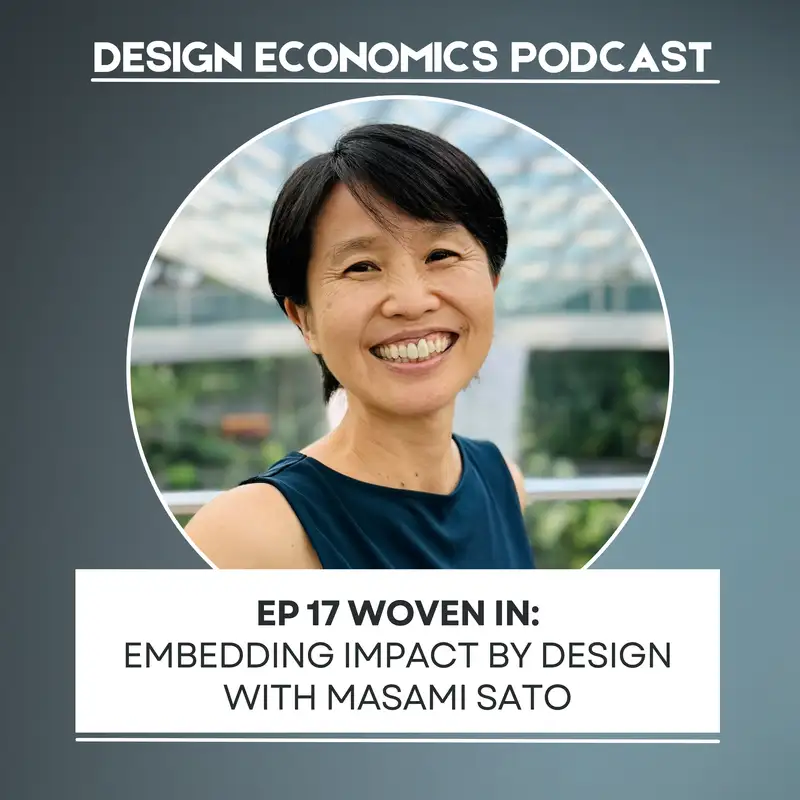
Masami Sato: Woven In; Embedding Impact by Design
The way that problems can be solved in different parts of the world, in different communities could be very differently from what we think will solve the problems. And tuning into the local voices and leaders and working together close to the community is really critical in understanding how to actually bring the positive change in ways that becomes more empowering and sustainable over a period of time.
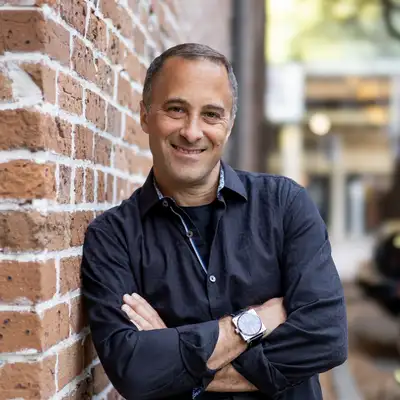
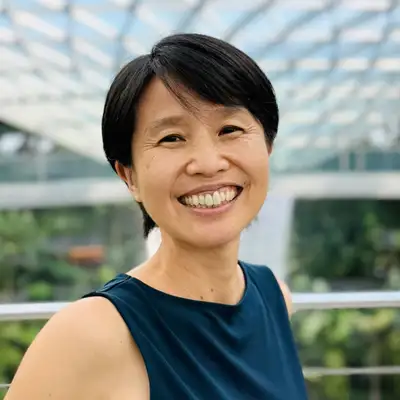
Vinny Tafuro:Hello, and welcome to episode 17 of the Design Economics Podcast, where we explore how design thinking driven by data is revolutionizing economics for the twenty first century. My name is Vinny Tafuro, a futurist, economist, and your host for this episode. My guest today is Masami Sato, founder and CEO of b one g one, a Singapore based social enterprise and certified b corp on a mission to make giving a natural everyday part of how businesses operate. Since founding b one g one in 2007, Masami and the businesses in her global network have generated over 395,000,000 acts of positive impact across more than 50 countries. Our conversation today explores what it looks like to design giving into the structure of a business from the ground up, and why small, consistent actions woven into everyday business moments may be the most powerful economic design tool we have.
Vinny Tafuro:Before we begin, if you find value in these conversations, please consider supporting the Design Economics Podcast through our Patreon at patreon.com/evolveeconomics. So with that, I hope you enjoy this conversation with Masami Sato.
Masami Sato:Thank you, Vinny. It's a pleasure to be having this conversation with you.
Vinny Tafuro:So I would love to start a little bit of your background and path to how you got to where you are with b one g one.
Masami Sato:So when you say b one g one, I suppose some people listening will go like, what what did you say? What is b one g one? So b one g one stands for the origin idea, which used to be buy one, give one, and then it became b one g one. And so to understand the power of this idea, I just want you to imagine. Imagine if every time, let's say, you had your favorite cup of drink like coffee, a child receives access to life saving water.
Masami Sato:Or imagine every time you read an inspiring book and then have a takeaway for yourself, a child receives access to education or a tree gets planted, or every time you go to see a doctor, somebody else receives access to medical care. So when we think about all the things happening in our lives and in our business, then if those things linked with goodness in the world and improving somebody else's lives, then we know that we can make huge impact happen together. So that's B1J1. And I'm the founder of this initiative.
Vinny Tafuro:Yeah. And so what brought you to that? I know you've been an entrepreneur, you've traveled, you've lived in various places. So what's kind of that background of brought you to
Masami Sato:Vinny, found you know that I started my journey as a young person traveling around the world, initially as a backpacker, you know, not having a lot of money, but then I had a curiosity, so I decided to do that. But the reason I initially left my country, Japan, was because when I was growing up, I didn't feel I fit in where I was. My parents were always busy working, not at home much. I didn't know how to make friends at school. And so being so introverted and didn't even know how to express myself in my own country and culture, somehow I had a curiosity and and I wanted to see the bigger world.
Masami Sato:And I wanted to leave Japan too because I didn't feel I fit, so I traveled around the world perhaps looking for a reason to be. But then when I was traveling, something interesting happened. So one thing was even though I was introverted and very shy, but when you are vulnerable and out there, you had to fend for yourself, get by. Right? Like, so I started to be open to connect with people without thinking about what to say or right thing to say or not saying the wrong things.
Masami Sato:So with that, when I couldn't even speak English or local languages, I started to connect with people for the first time in a very unique way. And then at the same time, that was during those times, I received so much kindness from people everywhere I went, but also I started to see reality of so many people and families who didn't have much or who actually didn't have access to very basic resources like access to water or kids not going to school because they had to work in the field or people with physical disabilities spending for themselves. So that was really like normal reality for so many people. But then I thought that it was very, very strange because if those things were happening to people in my own neighborhood back home, then either the government or the community would have helped. But that kind of help wasn't actually available for so many people.
Masami Sato:So I tried to make sense of what was happening in the world as a young person and couldn't. But then eventually, when I became a mom years later, that profound sense of love and connection with my own child who I didn't even plan to have, it was accident. And then that time I started to think about the fact that we were just lucky in this world. My daughter was born in New Zealand and we had safety, clean environment, beautiful nature, wonderful community. But I thought about other kids who were born in different circumstances, and I felt moved, that I felt I had to do something, Not just to take care of my own beloved daughter, but to do something a little more than just living my life.
Masami Sato:So that's when I became an entrepreneur. And that business I started, and then, you know, it was a food company. But eventually, the idea of wanting to make a difference as a business led to the formation of the b one g one initiative.
Vinny Tafuro:Gotcha. It's it's amazing what travel leads to, and then kind of the the different phases of life. So b one g one, you said, has evolved over time, and I guess this is kind of that acknowledging change in in how did you come up with the idea? Like like, what what was going on with your your food business that inspired you to kinda go, what what can you do? Because I think that's that's a big part of this, like, beginning story.
Masami Sato:Yeah. So every business start with an idea or a sense of purpose or connection. And then for me, food was my way to connect because I didn't know how to express myself in words, so food was the way that I could connect with anybody when I was traveling. So I worked as a cook and a chef, and then also by cooking together or eating together and being curious about local cuisine, that actually gave me the opportunity to really connect with the wider world. So I was really passionate about food and what it can do, Not only the connections, but also our health and well-being.
Masami Sato:So I went into food business because that was naturally part of who I was and what I believed in. And, you know, and every business start with that, right? Like, wouldn't start a business just thinking only about money because it's tough. It's hard work. And why would you do it if it was just for money?
Masami Sato:Then you, you know, a job. So for me, getting into food business and thinking that one day when my company succeeds, then I wanted to give all the profits away to help children and families. And that was kind of my idea and dream. So what happened? Was with a three month old baby on my back, I started my very first fast food takeaway business in Christchurch and serving truck drivers and, you know, factory workers.
Masami Sato:And I remember those days. And we worked really hard, like I was working sixteen hours a day nonstop seven days a week, and that continued on for about five years. And then by then, I initially had two businesses in New Zealand and sold them and moved to Australia. So we became an Australian company which produced healthy packaged frozen meals with organic ingredients and the allergy friendly. And so when we had distribution of about 150 stores in multiple states, our business was growing in a sense out of all the hard work.
Masami Sato:But Yeah. One day, this simple idea came to me. And then I realized that over the years, I worked so hard with two two little children then, but we weren't doing it. We weren't really making a difference because what we were always saying, day, we are bigger, when we have more money, we would do something great, like set up a foundation and build a soup kitchen and provide food and education to children. But that was just a dream in the future.
Masami Sato:One day I thought, therefore, instead of trying to do big things one day, what if we did small things every day? And that very simple idea turned into the origin of b one g one by one give one. And so for our food business, every time we sold a meal, then we would give a meal to a child. Not really an NGO that know how to do it effectively. So that was the first time I connected with the idea of buy one, give one or b one, g one.
Masami Sato:And then several months later, I had another realization. And I thought, well, this is really great because now making a difference is not a future thing, it's an everyday thing. And it's also owned by everyone who we worked with, not just by the company, but also the team members who packed the food and the customers who enjoyed the meal. So this shift was very pivotal to how I felt about my business every day, not only me, but everybody around the business. Then I thought, what if instead of trying to do this alone, we did it together with many other businesses?
Masami Sato:Because I knew so many other business owners, entrepreneurs, leaders who were really caring, and they had their own different businesses. So I imagined a world where so many things that businesses did made a difference just as a part of business as usual. So that was when I decided to sell my company in Australia and moved to Singapore to start the b one j one as the global initiative that helps businesses integrate this micro act of kindness into what they do.
Vinny Tafuro:Yeah. I love this story. I love the path there because there's so much about philanthropy and I don't even like to use philanthropy because like this social capital investment that we do that it's someday I'll exit or I will have enough money and I can sign the giving pledge and pile up with Warren Buffett. And we'll give away all our money before we die. And, and I think that that's, that's wonderful for the people that that that got to that position if that's what they do.
Vinny Tafuro:But I think how do we you know, something that I think resonates with me and resonates with with our work with the institute is how do we make these social capital investments? Because that's really what I see them as more than philanthropy or charity, is their investments in community social capital. How do we make that part of the business model? And it sounds like that's what b one g one really does. Rather than just doing it for your own company alone, it was, hey.
Vinny Tafuro:How do I make this available for others? And I guess that's, a a good kind of segue into that. Like, so what does how does b one g one work? What was the evolution, you know, from, like, I guess, a part of the question I wanna answer in this is is what is the evolution from how you founded it as as buying one and giving one, what it was like to b one g one and what that differentiation is. Because I think, I know myself when I when I first heard about it, it's taken me a long time, to move through that process.
Vinny Tafuro:And and I think, and a good explainer of of what that creative idea was and how it evolved to become the B1G1 model itself.
Masami Sato:Yeah. So on the surface, B1G1 is such a simple idea, you know, like every time business is done and something great happens in the world. But I didn't come from philanthropic background, like, you know, running charity organizations. And I knew how to run a business and grow a small business, but then at that time, you know, we weren't even thinking about terms like CSR or social capital or social impact or even just out of human essence of, okay, as a person living this life once and as a business owner who is doing our best to bring change or positive value and benefit, and as a parent wanting to see the next generation with better life than what we had, That was really the foundation of why we did what we did at that time. But to make it actually happen, we had to learn from the ground up because there was no other organizations that we could copy and then do what we actually could do out of that.
Masami Sato:So we started in 2007, which is nearly nineteen years ago, by trying, right, like testing and actually asking questions and working together with some extraordinary people in the organization. How it works of V1G1 today is pretty complex, but still simple on the surface. Businesses can join us and say, I wanna become a business for good and embed impact so that every time something good happens in my company, something great happens in the world. And then as a social initiative, and we are certified B Corp as a social enterprise, those businesses become a member and then contribute a small subscription charge to access everything. And then we have a platform that has all the projects broken down into micro units of contributions coming from charity organisations that we assess, so they can apply.
Masami Sato:Charities can apply for our program, it's free for them. We don't take anything from the donations or impacts or contributions because this is really about making that business impact go and create that impact, tangible impact. And then businesses can even link that to the business moment, such as every time we have a podcast interview, we could do that, or every time we have a Zoom call, or every time team achieves a milestone or new clients is created, or a new subscriber join our newsletter, you know, or every cup of coffee our cafe sells or a meal we serve. So depending on the business, there's like core fundamental meaningful moments that they want to celebrate, and then they can choose the impact from around the world and even link those with API, you know, with thousands of apps that they are using, or then we can track those impacts and count them live and then embed it on the website to say, thank you for being here with us, we have collectively created so many impacts. So that's how we do what we do.
Masami Sato:There's a lot more behind the scene, but we then over the years also realised that managing all of the charity relationships and then the administration of contributions, we had to have a separate organization, which is separate charity organizations, which the social enterprise also fund. So the model has a bit of a business element, right? Because we don't want contributions to be just out of donation, know, like charitable thinking, that we will just donate to this charity once off. But what we want is to bring business proposition and values to those companies and said, you know, when you integrate Impact into what you are doing every day, it really enhances your culture, brings people together. You can set your business goals in also relation to impact goals so that the people who are part of that goal don't feel like they are just here to sell something or achieve metrics, but they are achieving the goals that improve lives around the world.
Vinny Tafuro:Gotcha. I love that. I'm gonna pull on that one a little bit later, I think. The so the model itself, there's a a certified b corp that is one entity, but then there's also a charitable entity as well. How do those work together and collaborate?
Masami Sato:Yeah. We see these organizations as like sister organizations because we exist together to make the same thing come true. But we just happen to create these two party organizations. So whilst the social enterprise is still running as a business with a mission, the charity organizations have a separate voluntary board that make the decisions around the criteria for the charitable program and all of the guidelines and the governance issues. So having that separate structure was kind of out of seeing what will be the most effective way to run this.
Masami Sato:And then over the years, B1J1 becoming a B Corp company was a natural progression because when we first started, then there weren't these things available and we weren't even thinking that we were social enterprise because we didn't know what it was. We just were wanting to run this as a valuable business, providing value to the businesses, right? But then we realized that the governance around having the charitable activity was also useful and important. And then over the years, again, we started to connect with organizations like one percent of the planet. Today, and actually this year, we had a new update that all of the projects listed in B1G1 will be qualified for the 1% pledge for one percent for the planet initiative, where prior to that, we were only giving the environmental project in B1G1 as the kind of applicable project, right?
Masami Sato:So now it's expanded to even social project because of the understanding that when we bring these projects into B1G1, we are very conscious that the social initiative to give access to clean water or education and empowering the community to have a better income to stay in the communities that they belong, was also important part of allowing them and empowering them to actually take care of their own community and environment. So in a sense, like we had to morph over time because we didn't have a perfect answer to how to make this B1G1 dream come true right away. But we've worked with so many different charitable causes, about so many different types of businesses in all industries to really understand how to bring this meaningful way, but easy and simple way and resonant way of businesses making a difference. And then because there are so many different businesses, the impacts get diversified. And then that is actually another powerful part because if you think about that one for one model, lots of people know TOMS as the, you know, initial kind of famous like story of one for You one, buy a pair of shoes and you give a pair, but if it's just one company doing that at a mass scale, that might not necessarily be the best for the communities, but when lots of businesses are making their own decisions and coming from all different regions or industries, they are making these unique decisions to support different programs and different elements of programs to support people and solve different challenges.
Masami Sato:So over a period of time, it's better to be doing together rather than doing something alone.
Vinny Tafuro:Yes. I I I appreciate you bringing up Tom's shoes because it it is a question like, and I think my own remembering of that was, you know, at first they gave away shoes, but then they started investing in helping communities make their own shoes and make their own textiles and things as opposed to, I think, lot of western charity, quote unquote, especially in the textiles was we dumped clothing that we didn't want on countries that were capable of making their own clothes and ended up, you know, not giving them the things they needed. So is that kind of is that kind of how that evolution happened with them? Is that do I have that remembered correctly? Okay.
Masami Sato:You know, I think that one of the important things always to keep in mind is even when we exist in the space of philanthropy or giving, we need to really understand that actually, first of all, being able to offer something or give or help is a privilege that we have rather than we are the better, you know, being to help poor people. So that's one important thing. But then another thing is actually to bring our curiosity and humility into this mix because the way that problems can be solved in different parts of the world, in different communities could be very differently from what we think will solve the problems. And so tuning into the local voices and leaders and working together close to the community is really critical in understanding how to actually bring the positive change in ways that becomes more empowering and sustainable over a period of time. So we learned so much about that, you know, because it's quite a known fact.
Masami Sato:For example, if a company fund construction of something, right, like school or well, it's quite natural for the company to want to be recognized and put the plaque or something, right? But more powerful way of giving or helping could be to honor the community that they own that project or program or the change. So they might invest their time or even sometimes funding, depending on the charity organizations we work, you know, some of them have told us the story of how in the beginning they used to give this water filter to families, but when they are just giving it for free, people didn't take care of it and then sometimes it got abandoned. But then when they introduced the same program, asking families to invest, understand why filter is necessary and important for their health of the families, and got them to buy into that, you know, by paying something small. So then, because they paid for it, they own it.
Masami Sato:And so that's the things that we learn, you know, about how to bring change is often by being there to see what's happening and then really understanding the way to create more sense of ownership as well as a sense of fellowship. Because even if we are bringing some help, it means we are actually working together to overcome something that's actually profoundly important to do.
Vinny Tafuro:The idea of investing, I think, is important because I have a colleague that from the University of Tampa that he had start they started a education program that used through SMS messaging, they could do child child care tips and and education. And there was like a tie in to, cell phone credits and mobile phone credits. So there there was an exchange to it to kinda give it an ownership value of, oh, I'm I'm not just being given this. And I think that is important. What you mentioned earlier about the structure too and and this that you're just kind of a company trying to do good things is is b corps weren't available in 2007.
Vinny Tafuro:It wasn't until, I think, 2011 is when I first heard about them. And it was ironically enough, it was through couch surfing, which I I've done a lot of, their website. They were looking at transitioning to a b corp instead of a for profit entity or a nonprofit. I want a little bit more on on that detail. Like, what does the nonprofit do compared to the for profit?
Vinny Tafuro:And I think that's a good lead in to where I wanna go next, on on on kind of the services.
Masami Sato:Like lots of things that can be solved in the world or, you know, like when we are running B1J1 as an organisation as well, we can find a way to run it more commercially, with the intent to provide value and then in the exchange or direct exchange with that, we can generate revenue, right? So the for profit model is really great to really be very innovative and creative about where the value can come in. But then there is another part of work that we need to do, which we may not be able to commercialize. And then when you commercialize it, then the conflict of interest come in, right, because what we can create as a revenue for your own organization and own profit, for example, or you know, anyway the resources, you will make decisions to prioritize the value that you can create instead of prioritizing what matters. And so in that area of work that is really about governance, know, that is really about making the decisions in a way that has no conflict of interest or that is totally fair, you know, even if the value doesn't increase by making those decisions, but you do so because it matters in a quiet way, then nonprofit structure works so much better, or maybe that's the only way to do it.
Masami Sato:In V1G1 initiative too, that's kind of why we have a for profit initiative and nonprofit initiative, and nonprofit initiative V1G1 Giving, which is a charity, doesn't charge what it causes for the work that we do or we don't take a percentage of the donations because then all the decisions we are making does not prioritise what income that we can generate by making those decisions, but we are doing everything through the governance point of view. And that's why we have also voluntary board who actually not getting paid to help us make the right decisions. And also in the world too, when we think about, okay, the world has many challenges and businesses are the key to solving those challenges. I also believe in myself that the philanthropy and the charity is not necessarily the best way to solve all of those challenges. I think businesses create much more change, significant change to the societies and the communities throughout the world because they can go anywhere, you know, anywhere in the world to bring these business values and then serve people.
Masami Sato:And then in a way that's financially sustainable, so they don't need to ask for donations. But the thing is, if we think business should solve all of the challenges, there are type of issues that matters to us as a whole cannot be commercialized. And that's where the charity structure and the charity model is necessary to bring about the change that matters but converting that into the financial model is actually very difficult and then as a result of it, it needs to seek people to support the actual outcome and the mission even though it does not bring direct value or financial return for those people for support.
Vinny Tafuro:Yeah. So last piece on that, I guess you spoke about earlier. So the companies that want to join as members to be part of this and be part of the structure, they pay a fee for access to the dashboard and services. There's not like a percentage of revenue or percentage of donations. That's what funds b one g one, the b corp.
Masami Sato:We do have a model which makes larger companies contribute more to that because, you know, first of all, we wanna make sure that it's easy for small businesses to do this. Like, if all the corporations and the mini company or startup have to pay the same amount, it doesn't make sense. But then also, naturally speaking, smaller businesses want to do it in a simpler way, and then maybe the owner just want to log in and then choose the impact and create the impact in simple way in a self served manner. But larger companies with growing team would probably want to strategically implement this into the culture but also nominate the team members to manage the accounts to be the giving champion or the chief impact officer. So in a sense, we provide a more like a personalized services to larger companies.
Masami Sato:And that's why naturally it kind of justifies the different tier of the member, you know, model, membership model. Yeah.
Vinny Tafuro:So so the fee so so the cost to the companies is relative to their, say, annual revenues as a business. Yeah. It's not tied. It's not tied to a sale itself.
Masami Sato:Yeah. Yeah.
Vinny Tafuro:So so a large company that's doing, you know, tens of millions of dollars a year in business, there's a little bit of a different ask of them than a small consultancy that wants to tie, you know, their podcast episodes to a Yeah. Giving
Masami Sato:But then larger companies also often want to, you know, give tokens to employees for the anniversary or birthdays and let them choose the impact. So there are needs that can be fulfilled. So that's naturally why larger companies in B1G1 pay more. But at the same time, we know that this is actually enabling this entire ecosystem, right? Because we see every member as a stakeholder of changing the way that businesses exist and businesses make impacts in the world.
Masami Sato:So we are really like enabled by these amazing businesses that believe in what we believe in.
Vinny Tafuro:Gotcha. So I guess maybe could you tell talk a little bit maybe about a couple of examples of companies at different sizes and and how they came to b one g one? You know, maybe maybe a large and a small or, you know, large meat, like, a couple of examples of what that scale looks like in action.
Masami Sato:Yeah. So I think a few episodes earlier, Vinny, you spoke with a lovely lady called Mirren, Mirren Oka from Oka Kuatex, which is a swim school. And Miren Oka Kua Tek joined V1G1 more than a decade ago as a small business. Right? At that time, she had one swim school, you know, swimming pool, and with a great team.
Masami Sato:And she already was a great business owner who started her business and grew her business because she believed in the development of leadership and also saving the children from drowning. She was very mission oriented. So when she found out what B1G1 was doing, she naturally resonated with that and became a B1G1 company. And then she started to give a day of access to water for every swim lesson that she taught. And then also, then she started to do things like every birthday that the team members celebrated, they received the b one g one credit or tokens for the equivalent to their age.
Masami Sato:You know, if you are 36, then you get $36 worth of tokens that you can distribute to many different impacts. And so it was the initial journey of Mirren. And, you know, now she is a growing, thriving business with multiple centers. And she also became B Corp after B1G1 became B Corp. She thought it was a great idea, so she became that.
Masami Sato:And then her company also became part of one percent for the planet pledge, part of conscious capitalism. And now two years ago, became an employee owned company. So V1G1 existed as the starting point of journey into this world of business for good because making a small difference was easy to do and as a start, right? But there are lots of other things you could do as a part of journey. So that's like one example of, you know, small business growing with the one g one journey.
Masami Sato:And then we have a company like, okay, In The UK, we have a company called Coldstone, which is a SaaS enterprise solution for tech. So they have, you know, I think 300 strong like team size manpower capacity, and they joined the B1J1 as an enterprise. And then because the intention behind it is, yes, they believed in the power of tech, but they also believed in the power of tech to create change in the world. And also they had a team and a culture that aligned with the concept of being kind and also making an impact, so B1J1 naturally fit with them. So with them, we did things like a team session, know, we will go and then work with the team and then really like help the team members and the management team understand how much their work mattered, but also how much they could be doing by integrating impacts and also because they serve other businesses, that means they have more influence in creating like ripples of impact through what they do.
Masami Sato:Yeah.
Vinny Tafuro:I love that. I I I love that that that the the growth story with Mirin and and kinda going from one to another. So on the on the flip side of that and kind of, I guess, in the awareness side is how does what is the vetting process? I think there's something like over 400, four fifty companies or How does that process Actually,
Masami Sato:yeah, actually, it's not a number of organization. It's a number projects because some organizations have a few projects under their So
Vinny Tafuro:there our are programs within organizations.
Masami Sato:Yeah, yeah. Model is not chasing for all the charities, by the way, because one of the dilemmas of doing this work as an impact based initiative is that not all the charity organizations can do this way of facilitating the impact. So we are looking out for specific type of organizations that meet our criteria. So part of it is the track record. We can't work with brand new charities or brand new programs that they hope to run or succeed or for the first time, because we don't know the cost point, the success rate and the impact.
Masami Sato:So we can only work with organizations and programs that have been running for at least three years minimum and with good financial management, so we will look at the audited report and look at the financials, but also we do like a variety of background check. So when they meet the criteria, we also look at the project diversity and mix that we have and the funding level, because this is also balancing supply and demand, right? Because if we brought in too many of the similar programs running in the same region, when the funding toward that kind of impact is not reaching a certain level, then we are just creating competition, like when we are not ready to scale. So we look at the supply and the demand factor as well and sometimes even though the charity organizations might be doing really good work, we might ask them to wait. So in a sense that our aim is not to just have as many charities but to look at the diverse mix of areas of change that we want to fulfil based on what businesses want to do too at some extent, right?
Masami Sato:Even though we don't let businesses to say, you know, we want this charity, this project to be part of B101 whilst they can make recommendations, but in many cases we might have to reject certain applications coming from the charities or ask them to wait. So there's like always a little bit of fine balance to hit.
Vinny Tafuro:Yeah, I understand. What's the footprint of the charitable programs like Mirin's, you know, the swim time, is that something local to Miami? Is it something like and does that evolve over time?
Masami Sato:Yeah. It does it does definitely evolve. At this point today, right, Vinny, I wish we had more US based, like on the ground charities too, our project as well. We don't have as many compared to in countries, you know, in Africa or Asia because there are lots of projects like access to water projects is actually more available, but just because of people, you know, still more than 700,000,000 people around the world don't have access to even just water. But where are they?
Masami Sato:Where are those families? Then often they are in African Continent or Asia. So the programs that's kind of more life saving, the necessity items. And also the cost point that is actually very powerful, because if you can give access to water to one person for a day for 1 or 2¢, no business can say, oh, we can't afford that. And it's very powerful to be able to do this.
Masami Sato:But then at the same time, of course, businesses want to support local communities as well and the local needs. So over time, gradually, the programs and the project in those countries also gradually emerge through introduction, recommendations, but because we cannot bring on board all the local charities, right? Because if there's this good charity in Miami, but they don't meet the criteria of B1G1, quite often that's actually difficult to do. And also if we brought the Miami charity, then people in California might still say, oh, it's not local charity. It's not local enough.
Masami Sato:Yeah. We cannot fulfill like everybody's need right away. So what we actually say is that every business should actually support local programs and charities through their voluntary work or local donations and pro bono work. So those kind of supporting people in the local community must continue, not to be dropped, to replaced by B1G1. But then what we want to bring to those businesses as another layer is to really think about doing global and far reaching more impact based contributions in this way together with many other businesses.
Masami Sato:Because if we think about our current global ecosystem, global market, then we know we are benefiting from people around the world doing things, you know, we are not even seeing them. And the families are getting impacted by our choices and to create our own convenience and work, we are actually receiving this goodness. So we cannot say, I'm a local business, so I only support local charity because we receive materials or print things or use imported goods that comes from everywhere. So I believe that today we have opportunity and responsibility to do both supporting people in our family and in our own business and around our business and in our local community, but at the same time, every business everywhere could do something to help the global family as well.
Vinny Tafuro:I love that. And I think that it's a good way of understanding b one g one's position in this because, you know, for a local company to have impact on the other side of the planet, having a trusted intermediary like b one g one is priceless. And I look at too when you look at, you know, mirror and so many of this, we look at, you know, you know, taking the b corp assessment isn't about necessarily becoming certified. It's about asking questions of your company that you've never asked before. And what I love about this is this provides a kind of plug and play way for a company, regardless of size, to start on this journey and systematize giving before that far off destination we started off talking about, which then once they learn how to systematize it and how to do this, like, what else can I do?
Vinny Tafuro:You know? Yeah. And and I I love how that kind of blends. It's it's not about replacing it or only do this or only do that. It's it's, oh, we can have an impact on the other side of the world because, I mean, everybody has learned in the last five, six years, especially with COVID, how much supply chains matter to us.
Vinny Tafuro:And I think a lot of people have taken that for granted for so long. So I kinda wanna the the wanna get into a little bit of like, how does b one g one promote itself? Both to, like, grow like, what what is the the growth Yeah. Model there? And we don't or I don't often talk about growth in this, but it's also what what is kind of the the vision for b one g one?
Masami Sato:It's interesting time because first decade of our work was pretty much event driven. Like, we would travel around the world, appear in business event, you know, and then people weren't expecting anything like b one g one. No. The accountants came together to learn about how to become a good accountant. Right?
Masami Sato:Then we appear and say, hey. Here's the idea. And then the people in the room cry and be overwhelmed and say, oh, I wanna be part of this, you for life. And so we got so many of these amazing business people who in times when nobody was talking about even CSR or ESG or, you know, SDGs, they joined V1G1 because they believed in that idea. And then what happened was then the second part, you know, the next, let's say, near decade was online ideas.
Masami Sato:Right? Like, so how do we spread the ideas online more effectively? How to tackle the online referrals or content marketing? Or, you know, shall we try a little bit of boosting with the ad or tunnels and lead magnet? And we did all of these things.
Masami Sato:And what we actually realized after trying everything, Vinny, like this is a very honest truth, that actually it's not worthwhile investing our money and resources into online marketing, really, because if 1¢ can create access to water for somebody for one day, you know, and then if we are putting all that money into advertising, it actually is good for the social media companies, but can be we can achieve this in different way in new times. So we had a very hard lesson to learn, you know, because we tried everything and we are innovative people. So when people said that this is the better way of marketing, we tried everything, listening to the advices. But today, we have a different thought, you know, and this is the new time coming. And first of all, we know that the most meaningful way for us to grow is referral for sure, because businesses are connecting with each other.
Masami Sato:So when our members are expressing their gratitude to others by creating impacts, then it's gradually spread the story and inspire people and go like, just by having a meeting today, we planted one tree. How come? How did we do that? So that's one. And another thing, Vinny, now is the power of network partnerships.
Masami Sato:So there are other business associations, networks, connections that are starting to increasingly talk about the purpose or impact. And because v one g one is a way for networks to create more of a growing scalable impact, by working together with those networks and organizations, we can unlock more change without spending marketing dollars. Network partnership and things like that is a result of long term work that we do and then the trust we create over time. So those were not possible from day one, but today we see the necessity and the privilege of working with aligned organizations, network, and the people to do it together so that we can focus more on maximizing the impact that we get to create.
Vinny Tafuro:Gotcha. I think that network effect, and I think this is where, you know, B Corps, 1% for the planet conscious capitalism, all these things are coming together. And I remember when we founded the conscious capitalism chapter here was 2013. And nobody knew what we were talking about. It was just, just a kind of wild time of of just finding the few people that understood what we were working on at the time.
Vinny Tafuro:And I I I love to see that that it's kind of now there's there's enough going on. There's enough kind of saturation that people are discovering it that way. What is I guess, what's the best way to kind of reach out to b one g one? Where are you gonna be this year? Like, what what are kind of the immediate plans or ways of reaching out?
Vinny Tafuro:How can how can the businesses as well as nonprofits and and even customers how you know, maybe start with customers. Let me let me go there first because I think they have an impact Mhmm. When they ask, are you b corp certified? When they go into a coffee shop, are you free trade? You know, another question people are gonna ask is, hey, are you part of b one g one?
Vinny Tafuro:So how can customers be part of this? How can how can consuming
Masami Sato:Yeah. So if you ever already, you know, connected with b one g one member or business, member business, then you can continue to support them, right, like to be with them and to be part of the journey with them. Or you might choose to work for B121 businesses, so we have a business listening too. But because typically our members are small to medium sized businesses, so you might not see so many of them as famous companies. If you are trying to just live your life buying products from B1J1 businesses, it's not really possible right now.
Masami Sato:But we are launching something pretty exciting this year for the first time in nineteen years that we are bringing this experience to families. And you know, not in the same way that we serve businesses, you know, in the value driven way, but we realized that so many of our members, business owners, said to us that some of the most meaningful things that happened to them after they joined B1G1 was when they went home and then talked with their kids about the project, the impact, and sometimes some businesses, you know, told us that they got their kids to choose the project to give to. Okay. Yeah. Then they said, you know, how can we do this at home?
Masami Sato:And so, you know, we could have said like, oh, you know, gives you employee accounts and all that kind of things, but it's all part of business program, right? So then we decided to, for the first time, run a family initiative so that the families can say, you know, every time we have a nice family meal out, we wanna give a meal to another family. Or every time our kids do homework or dishwashing or then we can give access to water or, you know, provide education. So we are bringing this like very joyful way of making an impact, the part of the family moment. And then this is another way of us creating more awareness, even though this program doesn't make us money, it's a free program and we still transfer 100% of giving, which then, what is the purpose of this, is really to also make the business giving more meaningful over time too.
Masami Sato:And then when we have more people understanding the power of small, you know, the concept of power small and the power of all, then over time, who knows those children who grew up in the giving family could become an entrepreneur or their parents maybe working for companies, and they might go like, oh, actually, B1J1 is what our family use. What about our company consider doing this? So we wanna work with the families around world to create, like, compelling demand for the business program over time too.
Vinny Tafuro:Yeah. I love so how does the family the family program's not out yet, so I'm assuming you're still working through
Masami Sato:some of the details. Vinny, like, once the app is launched, because it's just about, you know, going through, I think, the spinal testing. Gotcha. When, yeah, the experience is available, I'll let you know so you can include in the show notes. Okay.
Masami Sato:Cool. Yeah. For now
Vinny Tafuro:We'll do that.
Masami Sato:People can go to v1g1.com and then find out about our work. And also, they can find me on LinkedIn and follow me, but I'm working on thinking about how to appear on Instagram moving forward because the family program probably requires to be a little bit more in the other social platforms.
Vinny Tafuro:Yeah, I would imagine so because it almost sounds like it. Yeah. I a long time ago with my with a bank, you know, they'd have like keep the change where like every day at the end, whatever change was left over in your bank balance was moved to your savings account. And it was impactful. And I think does this will this sort of like gamify it a little bit for families?
Masami Sato:Yeah. A little bit. But I think giftified is more of that. Giftified.
Vinny Tafuro:We
Masami Sato:could always say, oh, you could just go to this charity portal and then donate, right? Then families do that occasionally, but what we are doing is weaving this into the memories and the moments of families so they can think about, you know, when they give, first they can think about, is this a birthday gift or anniversary gift, it's a gift, or is it thank you for someone, or is it to celebrate something good happened today? And then they can think about setting a family moment that every Friday or every Sunday is a family giving day. You know, like we come together to celebrate the things that happen in a week. So that's how we wanna really change the way people think about helping and being kind.
Masami Sato:It's not about charity that we do once in a while, but it's about actually appreciating what we get to have more and enjoy our life more without feeling guilty. But then also knowing that what we enjoy is enabled by so many others and giving back as if we pollinate the flowers like a little bumpy bee, you know, as we receive the nectar, we pollinate the flower. What if we all pollinated our flowers together? That's, you know, not only that the challenges can be solved, but also we can create more kindness and sense of unity and connection in the world.
Vinny Tafuro:I love that, and I think we'll end there. That's a beautiful thought. Masami, thank you so much for being here this evening. We'll put everything in the notes. This was a wonderful conversation.
Masami Sato:Thank you, Vinny. It's been a pleasure, and thank everybody for tuning in as well.
Vinny Tafuro:Absolutely. And we'll keep in touch. Take care. We hope you enjoyed this episode of the Design Economics Podcast. If you value these conversations, please consider supporting us through our Patreon at patreon.com/evolveeconomics.
Vinny Tafuro:Your support helps us continue bringing these important discussions to a wider audience. Don't forget to subscribe to the Design Economics Podcast on your favorite platform. The Design Economics Podcast is produced by the Institute for Economic Evolution, a five zero one c three charitable organization whose vision is economic systems that cultivate rather than restrict our human potential. And I'm your host, Vinny Tafuro. Thank you for listening.
Creators and Guests