Veronica Pesantes: Artist-Built Economies; Pooling, Sharing, Collecting Together
We need more ecosystems that allow women to develop in the arch while taking female realities into account. What I see happening in middle age is women when you soft launch or hard launch your kids, and all of a sudden you're like, wow, maybe I'll go back and finish that Ph. D. I never finished. Or maybe I'll go back and do the creative act that I had to drop so that I could take a job that I hate so that I can make money.
Veronica Pesantes:There are no structures intact especially in the art world, for you to do that. It's either you're an upcoming rising star like you just graduated from Yale or RISD and they're going to scoop you up and boom. Or the art world lately has been rediscovering women that are in their nineties or after they died. I can tell you four major exhibits of artists in their nineties who just had their first huge solo break. So what's happening in the middle?
Veronica Pesantes:Nothing.
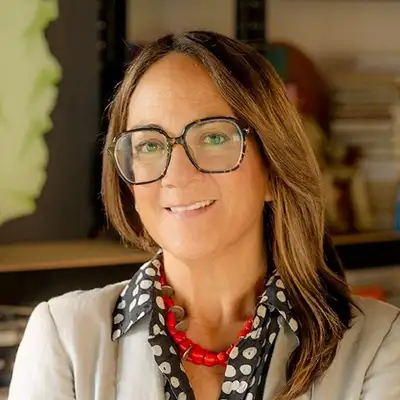
Vinny Tafuro:Hello, and welcome to episode 23 of the Design Economics Podcast, where we explore how design thinking driven by data is revolutionizing economics for the twenty first century. My name is Vinny Tafuro, a futurist, economist, and your host for this episode. My guest today is Veronica Pesantes, an art writer, curator, and cultural strategist who has spent nearly forty years in art from museum education at the Guggenheim to bylines and art news. She is also the founder of Miami Art Hang, an educational program that puts Miami's artists and galleries in front of the city's growing international population. Veronica identified the gap.
Vinny Tafuro:What we spend most of this conversation on is what people are building to fill it. Pooled funds that commission artists directly, shared stories, member run associations, intentionally designed structures that cultivate artists across a whole career, not just at both ends. Before we begin, if you find value in these conversations, please consider supporting the Design Economics Podcast through our Patreon at patreon.com/evolveeconomics. And with that, I hope you enjoy this conversation with Veronica Pesantes.
Veronica Pesantes:Thank you for having me. I've already learned so much with all the reading material. Well, just the other episodes that you offered that you shared and really, I'm super excited to dig in.
Vinny Tafuro:I'm glad to have you. We've been kind of as a board and as an organization been talking about, the parts of art and how that intersects with the economy and how in kind of as we modernize the economy and look at it in different ways, how do we start integrating art into the... Into economics better? And so this is a conversation I've been waiting to have, and I've known you for a little while now through some other networking and stuff, and it's been really good to kind of finally get you on the show.
Veronica Pesantes:Thank you. I know we were actually just talking about Andrew Carnegie. What better... Yes. Philanthropy, art, and economics.
Veronica Pesantes:Right?
Vinny Tafuro:Yeah. We're gonna do a history dive here. And so I guess to start off, I'd love to give the audience a little bit of a background on who you are and what brought you to where you are today in the Miami art scene.
Veronica Pesantes:So I have been working in the art since I was about 19. So that is... I'm going to date myself here, almost forty years. I mean, started, I moved to Spain when I was, my father was living in Europe. I started as an intern at the Prado Museum in Madrid.
Veronica Pesantes:I wanted to be an artist. That didn't happen. So I moved to art history. Then after a couple years there, I transferred and I studied art history and Latin American studies at SMU. And because of the mentorship of three incredible professors, they encouraged me to go into academia to pursue a PhD.
Veronica Pesantes:So I then started a PhD program at the University of Chicago in art history. And I did that, I did my master's, I did about a year and a half into coursework, and then I life happened. I got married. I moved to New York. I started working at the Guggenheim.
Veronica Pesantes:I put my academic career on hold, went into museum work. Then I founded a sustainable textile brand before there was a word sustainable. Then, that was my first brand. Then I had one kid moved to Miami, you know, continued working in the arts even if it was teaching art at my local school or being a consultant for arts organizations in Miami, then I founded a second sustainable brand when the word sustainability was trending. COVID happened, I got disillusioned with sustainability movement and greenwashing, etc.
Veronica Pesantes:Quit that and found my way back into the arts a couple years ago. And I founded Miami Art Hang because I basically saw a gap between the Guggenheim I'd worked in museum education. So I was very much into the part where we are translating what the artist is doing to the public, you know, sort of a bridge. And I saw that what was happening is people would zoom through museum exhibitions without reading wall text or really getting the context. I think it's, you know, obviously we're in a digital world where everything is scrolled in three seconds.
Veronica Pesantes:Having worked in a museum, I know the years that it takes to produce an exhibit. I know what it takes. It takes a lifetime for an artist to come up with the work and, and the same thing was going with exhibitions. Was seeing a unsustainable pace that mirrored the fashion industry, it still does in the art world, where galleries need to produce like two to three shows a month. And it's just it really is not sustainable at all.
Veronica Pesantes:And so I decided to start doing an education platform where I bring people in, slow them down, introduce them to artists. I also continued art writing. I just published my first academic piece in maybe twenty eight years this week. Congratulations. Yeah, that's how you know, it's a very circuitous route.
Veronica Pesantes:And I think one of your podcasts that you shared, I think it was the Swifty Economics one, talked about the difference between that linear Western path, right? And then the more non Western, more feminine circular path. And I think that for me, that's a huge thing in my writing and what I study is that. And I think it has to do with the care economics and women in the market and women in the art world. I think it all is related.
Vinny Tafuro:Yeah, I love that and I love the circularity side of it. And it's funny because that actually reminds me, Serena is the one that introduced us. And, you know, she's I met her through when I had founded Conscious Capitalism Florida and we were working on, you know, or the early, early B Corp movement in Florida. So it's great to kind of complete these circles and move into different realms with them. So a little bit about how I kind of...
Vinny Tafuro:In the piece you you were featured in... Well, some of your writing was featured in PRASSL, and it was about women in art and the age gap. And that's really what kind of hit me because I think if you look back to my conversations with Misty with... About Swiftonomics and a couple of our other podcasts, a lot of what we talk about is that economics doesn't evaluate the time and doesn't compensate... It doesn't count that time.
Vinny Tafuro:And and a lot of that, because of the way the systems were set up, was care time and the time of women and mothers. Now, of course, it's becoming a little bit more egalitarian now, and it just means husbands that stay home don't get counted either Yeah. Exactly. Because they're just doing caretaking. So Yeah.
Vinny Tafuro:Can you tell me a little bit about that piece? What inspired and what what you've seen
Veronica Pesantes:Well, what inspired it really is that... I mean, I'm not just a single mom. I'm a solo mom, meaning I am the sole parent for two children. And I have been for about ten years. So I mean, it's something that I definitely feel passionate about because it's been my everyday life.
Veronica Pesantes:In my own life, I mean, definitely detoured my, you know, my professional trajectory, if it were linear, right? I mean, it was pretty impossible to have a full time job, because I was the only, you know, again, because the economic system in this country, there's no subsidized daycare. There's no one to pick up your kid if they're sick. There's no one to leave your kid with if you don't have family around. So it's all these systemic issues that are very much prevalent.
Veronica Pesantes:And I think that that's what article sort of hinted at. One of the other people that was in that article, and by the way, PRASL is a great it's a, it's a more of an international platform where it's not just talking about the American art system, but it's global. And they really get into socioeconomic social justice causes, which is why I like them. So one of the people there, this woman, Genya Gaines, she said, need more ecosystems that allow women to develop in the arts while taking female realities into account. Cycle friendly and family friendly structures within the industry, quotas for women and mothers, and creating concrete formats of collaboration, like artist residencies with childcare or dual programs for mother and children.
Veronica Pesantes:So that's one thing, right? That's as a mother. And as a mother, you're probably in your 30s. But what I see happening in middle age, you know, is women when you soft launch or hard launch your kids, and all of a sudden, you're like, wow, maybe I'll go back and finish that PhD I never finished. Or maybe I'll go back and do the creative act that I had to drop so that I could take a job that I hate so that I can make money.
Veronica Pesantes:And there are no structures intact, especially in the art world for you to do that. I mean, I've been publishing, I publish in major arts magazines, you know, I've, I've gotten awards, etc. And I can't get the education manager at the PAM Museum to email me back with a idea for a lecture that I already gave in New York. You know what I mean? There's, there's just a gap.
Veronica Pesantes:It's like, and the art world in general is already very much connection driven. So if you're not in that world, if you're coming at that world from a different place, it's really hard to enter. Because that world right now, a lot of it, it's either you're an upcoming rising star, like you just graduated from Yale or RISD and they're going to scoop you up and boom. Or the art world lately has been rediscovering, not the colonial, you know, women that are in their nineties or after they died. Like, literally, I can tell you four major exhibits of artists in their nineties who just had their first huge solo break.
Veronica Pesantes:So what's happening in the middle? Nothing.
Vinny Tafuro:Yeah. Were they just not creative? And I think that that's something I noticed and what I connected with with that piece is the fact that and I think we said this on the call is like you either have to be, you know, child, you either have to be child free and scrappy enough to be living with friends in studio somewhere, or at the latter half of your career where now you've retired from, you know, ten, thirty, forty years of corporate or made better and have the time and energy to do this or money to do to
Veronica Pesantes:Or that care privilege part or in the art world, for instance, you have to have parents or someone to financially help financially support you while you moved to New York or LA to get an unpaid internship in the art world that's going to permit you to climb up, you know? So that's the other.
Vinny Tafuro:Yeah. And I think that that's the subsidy side of it is that if you have a family structure or a wealth structure that allows you the privilege to do it, you have the opportunity. And if you don't, you're just kind of out of luck unless you you just are that driven. You know, there... There's the outliers that make it despite all that, but there...
Vinny Tafuro:There's not the room for so many other creatives.
Veronica Pesantes:Right. And I mean, there definitely are the outliers. I mean, again, I can tell you, you know, in Miami, New York, you know, incredible. I mean, Latinx art is my, you know, is my area. I mean, Latinx scholars, museum professionals, professors, you know, that have gotten there.
Veronica Pesantes:But it has been probably double the work for many of them because I know many of them personally. You know, there hasn't been, that much, you know, the financial part is a big deal. Like it really is you really are passionate about the arts to get into the arts cause otherwise economically it makes no sense.
Vinny Tafuro:Yeah. It's I think that's a good way to segue into kind of our first segment here. You know, the design economics, tenants that we go by is that first one is paradigm change. And one of the things I've circled in in some of my writing over the years, and I think I shared an article with you from like 2018 on, that cited Adam Smith, and you know, it's, we're not getting into economics here, but in Adam Smith's Wealth of Nations, which is kind of like this founding document of capitalistic kind of systems, you know, one of the things he noted in the first chapter of that was that many people have beautiful talents, like dance, like art, like all of these things. And there was actually, he compared it to a sort of public prostitution to sell those talents because those inherent talents were gifts.
Vinny Tafuro:And what I don't think people understand is here we are two fifty years later, and the entire economy runs on creativity. And so we have this deep, deep challenge embedded in the early theory that there was this kind of moral challenge to it. It's... And I think the article I wrote is, you know, why we love art but we hate the artist. And it's because we love the art but we don't want to pay the artist.
Vinny Tafuro:And so a little bit of like, what is that ecosystem looking like in...
Veronica Pesantes:Well, it's also... There's... And actually, I'm gonna... I don't know. Have you ever read a book?
Veronica Pesantes:She's a former colleague called, my god, Art Thinking? This is a must read for anyone who is in a creative art and so it's written by this brilliant woman named Amy Whitaker. She's a professor in New York, I think at the New School, and she has a master's at the court... In... At the Cortland Institute, and I also think she has a master's at the at the London School of Economics.
Veronica Pesantes:I mean, she's operating from both cylinders, which is so rare. And it's just this brilliant book that really... And I think she teaches business to artists at the moment. So, you know, I think she's one of the... I always recommend that book to artists that I work with because really...
Veronica Pesantes:And I'm working with an artist right now that is at the... I mean, career wise, she's included in a biennale and it's gonna be in January, which is probably the most prestigious thing an artist could be in right now. And she's one of five or seven Latin American artists. When I looked at her price, I mean, when I saw what she's and she's operating in Latin America, which is a different economic model, but now she's entering a global art market. Yet her prices were not reflective of what I know what those were.
Veronica Pesantes:You know what I mean? So she was under, under, under evaluating herself. And she's at the top of her game when you look at it curatorially. Yet, do you know what mean? There's such gaps because, A, there's also a lot of shame and women carry shame around finances a ton.
Veronica Pesantes:We are taught not to talk about money. It's not correct. I still have to force my friends to tell me, what's your retirement strategy? Do you have any money? I mean, like men talk about it all the time.
Veronica Pesantes:Women don't. And then and in the arts, same. There is, you know, even sometimes I have those issues. You know, it's like people assume that what I do should be, you know, they're like, oh, wait, it's paid. I'm like, Yeah, I've been a student for forty years.
Veronica Pesantes:I have two degrees. I'm highly competent and this is my job. So yes, you know, I mean, it's a big, big issue. This what you just said, this idea of art as something, you know, up here and a different thing that shouldn't or has a difficulty being monetized.
Vinny Tafuro:Yeah. And I appreciate that because I think the... And I know a number of artists and, you know, knowing where to price yourself, I can't even begin to think how to do that, and and how personal it is, and how there's other people that are going to... You know, I I know just from, you know, freelance work on the design side and whatnot, what it's like to try to maintain your integrity and pricing. And to do that with art when you're also struggling to make ends meet is just...
Vinny Tafuro:Has to
Veronica Pesantes:be really... No. And it's just not art. I think it's all creative fields. I mean, I cannot tell you it's the can I pick your brain situation?
Veronica Pesantes:I mean, nine out of... No. Eight out of 10 emails or call that I get is someone picking my brain. I'm like... And finally, like, you know, I have another great friend who works with creatives and entrepreneurs.
Veronica Pesantes:She has a website called Weird Specialty, and that's what she does. She sort of works with women saying, No, you know, you will not pick your brain. If I was a lawyer, you know, maybe I'll get... Right? Maybe a little bit of time to see if I'm going to take your case.
Veronica Pesantes:But you're not picking my brain for an hour unless you're going to So pay me $4.50 that is so slippery with creative work because people, again, people assume that it's free labor.
Vinny Tafuro:Yeah. We're just not set up to have paid for it the same way, or at least our, you know, our models because, you know, it's in one way, you know, there used to be this... We've celebrated the breaking down of centralization with being able to publish your own book, put out... You know, putting out music, putting out video, all these things. It's way easier to put it out, but now you've got these tech platforms on...
Vinny Tafuro:For a lot of the content production that dictate prices. And on the art world, I I have to imagine it's it's a similar challenge now with trying to price yourself, trying to break into that.
Veronica Pesantes:Well, you know, a lot of that is mitigated by galleries. But the gallery model itself is in a bit of a pickle because these art fairs like Art Basel, mean, that is where most art is sold. First of all, most artists sold in The United States. Globally, the transactions in The United States far exceed any other place. And so these, you know, like Art Basel in Miami, these art fairs are so expensive.
Veronica Pesantes:I mean, if you're a gallery, you're paying for shipping, bringing your staff, a blue chip, a premier booth in our Basel can run you up to $100,000 That's for three to four days. I mean, it's insane.
Vinny Tafuro:So
Veronica Pesantes:the smaller tiered galleries, and that's our Basel, you know, then they're smaller fares, but still, it's, it's a stupid expense. So it's harder for the galleries to make money. It's just, you know, the, it's a broke, it's kind of a broken system. I'm going be honest with you. It really is.
Vinny Tafuro:Well, feels like to with, you know, and I wanna dig in a little bit of like, you know, what you're doing with Miami Art Hang and what that is because this idea that, you know, if you surround it around an event and we have, you know, many communities have different art festivals and events, art puzzles, large. But how do you bring that and spread that over the year? It's almost like art is treated a lot like Christmas.
Veronica Pesantes:It's like That's actually
Vinny Tafuro:together in Black Friday.
Veronica Pesantes:That's a brilliant, brilliant analogy and a little bit that was my goal. Miami, the reputation of Miami as a premier art city was built around Art Basel. I mean, Art Basel started roughly twenty years ago, and it really put Miami on the map. Has been I've lived here for twenty two years, I have seen this huge change. Now there, you know, a lot of the museums have brought in incredible curators.
Veronica Pesantes:Local curators have evolved, into, you know, into world class curators and they're all there. And there's so many galleries. And because Miami is an entry point to Latin America, there are so many galleries from Latin America, artists from Latin America, and that's incredible. But that is the problem. That's one of the problems that I saw, you know, people...
Veronica Pesantes:Or or here's another thing, people go to the opening of a gallery or of a museum show, they drink the sorry, crappy wine, and they leave and you know, they're talking. And then what happens? These galleries, the rest of the month or month and a half that they have the show, you walk in on a Saturday, there is nobody. Crickets. So I thought because I come from a museum, you know, I come from a museum education.
Veronica Pesantes:We had an exhibit and we had a month or two or three of programming. We had Family Day, Child Day, you know, everything, guides, educator guide. So I thought, like, what can I do to bring people in? Because I know art, you know, and also to give people an experience where they're understanding that Miami is a three sixty five day. The artists are here every day, not just during Art Basel.
Veronica Pesantes:So that was a little bit of idea. The thing is just this creating of these mini gallery crawls events throughout the year. And again, and something that's happened that I wasn't 100% sure at the beginning, but it's evolved is I've created an entire ecosystem of new collectors. I mean, because, you know, let's face it, the art world has a reputation as being snooty. And oftentimes you do walk into a gallery and the person sitting there will not even look up at you, you know, and there's you know, that's something that it's a PR issue.
Veronica Pesantes:That's a problem. So many of the people that started with me are now full on collectors. And I mean, I can think of a couple of them that are on their tenth or twelfth acquisition of local artists through what we've been working with. That to me is amazing, because not only are you and by the way, the art world is not going to continue until it drops the elitism and welcomes in a whole new class of collectors. And I have sat through lectures with a trustee of a major museum in Miami who espouses himself as a huge collector.
Veronica Pesantes:And he sat there in front of an entire audience of artists and artworkers and you know, students saying that like, if you walk into a gallery and are going to spend under 5 to $10,000 no one's going to look at you. I mean, it was giving Linda Evangelista saying that she was not would not get out of bed for $10,000 which by the way, almost destroyed the fashion industry. That is utter bullshit. There's I can't think of one artist that doesn't wouldn't be excited to sell a piece for $1,000 I mean, unless you are already, you know, like, at a blue chip gallery. By blue chip gallery, I mean the big ones that are selling artwork priced at $500,000 and up.
Veronica Pesantes:So that attitude, you know, because the reality is that 5,000 to $10,000 mark and less, that is what the art world needs. And you need new people in that tier for it to survive. Otherwise, it will not. I mean, it's, you know, we're going to have crisis. If there's an economic crisis, buy for so many galleries.
Vinny Tafuro:Yeah. And that makes sense because I mean, I've done enough gallery visits that like you do, you kind of get that, oh, you're judged as soon as you walk in the door. And now I'm probably, you know, I'm looking at this as, like, how do you make the connections with people? And I think kinda going from there, how... What what are some of the stories of, like, the...
Vinny Tafuro:You told me... There was one that you told me about that
Veronica Pesantes:Commissioner?
Vinny Tafuro:Not commissioner. It was somebody that you brought in that had not seen local... Like, not seen the Miami art scene. I'm drawing a blank.
Veronica Pesantes:Yeah. Yeah. So that's how I actually I actually started Miami Art Hanging. I have a friend, a colleague in in New York at a museum. And she said, Listen, I have this collector.
Veronica Pesantes:He's British. I think he lives in Miami part time. He's going to be at our puzzle. Can I hire you to show him around? So I'm calling him.
Veronica Pesantes:We're emailing. He's delightful. And in fact, he lives between London and Miami has a house in Miami. And I said, Well, great. I said, you know, I can pull up a list of some of the local that you know, we can visit some of the local galleries was right before our puzzle.
Veronica Pesantes:And some of the museums, what are some of your favorites? Crickets. And I'm like, he's like, I gotta tell you something. I've never been. And I was like, you have a house in Miami, you are a major collector.
Veronica Pesantes:I mean, I, you know, and I said, you've never been to these institutions or galleries? Like, I can't actually believe that. That's how I started. I started this whole agenda for him. He's it was it went really well.
Veronica Pesantes:Next time he's like, Can I bring my family? I'm like, Absolutely. I put it on social media, I got a bunch of, you know, friends saying, Hey, can you do another one? I'd like to come. And that's how I started.
Vinny Tafuro:Gotcha. Gotcha. So it's really just introduced. And I mean, you find that in so many places when people, know, moving to a new city, matter what their income level is, there's a certain amount of, Does the city have a community infrastructure to receive people? And are you being proactive to seek out those?
Vinny Tafuro:You know, so as an art collector, you know, did did he maybe not look for anything either at the same time? Yeah. I mean, I think it was
Veronica Pesantes:Yeah. But it's also a But it's little also this feeling like... And, you know, this is something, again, something that needs to break, right, in in the whole ecosystem is this feeling that, like, if it's coming from New York, Paris, you know, and right, it's that whole idea of like, it's these centers of the art world and like, you have to either study there, you have to have a gallery there. And that is busting open. I mean, are cities like Detroit, Minneapolis, Dallas.
Veronica Pesantes:I mean, there are smaller cities in The United States right now that have such incredible museums, artists living there because it's much cheaper than living in New York or Miami. And frankly, really interesting curatorial programming. So, you know, I'd like to see that bust open even more. That idea that it has to come from a center, you know?
Vinny Tafuro:Yeah. You know, and I think that's a good transition into kind of like, you know, so tenant two is this idea of creativity and not, you know, not punishing creativity in economics, but also in whatever field is being disrupted as economics changes. And so what are some of the things, and you mentioned commissioners, and so what are some of the things that are going on right now to kind of break down this gap?
Veronica Pesantes:I've mentioned to you this incredible organization that was started by a dear friend, Dia Carrington and Rebecca Monsoon. It was started in 2017 with a couple grants. So there was a wave maker grant by another artist non for profit called Locust projects, and, and a research and development grant from the Knight Foundation. And they recently received another Knight Foundation grant, and are now expanding to Detroit, I think to Montreal, I want to say that because I know that Dijas from there. But basically, and I'm kind of reading from their thing.
Veronica Pesantes:I mean, what they do is kind of amazing and revolutionary. I'm actually going to one of their events tonight. So I'm going to read because their, their messaging is so clear. So it says inspired by diasporic systems of mutual support, what began as a local art project with an initial base of 80 members in Miami has since expanded into a national movement, challenging conventional arts patronage through more artist centered community led collaborative programs, making art collecting possible in ways that may not be affordable or accessible on our own. So what they do is they they sort of pool the resources of a group of collectors, and then they take the capital and they give it to the artist, the artist produces original artwork for the members.
Veronica Pesantes:So it's a way to increase and diversify the collecting base. It's a way for artists to get commissions. And, you know, there's another tier, which is just, it's like, I think it's $75 a year, which you can just join and go to the events. I mean, it's really incredible. And that's why I think she they just received this other grant, and it's growing because it is an incredible community based arts model that has worked and is working.
Vinny Tafuro:It sounds fabulous. And I think I looked on their website like Detroit, Philadelphia, Charlotte, and then you're saying Montreal as well.
Veronica Pesantes:Oh my god, I might be wrong about Montreal. Montreal, I know that one of the founders is from Montreal. I know they also lead incredible trips, and I know they go to Montreal and she does do things in Montreal. So I'm not sure. But definitely, I know Detroit and you if you looked in those are the other cities.
Vinny Tafuro:Yeah, well, and what's interesting, said the part about the diaspora, you know, inspired by diaspora systems of mutual aid. And so the last episode before this one, because this is going to come out in late September, I spoke with Carolyn Shanaeze Hussain, and she wrote a book called The Banker Ladies. And it was all about what in academia is called a ROSCA or savings and credit associations. So they're informal banking systems, and the banker ladies are the women in communities, she studied in Toronto where these are going on for women from the African and other diaspora that are not able to access traditional banking. And so they're creating their own systems of pooled money and to help each other out with expenses and whatnot.
Vinny Tafuro:So to then, you know, hear... In talking to you, find out this is going on in the art world even is just fascinating to me. And so I'm looking forward to that introduction.
Veronica Pesantes:And two Canadians. Yeah,
Vinny Tafuro:and two Canadians.
Veronica Pesantes:Canada.
Vinny Tafuro:I know. Yeah, Carolyn is from, she's in Toronto. So yeah, we're, it's just amazing how the kind of the connections come together like this.
Veronica Pesantes:Yeah, and I think, you know, honestly, I mean, I think economics and you had and I'm going to quote you now because you shared with me something that kind of stuck. And I think like art, you know, economics is something that kind of scares people off. And it has a very like, Oh, you know, I'm really bad at math, I don't understand economics. So you say economics have expended a great deal of energy convincing the public that the economy is a complicated system understood only through complex mathematics with equations that create perfect theoretical models, but do not translate to societal reality. The resulting lack of public literacy and discourse severely limits the ability to question economic orthodoxy.
Veronica Pesantes:And so I that like really stuck with me. I mean, I went to University of Chicago that is econ central. And we were always like, you know, but it was also a very we also were able to take courses in the English department and the law department, like, but not econ. I mean, and I always like, I would wonder, was like, you know, I kind of would love to take an econ class, but it was like the holy grail. Like we were not.
Vinny Tafuro:Yeah, that's part of what I talked on the other academic side of this is, is there's so the Economics Department is so isolated from every other department, and even when you think of like there's, you know, programs like called Donut Economics, Kate Raworth is the author of that. She's at Oxford, but she's in the Sociology program. She's nowhere near the Oxford School of Economics, yet she is this renegade economist that's been working in the field for fifteen, twenty years. And so it's funny because now as you read my words back to me, I'm like, it is the same thing. If you don't have that high level math degree, the Economics Department doesn't want to talk to you the same way a gallery wouldn't want to talk to me if I didn't have at least $5,000
Veronica Pesantes:No. If you don't... And it's the same way in the art world. Like, if you don't have, you know, there's a lot of jargon. Like, I just told you I just published my last piece.
Veronica Pesantes:I even read it back to myself and I was like, woah. I mean, because, you know, I have to use, I know those words, but in my work, I try to translate that and make it legible because they're very theory laden, you know, and that's off putting to a lot of people. I mean, I think that that work on the theoretical level is super important. But I think if you do not break it down and if you don't make it accessible in a language that is not, you know, that doesn't repel people, then you're not going anywhere with it. It's just going to stay in that ivory tower.
Veronica Pesantes:I mean, that's the, you know, forever analogy for academia.
Vinny Tafuro:Yeah. And that's so I want to kind of go back. We've got a couple other ideas though, too. So one of the things in your article was about creating programs for people that are going through life changes. And are there any examples of that happening yet?
Vinny Tafuro:You know,
Veronica Pesantes:the Yeah. Commissioner seems to be a kind In Miami, I've met... Well, there's two. So you know, I'm speaking to my, you know, I am a Latin American woman who lives in Miami. I'm in my mid 50s.
Veronica Pesantes:And I work in the arts. I there are two organizations. Mean, they one is Fama, which is a fiber art. Oh my gosh, I forgot the M stands for. I'll tell you in a minute.
Veronica Pesantes:Artist- Association. Yes. And it was founded by by a couple artists and during the pandemic, you know, just as a way they started doing virtual embroidery workshops, weaving textile as a way to connect and then it grew you know, then there's another gallery here that does every year they put on a huge show of many, many textile artists from all over the world, which is beautiful. And, you know, I've gone to several events and I know many, many of the artists there and they really have an incredible network. I mean, they all, you know, if one is the curator of a show she's going to pull from this group, you know, they're all, a lot of them are mothers, a lot of them are, you know, in that age group just sort of gets left out of the whole younger star, older rediscovery.
Veronica Pesantes:So that's one. There's another there's another group called Collective sixty two founded by another woman artist who's also a mother. And she started this this beautiful, beautiful network of studios with it's it's it's so like well done because in the center is a space for a gallery for a show where you can have shows. There's individual galleries. There's a beautiful table outdoors where have meals together.
Veronica Pesantes:So it's just kind of like this, you know, it's it's a really beautiful model of collaboration. And again, because, you know, if one curator comes in, like when I come in with a group of people, and I'm working with the artist, she's going to immediately tell the other one and, you know, it's a very like, sharing collaborative space. And I think that though and, you know, those both of those are indicative of a more like grassroots way. Like, you know, Commissioner is actually a not for profit. These two are just started by women filling a gap, but doing essentially the same thing, right, which is a more democratizing, humane way to navigate a very, very hard to understand system, which is the art world.
Vinny Tafuro:Now, to get into that, and this is one of the things, you know, we touched on it a little bit, like when you talk about or these other places, other cities are starting things up. But one of the things I've noted is, and and I think we mentioned it when we had our preview call, was the fact that, like, you no longer have to go to Silicon Valley to find an incubator for a start up. Mhmm. And so what is kinda happening with these organizations that are starting in Miami? Are are some of them looking at how they would expand or or how these models can be used other places?
Vinny Tafuro:Like, I look at the commissioners, for example.
Veronica Pesantes:Yeah.
Vinny Tafuro:Obviously that that that seems to be a working model, but how does that scale or how do other cities potentially like look at that model to build it and of course then we get into the funding because there was the Knight Grant.
Veronica Pesantes:Right. So yeah, so you had asked me that and so, know, and again I just, I'm going on what I know from them from being involved with them, that they do, like I said, they just received a large Knight Foundation, grant but they also have this system where they pool from the commissioner members. Right. So I think in my opinion, I'm not an economist, it is completely scalable to any arts ecosystem. Because like I said, these cities like Detroit, like Charlotte, like Dallas, like Austin, I mean, they all have a Minneapolis is another great example.
Veronica Pesantes:I mean, Minneapolis is a city that has incredible museums. It has a great university. It has a lot of artists that work there. So I think, you know, there's elements that you need, at least in the arts, to have that. And so, you know, although I'm not an expert on any of those cities, you know, I would imagine that if you had a model like that, you already have the infrastructure there, you have the artists, you have the curators, you know, you have it's all there.
Vinny Tafuro:Yeah, well, I think that same thing happened with incubators is, you know, fifteen years ago or maybe a little bit more, no, fifteen years ago probably, you were looking at, you know, oh, was Boston, it was San it was San Francisco, just certain areas that had it. Where... Whereas that was, you know, then all of a sudden, you know, I know here in the Tampa Bay Area, have Tampa Bay wave. I think they're going on probably fifteen to twenty years or something like that. But they started with, you know, a congressional grant matched by some private dollars or something like that.
Vinny Tafuro:Like, they... But the models were already out there, so they could kind of take, oh, this is how an incubator for a technology company works. Oh, well then, you know, then the experiment is, well, how do we make it more for, you know, health tech as opposed... You know, health and med tech as opposed to some other area that a city might specialize in? And so I kinda see, can this be done with art to kind of
Veronica Pesantes:invigorate I think it can and it needs to because as we know, federal funding is getting obliterated. I mean, you know, this administration does not like artists. It's not. No. And I think the
Vinny Tafuro:social sector itself is what we want to build up. Know, that way... What I would love to see, and I think I had the conversation with Jody Levison Johnson a few months ago, and it was really about building the social sector up because if we have a strong, robust civic and social sector that's funded by market philanthropic dollars, then you're no longer whim to... You no longer succumb to the whims of whatever political forces are in in power. And and it really...
Vinny Tafuro:The same way the market, you know, is able to do things on its own, which I guess one of the things I wanna talk about is that as we kinda go into how do we talk... Get more people talking about this, and I think the philanthropic side of it. And, you know, while we are trying to rebrand the nonprofit sector to be really the social sector that it's really the social fabric weaver of society, there's still the the company and or entity or person writing a check and looking at how that person is rewarded, and and the amounts that they're putting into it. Can you talk
Veronica Pesantes:anything Well, about mean it's funny because topic today, you know, a big... I mean I used to work at the Guggenheim. Know a big thing in New York in a lot of museums is, you know, the naming. Like, you know, you have the Sackler Wing, which we know what happened to Sacklers got booted out of the Met because of their, you know, dubious, pharma dealing. So, you know, that was a big deal.
Veronica Pesantes:Like what is it called? You know, there was like this wing, that wing, you know, so that's, I, you know, I think that's still a thing and in a lot of, in a lot of the arts, funding world. What I think is, is a again is a is a issue is that, you know, right now, as you know, we have the largest wealth concentration in the history of the world. And I don't think that any of the those top, you know, billionaire, trillionaire, know, there's there's not a lot of interest in the arts. Yeah.
Veronica Pesantes:And, you know, I just told you before, Time Magazine came out today with its list of 100, you know, most influential people in the arts. And Ken Griffin, who is the billionaire founder of Citadel, who recently just relocated to Miami, he was on there, written up by a very prominent arts journalist who just won a major prize. Right? So legitimized Time Magazine, most influential
Vinny Tafuro:Yeah.
Veronica Pesantes:Written about by a very critically acclaimed writer. And as as one of the top 100 influential as a trophy collector. First of all, that sounds so colonial to me, like what he's got hunting and he's getting the trophy. Like, hate that.
Vinny Tafuro:I don't think I want the trophy collector name.
Veronica Pesantes:No, no, no. But I was influenced by you and thinking economically and thinking, well, okay, he's worth around $52,000,000,000 Right? And he has given 26,000,000 it to the Norton and the Pam in Palm Beach in Miami proper, right? If you do the math, 26,000,000, dollars 52,000,000,000, it's point 05%. That's a joke.
Veronica Pesantes:And we're going to talk about Carnivica, a joke, because he's also saved an estimated $50 to $100,000,000 in taxes. So he has been lauded, celebrated. He just, you know, let the Pam borrow some of his works. Why? You know, I don't know many people in the art world, and I know everyone from curators to artworker to artists who's not struggling or or working two jobs and doing a lot of work for the arts.
Veronica Pesantes:And they're not so... I mean, it's just the economics of it just doesn't work for me.
Vinny Tafuro:Yeah. It's absolutely... There's just... The structures of giving now, and even this is, you know, your large philanthropic organizations that will only give the bare minimum to that's required by the IRS to maintain their charitable status. And I know it it was actually...
Vinny Tafuro:It was quite a break from tradition during COVID that I think the Ford, and I know the Ford Foundation and a few other foundations, for at least a couple of years during that time, opted to give more than what the foundation had to give legally. And that was a big deal. And I and I almost think, you know, I look at the evolution of charitable organizations and and, you know, kinda... We'll we'll get to touch on the Rockefeller and and Carnegie stuff right now is because, you know, at the time, charity was just a state thing. You you had...
Vinny Tafuro:You know, each state, you would have to register a charity in the same way you register a corporation. And it was under... Rockefeller was the one that, like, he pushed Congress to allow for national organizations with a charitable status. And so built this infrastructure, but at the same time, that infrastructure still exists today and now has become kind of these old institutions that are just here. And what I find interesting is the migration now when you look at somebody like Bill Gates, you know, it was Bill and Melinda Gates, but it was the first time I had heard the term spend down foundation.
Vinny Tafuro:And I'm I'm assuming it's still set up the same way even though they've they've divorced, but the Bill and Melinda Gates Foundation was set up that within twenty years of the final one's death, the organization would have to spend all of their money. So there was a mechanism then that there wouldn't be a Gates Foundation a hundred years from now, the same way there's a Rockefeller Foundation. That the idea being there will be new rich people and those rich people can solve the problems of that day.
Veronica Pesantes:Right, right. It's like hope.
Vinny Tafuro:And then you look at... Yeah, and then you look at Mackenzie Scott. Was about to Yeah. She's just giving out of Yeah. But she still has not lost a whole lot of net worth.
Vinny Tafuro:It's hard to give away all that money. It's a... To come back to what you're saying about Ken Griffith, like, it's it's a celebration, but it's literally pocket change.
Veronica Pesantes:It's nothing. It's actually negative if you count the the
Vinny Tafuro:The 10%.
Veronica Pesantes:About Melissa Gates. She went to my high school in Dallas.
Vinny Tafuro:Did she? Okay.
Veronica Pesantes:First, I went to a Catholic... Speaking of charity and tithing. Right? I went to a Catholic high school, Ursaline Academy. Shout out.
Veronica Pesantes:And she has often said, I've heard interviews where she says that a lot of the, you know, sort of the, as we were talking about tithing, right, the idea of charity and all that really influenced her in the formation. And then she in turn influenced Gates in the charitable giving.
Vinny Tafuro:And that's thing, yeah, because I did not mention it in the episode yet. We were talking earlier. And it was this idea that, you know, despite the challenges in understanding Ford's racism and antisemitism and Rockefeller, they all had these moral challenges of one hundred years ago plus. But because of their religious teachings, they gave 10% of their revenue, not of their profit, not 10% of what they're going to save on the taxes. It was 10%.
Vinny Tafuro:And of course, was usually through churches until Rockefeller kind of changed that model. But to even imagine what it would be like if, you know, Jeff Bezos gave... Yeah. If Amazon or some of these companies gave away 10% of their revenue. And I don't think anybody's asking to because I I I made the same argument against cash reserves.
Vinny Tafuro:One of these weird little quirks of academic... Or of bookkeeping and finance is GAP, generally accepted accounting principles. And the GAP principle is that you keep 10% of annual revenue in savings. And I looked into it, when these things were formed as acceptable practices, well, Henry Ford was waiting on a ship that didn't have radar coming from another country or something. Like, the supply chains were longer and far less predictable.
Vinny Tafuro:Whereas now supply chains got... We allowed supply chains to get so thin and fragile that that became a problem during COVID and is still today with with the Strait Of Hormuz, etcetera. But the thing is is these these principles and ideas of give 10 away has become give 0.0002% and the gap thing of we'll save 10% of a rainy day has become save 15% and then do stock buybacks with it.
Veronica Pesantes:Yeah, no. It's performative giving. And back to what you were saying about COVID, I mean, actually what I told you the paper I just published was part of a Mellon Foundation grant, which the Mellon Foundation gave money to an organization called USLF, which is the US Latinx Forum. And it was a huge, huge grant. And it's this I was actually the last part of the last cohort where they gave a grant to an artist and they paired the artist with an arts writer to write a scholarly article and have the advantage of having the editorial board.
Veronica Pesantes:So it was part of that. And it was amazing. I mean, when I look back at like the work they've done and and this body of scholarship on Latinx art, which they have, you know, published and which is there, you know, on online, accessible to anyone doesn't have to, which is pretty incredible. And, you know, it's that kind of grants. It's like, it's pretty incredible what everything that can happen from that, you know, from one very generous grant and how the trickle down effect to, you know, especially something like Latinx art, is very understudied, underrepresented, even in Miami.
Veronica Pesantes:Miami has almost 75% Latinx identifying people. Yet there were I have I have the data. There was barely any solo shows of Latin American artists. Why? Ridiculous, you know?
Veronica Pesantes:Yeah.
Vinny Tafuro:That seems very skewed. Yeah. It's very skewed. So let's get into that a little bit on the idea of how we can start bringing more people, because this is this idea of cultivating literacy in this, and I think, you know, what what I've loved about your writing that you've shared, and I'll I'll share the link to the article as well in in the show notes, as well as the book you mentioned earlier on. How do we get more aspiring artists to push for getting into it?
Vinny Tafuro:How do we... And also for getting the infrastructure out there, like, to duplicate a Miami art hang, to get more people talking about art and and be able to kind of point the finger or or... I don't I don't know if the correct analogy right now, but for really pointing out the the the isolation that the field causes itself, I think is the question there.
Veronica Pesantes:I mean, you know, the idea is is is, you know, connecting, connecting the dots. Obviously with everything that we have our... At our disposition, that shouldn't be that hard. But, you know, I think fund... I mean, I I started this on my own.
Veronica Pesantes:I mean, it's a bootstrapped... It's just me and another lovely woman that helps me with logistics and production and a graphic designer that is just graduated from college who's incredible. So but like I said, I mean, lot of it is would what would be really helpful in other cities would have an arm of an educational arm of someone who understands economics, how the not for profit sector, you know, to give guidance. I mean, I wish I had that, you know, like, why don't you think about, you know, like structure because again, if someone who has worked all their lives in arts, either an artist or an art producer, like that's not how we think at all. So, you know, I think you need a collaboration between you need funding, you need a collaboration between someone that understands the logistics and the back end of it, and then you need to pay people to do their job.
Veronica Pesantes:You need to pay, you know, and you need to then foster this community of new collectors. You need to open the floodgates. You need to let new people in, new voices, you know, because the way it's been run, the way the art world has run and the way that market still runs is, you know, the top tier of the art market, in sales even, you know, it's always dead white men, mainly, you know, Leonardo, Picasso, and the myth of genius is still there. You know, it's like you you ask someone, you know, even, like I said, this is a 75% Latinx identifying city. You ask most people, I promise you, who's your favorite Latin American artist?
Veronica Pesantes:And they'd be like, maybe if they knew something a lot about art, you know, I'm just saying the general public. But yet if you ask that general public, like if I say like, wow, who, you know, whose art? Like, what's what are some of your favorite artists? You know, they're all gonna they're all gonna say like, you're Picassos, you're they're always they're always white men because the history of art history was written about, you know, white men. And and it still skews like that.
Veronica Pesantes:So women occupy fewer directorships at the museum level with museums that have budgets over $15,000,000 Yeah, so they still earn in the art 75¢ for every dollar earned by male directors. And of the representing artists in US museums, so if you take all The US museums, right? Mhmm. The artists that they show and hold are 80%... 87% male and 85% white.
Veronica Pesantes:There's your diversity. You know, it's... Yeah. Got a lot of work to do. Highly.
Veronica Pesantes:The good news is that women are, you know, women are getting more and more jobs as museum directors and stuff. But like I said, but the big the big like money budgeting institutions are pretty much still held by men.
Vinny Tafuro:Yeah. Well, and now on the generational side of this, because I, you know, obviously it's going to take time and bringing new people into the field. And I think, you know, one of the connections I want to make for you offline with this is with Thaddeus Squire with Social Impact Commons, because he's the one... They're talking about fiscal sponsorship as a mechanism for funding other nonprofits without becoming a nonprofit yourself, like an actually operating
Veronica Pesantes:art, yeah. Program.
Vinny Tafuro:And he started Culture Works in Philadelphia, which is kind of an incubator of creatives and artists. And so I'm I'm gonna dig into that and and make the connection for you that way. But it's also in figuring out the business structure, because part of that was the fact and part of what we're talking about with our institutes, we're looking at doing some fiscal sponsorship of other programming because it allows... You know, it took a lot of work to file the IRS C3 filings, to maintain the charitable status, to maintain a board of directors and do all of those things. And it's like, if you're a creative or, you know, whatever the field is, you just want to make change, we have this huge just bureaucratic mechanism on top of you.
Vinny Tafuro:And if you make a mistake, it could be costly. Yeah.
Veronica Pesantes:No. Really costly. And really kind of shut you down too. Right?
Vinny Tafuro:Yeah. Exactly. And you know, that's something I think in this realm of looking at fiscal sponsorships and looking at things like the commissioner... Commissioners as different methods for bringing like just more people in
Veronica Pesantes:and more Right. No. Like you said, I mean, this idea of polling, mean, I... What you just talked about, I mean, having someone say, okay, we're going to work with this organization. They're going to take over that part because that's what they do well.
Veronica Pesantes:And, you know, and you, the arts organizations can do what you do well, which is help artists, you know, promote their work, sell their work, equitable, and, you know, make make make the whole thing work. I mean, just back, I found the Picasso figure, just back to this systemic problem. Right? So the auction sales of works by Pablo Picasso alone were roughly 6,230,000,000. This was...
Vinny Tafuro:My goodness.
Veronica Pesantes:Okay. Art by all women artists in the same year roughly generated 6,200,000,000. So you have one male artist and all female artists in the world. And if you look at sales, the sale of his work in the secondary market was more than women. So, you know, I think that's a problem.
Vinny Tafuro:It's a huge number. Oh my God. How do we... What what are some of the options, like, as far as for people to do, like, to get involved in their own city? Or, obviously, in Miami, we'll put the connections to you.
Veronica Pesantes:Yeah. I mean, I also think, you know, again, the art world may be intimidating, and that is not all galleries because, you know, I'm talking, there's a reputation among these blue chip galleries, which if you look at the pyramid of the art world, the commercial pyramid, these blue chip galleries that are usually in New York or in, you know, they're here at the top. They're selling those million dollar, you know, Picasso, whatever. But if you look down the pyramid, there's a lot of smaller community galleries that are much more grass, you know, grassroots. There's so many here in Miami where the people that run it could not be more inclusive.
Veronica Pesantes:But I do think it is hard for people because, you know, people have a short attention span in a city like Miami. There's so much going on in all different places. It is really hard to understand what's happening everywhere. So I think and what happens is because people have this idea of intimidation and I don't know and I don't they, you know, they sort of don't meet the artists. And I always encourage people and I like to bring people to an artist studio to meet them because artists are some of the most down to earth, incredibly generous and gracious people there are.
Veronica Pesantes:So when you bring a group to meet the artist, it gets rid of all this, you know, crap, and they're really able to totally understand the process better and really fall in love with it more. And I think become stakeholders and collectors. And I remember I had an art history teacher at SMU who had this huge lecture hall class. And, you know, she was so incredible. Her name was Alessandra Camini.
Veronica Pesantes:And she's like, I don't want I mean, I was obviously an art history major. She's like, no, I you guys are good. Sit over here. But what I want, I want people from the business school, law school, every other place. Why?
Veronica Pesantes:Because when they get out in the world, I'm going to make this love of art that they have come back. And it did. Those her students that went to it was Cox Business School at SMU, big, hugely funded, business school. Those are the people that then fund, you know, scholarships and endow museum chairs and things. And they are because of people like her educators, pay educators better, like, you know, all your museums in every single city.
Veronica Pesantes:They all have an education department and those education departments. I mean, MoCA is my closest museum here, has the most extraordinary museum education program where artists come in and teach art and you can go there are programs that are for free or you have to pay $5 for children. They all have education programs. And oftentimes, if you get involved in your local museums and become a member for $60, whatever, you know, through that membership, you'll have access to when major artists come and open an exhibit to gallery talks. And, you know, it's just it's an underutilized resource.
Veronica Pesantes:Sometimes I go to some of these talks at some of these museums that are perhaps not the main museum in the city, you know, and, you know, they're sometimes they're under attended. And sometimes the art programming or the education programming, there's a couple of people in the class and they are an incredible resource. So I think that obviously museums and getting involved in museums is a great way. And then going to openings, you know, following someone like, you know, there's there's arch writers all over the place. Even though arch writing is getting defunded everywhere, everywhere, including the New York Times just laid off in Miami, there's been layoffs across the board.
Veronica Pesantes:It is decimating an industry that is already completely underpaid. But you can find those people that are writing about arts and culture, you know, in smaller magazines. We have the Miami New Times here. It's a great resource for, you know, what's happening in Miami, what are the openings, and you can just go to the openings, there's free bad wine, but there's also artists and you can go up to the artist and talk to them, you know, and as an artist, you can do the same thing and start networking yourself and inserting yourself into these, you know, into these communities.
Vinny Tafuro:Yeah, I love that. You know, I see that in other cities. You know, I'm near St. Petersburg, Florida, and, you know, there's a gallery environment there. And the museums here.
Vinny Tafuro:I've actually done some interesting thing for accessibility side is I've hosted a couple of meetups at some of the museums around here and the county libraries offer
Veronica Pesantes:Oh my gosh, incredible.
Vinny Tafuro:Museum passes. So, you know, because you look at them some... Like, I think the Dolly Museum is, like, $29 or something like that, but you can get a pass through the local public library.
Veronica Pesantes:And libraries... Also libraries here in Miami. I mean, one of the artists that I'm actually going to see on Saturday, she had curated this one of the best shows I've seen this year of women textile artists and women identifying text artists in the Miami Library. When I again, when I brought a group there, 99% of the group had never been to our main branch of the Miami, has artwork by major artists, it is an incredible resource. So that's another thing we forget about the libraries that Mr.
Veronica Pesantes:Carnegie built 3,000 of them, you know, So that is definitely another thing. And like you said, a lot of it, a lot of these programs are free. They don't, you know, they're free.
Vinny Tafuro:And I think this is also, you know, for smaller communities. It's a weird skewed one. Last summer, I visited Bentonville, Arkansas.
Veronica Pesantes:Oh my god. Forget it.
Vinny Tafuro:Yeah. There's a ton of money there because of the Walmart family and the fact that every vendor has to have an office there. But I went to Crystal Bridges Museum.
Veronica Pesantes:It's incredible.
Vinny Tafuro:It is an amazing museum. They had an outdoor garden with sculptures. The the artist, the woman that just passed away, like, in the last couple of weeks that had the the weird shaped glass and color thing, they have some of her work there in the garden. Anyway, it it... That I think Bentonville is an outlier because of Walmart.
Vinny Tafuro:Yeah. But also I've been to other communities in smaller towns, you know, I think Meow Wolf started in Santa Fe and has become like, how many
Veronica Pesantes:locations around
Vinny Tafuro:the globe now?
Veronica Pesantes:In San... I mean, SITE Santa Fe. They... Santa Fe is incredible. Sarasota is amazing.
Veronica Pesantes:I worked on a piece for an artist that I've now continued working with for over a year, Sandy Rodriguez, because she was having a show in at the Ringling Museum. And, you know, I went down there, I went to her opening, I met the staff, I met directors of other museums in Sarasota. I mean, I think Sarasota has, first of all, that museum is so beautiful. So beautiful. So yeah, it's and again, people don't you know, you don't think they think Oh, Florida, culture.
Veronica Pesantes:Well, no, no, no, it's it's here. And it's in many, many, many small cities. You know, again, I grew up in Texas and wow, Texas. I mean, the arts world in Texas is booming between Austin, Dallas and Houston. You know, there's incredible, incredible wealth, but also incredible generosity.
Vinny Tafuro:Yeah. And I see a future as we have this conversation kind of wrap up that the... As as we start looking for other places to live that are not major cities necessarily, that that, yes, there's a... You know, I... I'm from New York.
Vinny Tafuro:I love the big cities. But there's also... There's this value in how do we reinvigorate, you know, more rural or less urban areas. And part of that is going to be leading the way with art, that, you know, these places that get on the map because there's creativity there and because artists can afford to live there too, I think is going be a big.
Veronica Pesantes:Mean, that's a whole another episode, know, the affordability crisis in art. That's huge. I mean, Miami's lost a lot of artists and the lack of artist housing, affordable studio space. I mean, it's a crisis again. Big, big, big problem.
Vinny Tafuro:Well, I'm really glad that we kind of had this kind of overview conversation because I think I want to talk... There's some conversations I think we want to have in the future on this that'll touch on different aspects of
Veronica Pesantes:And I'm excited to share it with my community because, again, I mean, are topics that are not talked about a lot. We talk about a lot of things, but like the economics of it is really interesting. So thank you because you've really opened my eyes too.
Vinny Tafuro:Thank you. Well, Veronica, I will be putting all of the links to your website and contact info and bunch of the stuff we talked about will be in the show notes, and we will have to continue this conversation. Appreciate
Veronica Pesantes:Okay. You being here Thank you so much.
Vinny Tafuro:We hope you enjoyed this episode of the Design Economics Podcast. If you value these conversations, please consider supporting us through our Patreon at patreon.com/evolveeconomics. Your support helps us continue bringing these important discussions to a wider audience. Don't forget to subscribe to the Design Economics Podcast on your favorite platform. The Design Economics Podcast is produced by the Institute for Economic Evolution, a five zero one c three charitable organization whose vision is economic systems that cultivate rather than restrict our human potential.
Vinny Tafuro:And I'm your host, Vinny Tafuro. Thank you for listening.
Creators and Guests